Chicagoans with student debt are feeling whiplash and confusion under the Trump administration.
While President Donald Trump’s predecessor canceled $183 billion in student loans for more than 5 million Americans, Trump has called those actions illegal and is removing pathways to affordable monthly payments and loan forgiveness. Earlier this month Trump’s Department of Education restarted collections for borrowers in default, meaning their wages and social security benefits could be garnished.
In the meantime, the SAVE plan, the most affordable repayment plan offered by the federal government, remains held up in the courts by Republican legal challenges. More than 8 million borrowers who were on it have been placed on administrative forbearance — and don’t know when they will have to start making payments again and how much they will have to pay.
Conservative lawmakers have proposed replacing it with a plan that the Student Borrower Protection Center says would significantly increase what most people have to pay each month and force even the lowest-income earners to make payments they cannot afford.
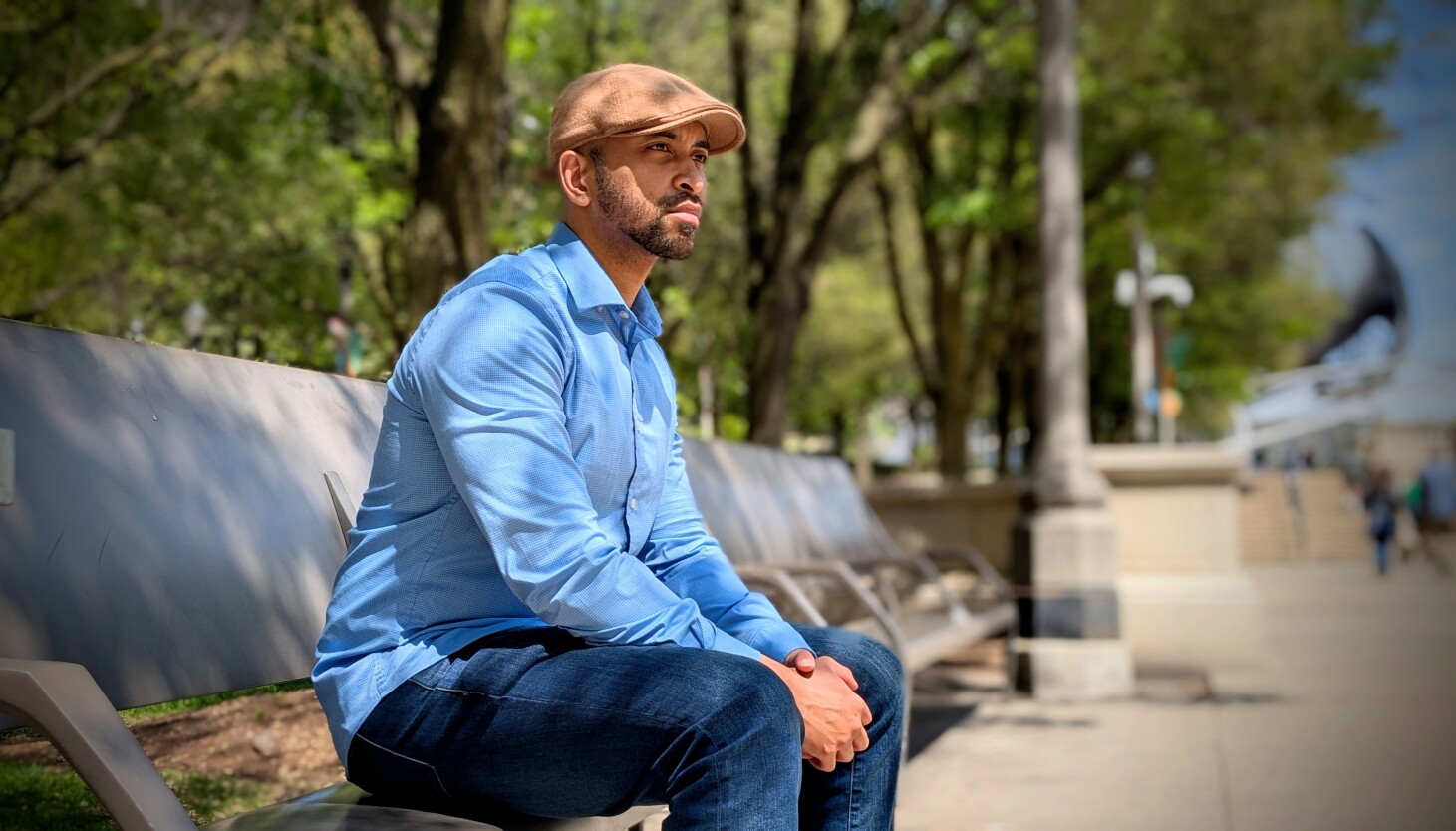
“I’m not prepared,” said Jay Baker, a Chicagoan who qualified for $0 payments under the SAVE plan. “I don’t even know how much I’m going to start being charged, so it’s a little scary. Everything’s kind of up in the air right now.”
Baker, 30, took out more than $5,000 in federal student loans to get his associate’s degree in paralegal studies at City Colleges of Chicago. He had been working at a catering company for several years when the pandemic hit.
“I was out of work for a month because I was in the proximity of someone who had COVID,” said Baker. “That made me realize I needed to go back to school to keep my finances at least stable.”
He’s now a legal assistant at a firm downtown. But he said he is still living paycheck to paycheck and that monthly student loan payments would significantly cut into his finances.
“I would probably have to buy less groceries … and get rid of my car,” said Baker, who rents an apartment in the Belmont Cragin neighborhood. “I’ll probably have to send my mom less money. She lives in the Philippines … and she’s already asked for more than I can afford, so having to send her less is probably going to be painful for both of us.”
Baker said he would like to go back to school to get his bachelor’s degree, but he does not think that will be possible given the Trump administration’s policies.
“I don’t think what they’re doing is fair. I just feel like there’s no understanding of people’s situations,” he said. “There are people who are hurting right now, and they want to better themselves, and I think the government should play a role in helping people progress and having some kind of support system.”
Lacourdaire Camargo in the Little Village neighborhood of Chicago, where has she lived nearly her entire life. After working for many years, Camargo went back to school in order to gain financial stability. But the student loans she borrowed are hurting her ability to save for a home and for retirement.
Longtime Little Village resident Lacourdaire, or “Lucky,” Camargo agrees. After working for many years in real estate and education nonprofits and experiencing two periods of financial instability, she went back to school to get her undergraduate and master’s degrees in economics.
While she was in graduate school, Biden promised to cancel $10,000 to $20,000 in federal student loans per borrower. Camargo said was excited she would be able to put some of that money back into her retirement fund. Then the Supreme Court decided against Biden’s initiative.
“When I think about the comments people make like, ‘Well, I paid my student loans back,’ or, ‘This is a choice that you made’ — it wasn’t really a choice,” she said. “I had to get a college degree if I was going to make any sort of income that allows me to have a roof over my head. Otherwise [there’s only] precarious work that brings forth no benefits, unstable working hours and is largely not very good work for your body.”
Camargo, 48, borrowed from her 401K and took out more than $10,000 in federal student loans to pursue higher education. Although she has a steady job with the City of Chicago, she said her debt is hurting her ability to save for a home and for retirement and she worries she can no longer rely on federal student loan relief.
“I’m somewhat fortunate because I work in government, and there is the possibility of public service loan forgiveness if I stay in government for 10 years and contribute to my debt during this time,” she said. “But there’s nothing to say that during this administration, that particular program won’t get clawed back as well, right?”
In the meantime, Camargo is paying what she can towards her student debt. That isn’t much after covering other expenses, she said, so she anticipates paying it off for a long time. Still, she said, she has no regrets about going back to school.
“That’s something that I’m never going to get taken away,” she said.
Lisa Kurian Philip covers higher education for WBEZ, in partnership with Open Campus. Follow her on Twitter @LAPhilip.