The beach bars on Orient Bay are already full by lunchtime. At Maho Beach, travelers line the sand waiting for arriving jets to roar overhead. In Grand Case, restaurant reservations are getting harder to land, particularly along Boulevard de Grand Case, where tables spill toward the water and kitchens stay active deep into the night. At Simpson Bay Lagoon, charter boats head out before sunset while airport arrivals keep stacking up across the afternoon.
Right now, few places in the Caribbean have this kind of momentum.
New data from Amadeus shows Sint Maarten up 18 percent year over year, while Saint Martin is up 12 percent, underscoring what we have already been seeing on the ground for months: the island is hotter than it has been in years.
The increase reflects several things happening at once. Airlines are adding more seats. Hotels are opening and expanding. Travelers are returning to classic beach neighborhoods while new boutique properties continue to arrive across both the Dutch and French sides of the island. The food scene keeps getting stronger. And perhaps most importantly, St. Maarten remains one of the easiest Caribbean islands to actually use as a vacation base.
You land, grab a rental car or taxi, and within minutes you’re at a beach club, a marina, a hillside hotel, or a waterfront restaurant.
That simplicity continues to separate the island from much of the region.
According to the Amadeus report, St. Maarten’s tourism strength also reflects its role as the northeastern Caribbean’s major gateway.
“Sint Maarten also shows particularly strong year-over-year performance. These results should be interpreted within a broader regional context. Sint Maarten pairs its own tourist appeal with a role as a key gateway, providing access to Saint Martin via land connectivity and to nearby islands such as Anguilla and St. Barthélemy via boat and charter flights. This gateway function helps explain the unusually strong demand signals observed in the data,” the report said.
That combination — destination and regional hub at the same time — has created one of the Caribbean’s strongest travel engines.
And travelers are responding.
The Flights Keep Growing
The biggest sign of the island’s momentum is happening in the air.
Airlines continue adding capacity to Princess Juliana International Airport, particularly from the United States, where demand for Caribbean travel has remained elevated through 2026.
Among the most significant additions are new Southwest Airlines flights from Orlando and Baltimore, expanding the carrier’s footprint into one of the Caribbean’s busiest leisure markets.
The Orlando service opens another direct link from one of the country’s fastest-growing travel corridors. The Baltimore flights strengthen the island’s reach across the Mid-Atlantic, where St. Maarten has long maintained a loyal repeat-traveler base.
The additional service comes as Princess Juliana International Airport continues operating at a level travelers haven’t seen since before Hurricane Irma.
And the airport itself feels different now.
The rebuilt terminal has dramatically improved passenger flow, with brighter arrival halls, upgraded retail space, expanded seating areas, and a far more modern experience overall. Travelers who last visited several years ago immediately notice the difference. Arrivals move faster. Security processing has improved. The airport finally feels fully back.
That matters on a Caribbean island where the airport functions as part of the experience itself.
Few Caribbean arrivals are more recognizable than the final approach into St. Maarten, particularly over Maho Beach, where incoming aircraft descend just feet above the shoreline. It remains one of the most photographed airport approaches anywhere in the world, and it continues generating enormous social media visibility for the destination.
But the airport’s role goes well beyond tourism imagery.
Princess Juliana International Airport remains one of the Caribbean’s most important regional connectors, with onward access to nearby islands including Anguilla, Saba, Statia, and St. Barthélemy. Travelers flying into St. Maarten often continue elsewhere in the northeastern Caribbean, either by ferry, private boat, or regional aircraft.
That regional traffic helps sustain the island’s year-round energy level.
There’s almost always another arrival coming in.
The Beaches Are Driving Demand Again
The island’s beaches have always been central to its identity, but right now they’re driving a major part of the tourism resurgence.
And the appeal stretches across dramatically different coastlines.
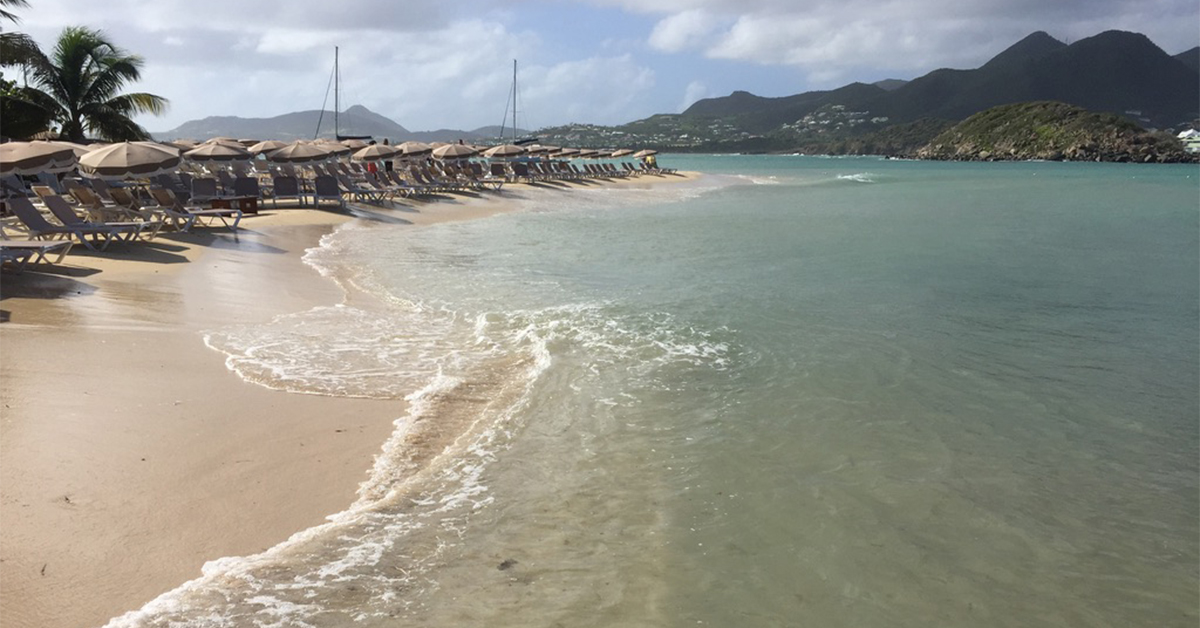
On the French side, Orient Bay continues functioning as one of the Caribbean’s strongest beach scenes. The beach clubs remain packed through the afternoon, with long lunches rolling into late-day cocktails while kite surfers cross the bay offshore. The combination of white sand, consistent activity, and walkable restaurant access keeps Orient Bay among the island’s most active destinations.
In Grand Case, travelers split time between restaurant hopping and smaller beaches tucked along the waterfront. Nearby Happy Bay continues attracting visitors looking for quieter stretches of sand away from the larger crowds.
On the Dutch side, Maho Beach remains one of the Caribbean’s signature experiences. The beach itself stays busy throughout the day, but activity intensifies whenever arriving aircraft descend toward the runway. Travelers crowd the shoreline with phones raised while beach bars nearby fill with spectators waiting for the next arrival.
Further south, Simpson Bay continues functioning as one of the island’s most versatile beach corridors, combining long stretches of sand with restaurants, nightlife, marinas, and resorts all within close reach of one another.
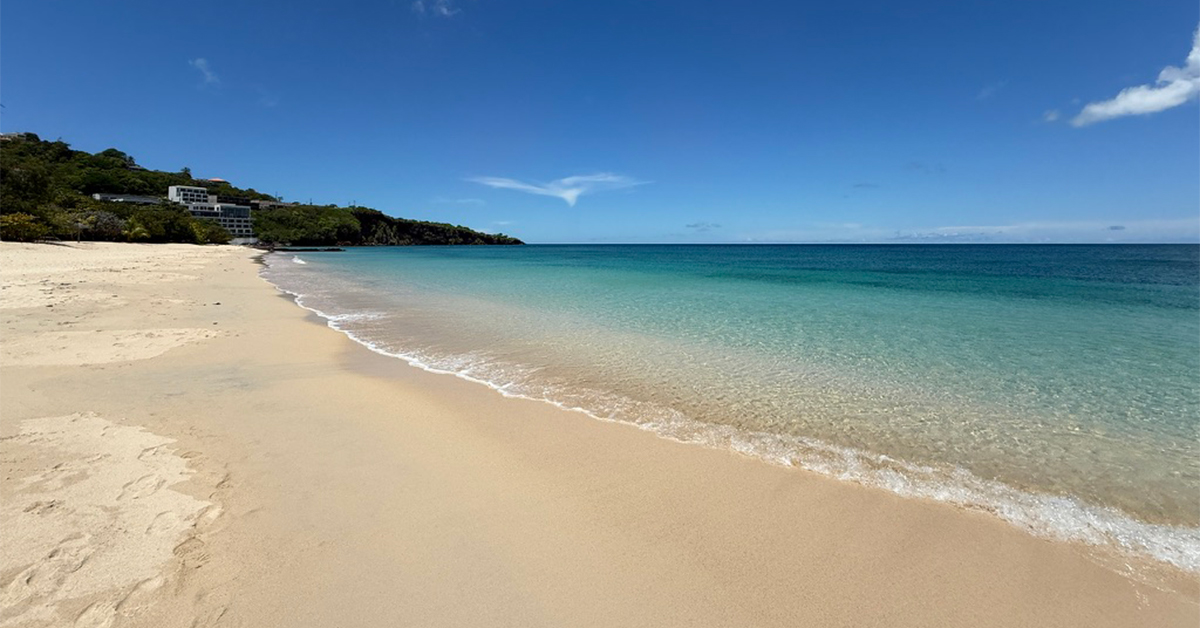
Then there’s Mullet Bay, where calm turquoise water and wide white sand continue drawing both visitors and residents throughout the week.
What separates St. Maarten from many other Caribbean islands is how closely everything connects together.
You can spend the morning on Orient Bay, eat lunch in Grand Case, stop at Maho Beach for plane spotting, then finish the evening at a marina-side restaurant in Simpson Bay — all in the same day.
That flexibility continues attracting repeat travelers who want multiple vacation experiences without changing islands.
Grand Case Keeps Getting Stronger
If St. Maarten’s beaches create the first impression, Grand Case often becomes the reason travelers return.
The dining scene there remains unmatched in the Caribbean for density, variety, and consistency.
There are Caribbean destinations with strong individual restaurants. There are islands with luxury resort dining. But Grand Case offers something different: an entire waterfront village built around eating well.
Within a relatively short stretch along Boulevard de Grand Case, travelers find French bistros, Caribbean seafood restaurants, wine bars, beachside grills, pastry shops, cocktail lounges, and long-established fine dining institutions operating side by side.
And the range works.
One night might mean a full French tasting menu with wine pairings. The next might be grilled lobster and rum punches at a beachside table directly on the sand.
That concentration continues separating St. Martin from virtually every other culinary destination in the region.
The restaurant scene also extends far beyond Grand Case itself.
In Simpson Bay, travelers continue filling marina-side restaurants late into the evening. Philipsburg maintains its cruise-driven dining traffic throughout the day. Orient Bay’s beach clubs remain active from breakfast through sunset.
Food has become one of the island’s primary tourism drivers.
Not an add-on.
Not a secondary attraction.
A major reason people book trips here in the first place.
And unlike some Caribbean destinations where dining largely revolves around resorts, St. Maarten’s restaurant culturespreads across neighborhoods, marinas, villages, beaches, and roadside locations.
You spend the island moving between them.
Hotels Are Expanding the Island’s Reach
Part of the island’s recent surge also comes from its increasingly broad hotel product.
Travelers can now choose between large beachfront resorts, marina hotels, hillside boutique properties, apartment-style stays, and smaller design-forward hotels spread across both sides of the island.
Several properties have become particularly important in the island’s current tourism push.
In Grand Case, The Grand Case Beach Club continues attracting travelers looking for direct beach positioning within walking distance of the village’s restaurant scene. The combination of waterfront rooms and immediate proximity to Grand Case dining remains one of the strongest location pairings anywhere on the island.
On the Dutch side, The Morgan Resort & Spa has emerged as one of the area’s most visible upscale properties near Princess Juliana International Airport and Maho Beach. The resort’s dramatic pool deck overlooking arriving aircraft has become one of the island’s most recognizable hotel visuals.
Newer boutique concepts are also helping expand the destination’s appeal.
Le Martin Boutique Hôtel has drawn attention for its smaller-scale French-side atmosphere and residential-style feel. Properties like La Plantation continue attracting travelers looking for quieter hillside environments above Orient Bay. Meanwhile, Aura reflects the island’s growing inventory of contemporary lifestyle-focused accommodations aimed at younger travelers and longer-stay guests.
That diversification matters.
St. Maarten no longer relies solely on one traveler profile.
Families arrive for beaches and convenience. Couples come for dining and boutique hotels. Yacht travelers pass through marinas and charter docks. Long-weekend visitors arrive on direct flights from the United States. European travelers continue maintaining strong ties to the French side.
The island now supports all of them simultaneously.
The Island Feels Busy Again
One of the most noticeable differences right now is the overall energy level.
St. Maarten feels crowded again in the way major Caribbean destinations are supposed to feel crowded.
Airport arrival halls stay active. Beach clubs fill early. Roads around Simpson Bay back up before dinner service. Sunset catamarans leave packed marinas. Music carries out from waterfront bars late into the night.
And unlike highly seasonal Caribbean islands, St. Maarten maintains activity across a wide stretch of the calendar.
Cruise traffic contributes to daytime volume, particularly in Philipsburg. Stayover visitors sustain hotels and restaurants into the evenings. Regional travelers continue cycling through the airport throughout the week.
That layered tourism economy creates constant activity across the island.
For years after Hurricane Irma, travelers arriving on the island saw rebuilding projects, partially reopened properties, and infrastructure still under repair. That phase has largely passed.
Today, the dominant story is expansion.
Part of St. Maarten’s strength comes from something much simpler than tourism statistics.
The island is easy to use in a way many Caribbean destinations still struggle to match. You can land on a nonstop flight from the United States and be at your hotel within minutes. English is spoken everywhere. Beach hopping is simple. Restaurants span every price point. Ferries to nearby islands run consistently. Travelers can experience both Dutch and French Caribbean culture in the same trip.
That combination continues driving repeat visitation. Families arrive for convenience and beaches. Couples come for the restaurant scene and boutique hotels. Yacht travelers use the island as a regional base. Long-weekend visitors can maximize short trips because nearly everything is within easy reach.
And right now, all of it is accelerating at once.
The beaches are hot — but never crowded. Airlines keep adding seats. Hotels continue opening and renovating. Grand Case dining rooms stay packed deep into the evening. Across both sides of the island, the energy level feels elevated again.
That’s why St. Maarten, which calls itself (rightly) the “Friendly Island,” has become one of the hottest Caribbean islands right now.
What It Costs to Get There
Flight prices across the region are higher right now because of the Iran situation, but they’re still within reason.
I found nonstop flights from Orlando to St Maarten for about $442 roundtrip on Frontier, based on Google Flights. It’s even cheaper from Fort Lauderdale, where you can get to St Maarten on JetBlue for just $310 roundtrip.