One Nation has scored a thumping win in the Farrer by-election, marking the first time the party has won a Lower House seat n the federal parliament.
The ABC’s election analyst Casey Briggs called the seat for One Nation just after 8:00pm.
At that stage One Nation candidate David Farley had more than 40 per cent of the primary vote and was predicted to win the seat with a margin of about nine per cent after preferences.
He will become the first member for Farrer who does not represent either the Liberal Party or the National Party.
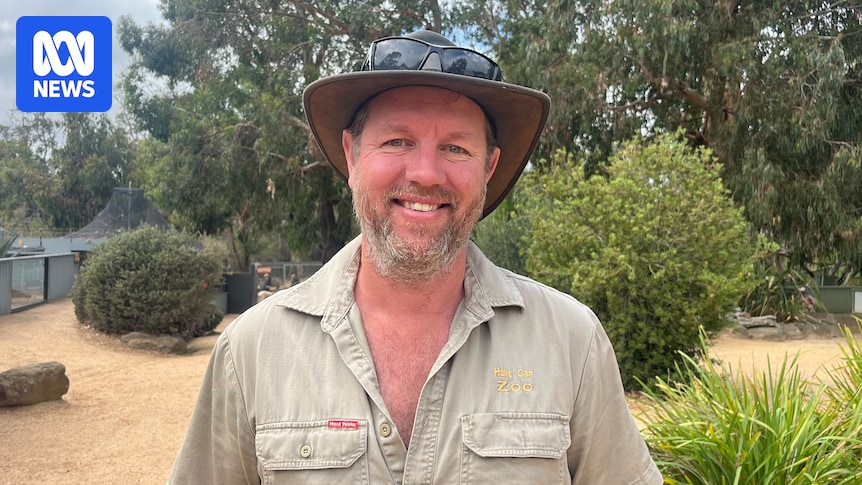
Mr Farley said he chose to join One Nation because it was “a political party of courage and tenacity”.
“I wanted to match that to what my skills were … in agriculture, agribusiness and community, and I could see the job that was required,” he said.
“So I look at it and I understand what is the job in Farrer, what’s got to be required and how to deliver it, and that message plus our policies has resonated very well right across the whole depth and breadth of Farrer.
“People just want change, it’s as simple as that.”
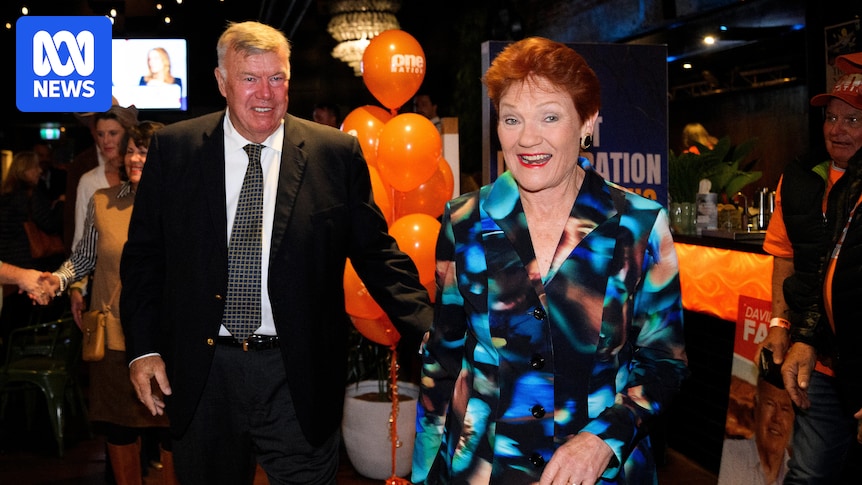
One Nation Leader Pauline Hanson has appeared on Sky News where she thanked the voters who delivered a thumping victory for her party.
“They realised that we are the last hope of changing things in this country, to get it back to the country that we used to be,” she said.
“People have fear for the future generations, no hope of owning their own home, you know?
“And the cost of living is just destroying families.”
First federal win
One Nation had never won a seat in the federal House of Representatives, although Barnaby Joyce now flies its colours in the lower house after defecting from the Nationals.
One Nation leader Pauline Hanson was elected in 1996 after being disendorsed by the Liberal Party for controversial remarks about Indigenous Australians, but that happened so late in the campaign that her name appeared on the ballot as a Liberal.
She subsequently lost her seat in 1998.
Voters in the Farrer by-election had the choice of 12 candidates. (ABC News: Callum Flinn)
A dozen candidates contested the seat, which was held by the Coalition since its creation in 1949 and by former Liberal Party leader Sussan Ley for the last quarter of a century.
In the 2025 federal election the Liberal Party secured more than 43 per cent of first-preference votes.
Independent Michelle Milthorpe secured 20 per cent, with Labor on 15 per cent and One Nation just shy of seven.
A year later the by-election has delivered a dramatically different result.
The four-cornered contest saw both Coalition parties relegated to the status of also-rans.
But their decision to preference One Nation ahead of the independent made her task vastly more difficult.
Albury councillor Raissa Butkowski contested the Farrer by-election for the Liberals. (ABC News: Greg Ryan)
The deputy leader of the Liberals, Jane Hume, would not be drawn on whether it was the correct decision.
“I’m not going to speculate on preferences, that really is a decision for the party organisation, not for the candidates and not for the politicians themselves,” she said.
The Nationals deputy leader Bridget McKenzie told ABC News she would be open to the prospect of forming a minority government with One Nation in the future.
“I’d be willing to work with anyone that wants to see Anthonty Albanese leave the lodge,” she said.
“I don’t care what colour you are, I’m interested in delivering results and building a prosperous and healthy country.”
Nationals leader Matt Canavan described the by-election as “a bit of a reintroduction for us for the people of Albury and southern NSW”.
“But we are not going anywhere. We are here for the long haul,” he said.
“I do recognise the fact that people have been disillusioned with politics and the political class, and we’ve been part of that and got to take our licks.”
Nationals leader Matt Canavan became a familiar face in the electorate of Farrer during the lead up to the by-election. (ABC News: Philippe Perez)
Polling day had its share of controversy with the Federal Court issuing an injunction ordering the removal of signage claiming to be authorised by the Australian Electoral Commission (AEC).
The posters were spotted on a fence at the Orana Community Centre at Springdale Heights, north of Albury.
They depicted an AEC transparency register of political donations to independent candidate Ms Milthorpe who has been under fire from her opponents over contributions to her campaign from Climate 200.
In a statement the AEC said the signs had the potential to misrepresent the source of the corflute.
“While it includes information from the AEC’s transparency register, the AEC did not erect or authorise the signage,” it said.
It did not disclose who was responsible.
The Federal Court has granted an injunction for the unauthorised sign to be removed. (Supplied: Australian Electoral Commission)
Conservative voters were spoilt for choice when it came to choosing a candidate, but all four aspiring MPs expressed similar views on what emerged as the key issue: water.
All went on the record as being opposed to further water buybacks in the Murray-Darling Basin and supporting further investigation of the basin’s management.
The electorate of Farrer covers 126,563 square kilometres, or nearly 16 per cent of New South Wales. (Supplied: Sussan Ley)
They also voiced support for more scrutiny and decreasing immigrant numbers — although this was a more delicate issue in an electorate with strong multicultural communities and local industries that rely on migrant workers.
Mr Farley will now have to find a way to work with the Albanese government if he is to deliver on the pledges made during the campaign.
Loading