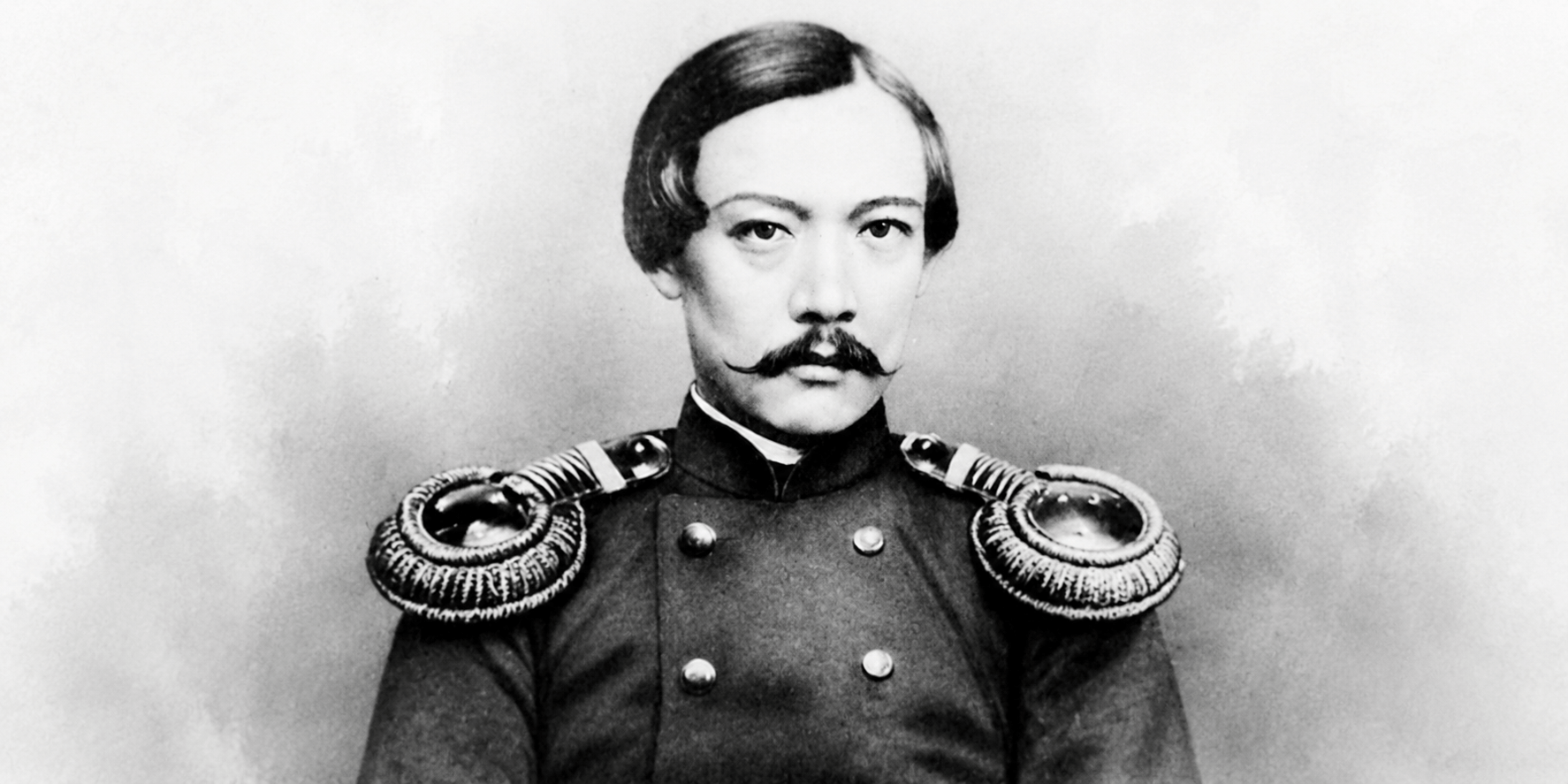
Shoqan Walikhanov gained recognition far beyond the Kazakh steppe, earning admiration in Russian and European intellectual circles. Although his life was brief, he left a lasting impact on Oriental studies, ethnography, geography, history, and folklore research.
Western academics especially valued his expedition to Kashgar and his detailed studies of Central Asia. Even today, many scholars writing about the region continue to rely on Walikhanov’s observations and publications.
One example of this influence appears in A Century of Russian Rule in Central Asia, a scholarly volume edited by Edward Allworth and published in the United States in 1967. In the book, researchers frequently cite Walikhanov’s articles and reports on Central Asia, recognizing them as important historical sources.
Russian Oriental scholars famously compared Walikhanov to “a fleeting meteor” whose brilliance appeared only briefly. The respected orientalist Nikolai Veselovsky also wrote about the high expectations scholars had for his future. Walikhanov’s studies first became known in Europe through the Russian Geographical Society. His works, including Sketches of Dzungaria, Journey to Altyshahr, and Notes on the Kyrgyz, introduced Western readers to the history, customs, and traditions of Central Asian peoples.
By 1865, Walikhanov’s reputation had already reached the English-speaking world. That year, The Russians in Central Asia was translated into English and published in London by John and Robert Michell. The book examined the Russian Empire’s expansion into Central Asia, the Syr Darya military frontier, and political relations with the khanates of Khiva, Bukhara, and Kokand. It included Walikhanov’s accounts from his 1858 and 1859 expedition to Kashgar and Dzungaria, identifying him as “Capt. Valikhanof,” a Russian-based transliteration of his name. His writings offered Western audiences rare insights into the geography, political climate, ethnography, and daily life of Xinjiang and neighboring territories.
The publication also featured studies by Russian travelers such as Mikhail Venyukov. The authors described the incorporation of the Kazakh steppe into the Russian Empire, the unstable political situation in the Central Asian khanates, and the international rivalry associated with the “Great Game.”
Decree of Emperor Alexander II on awarding Chokan Valikhanov the Fourth Class Order of Saint Vladimir for his journey to Kashgar, 1860. Photo credit: shoqan.kz
Clothing of Kashgar Women. Drawn by Chokan Valikhanov, 1858.
Photo credit: shoqan.kz
Modern historians still consider the book one of the most valuable nineteenth-century sources on Russian colonial expansion in Central Asia. At the time, Walikhanov’s observations on Kashgar were regarded as some of the most reliable information available to European scholars about a region that remained largely inaccessible.
Western academics admired Walikhanov not only for his scholarship, but also for his role as a bridge between Eastern and Western cultures. English-language studies often describe him as “the first European-educated Kazakh intellectual.” His growing reputation in the English-speaking academic world has also been examined in later research. In the article Chokan Valikhanov and the English-speaking World, British researcher Nick Fielding explains how Walikhanov’s writings attracted the attention of nineteenth-century British scholars. According to Fielding, members of the Royal Geographical Society highly valued his reports because reliable information about Kashgar and surrounding regions was extremely limited.
Walikhanov also received praise from Western scholars for his work in folklore studies. He was among the first researchers to study and introduce the Kyrgyz epic Manas to European audiences in a scholarly manner. English-language encyclopedia and academic references continue to highlight this achievement.
Photo credit: gov.kz
Today, Walikhanov’s legacy continues to inspire international interest. English translations of his works are preserved in libraries across London and the United States. In 2000, Selected Works of Chokan Valikhanov, published in collaboration with the University of Cambridge, introduced a new generation of Western readers to the ideas and scholarship of the renowned Kazakh thinker.
Shoqan Walikhanov remains an outstanding figure not only in Kazakh intellectual history, but also in the broader history of global Oriental studies. Through his research and writings, Western audiences gained a deeper understanding of the history, culture, and traditions of the Kazakh steppe and Central Asia. His contribution to world scholarship continues to be remembered and respected today.