When Claire’s two-year-old daughter was taken away from her, the mother did not receive a warning. A call from the nursery informed her that the girl had been taken away and placed in a home.
“I received a phone call in the afternoon telling me not to go and collect her from the nursery,” Claire told Contacto, speaking on condition of anonymity to protect the family’s privacy and fearing potential negative repercussions from authorites. “It was a psychological shock. I spent weeks in a daze: not eating, not sleeping, crying a lot.”
This was roughly six months ago, in October 2025.
Claire, originally from France and living in Esch-sur-Alzette, said she wasn’t allowed to see her daughter until four days after she was taken away from her, under the supervision of a social worker. The child was not well, she recalled. She was crying a lot and wanted to be with her, the mother said.
Almost two months later, in December, the juvenile court judge upheld the decision to keep the child in care, based on social workers reports alleging the mother’s psychosocial instability and the risk of parental alienation – accusations that Claire disputes.
The case is still before the court. And the girl remains separated from her mother.
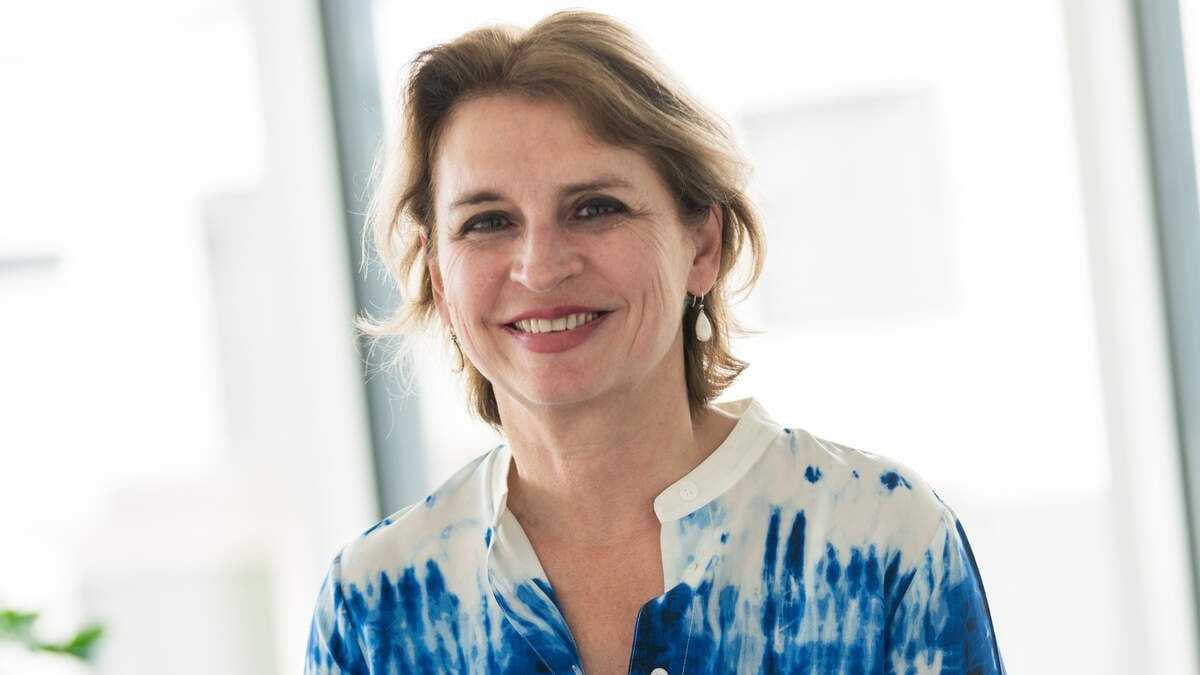
Claire (not her real name) is challenging the court’s decision to place her two-year-old daughter in a care home © Photo credit: Marc Wilwert
The case is still before the court. And the girl remains separated from her mother.
Like Claire’s daughter, hundreds of children live in care homes in Luxembourg. As of April this year, there are 1,521 children and young adults in care, government figures show.
More than 60% are placed in institutions – 861 in the country and 82 abroad. The rest live with foster families. The figures reveal a predominance of institutional care, bucking the European trend towards deinstitutionalisation.
Between 2014 and 2023, the number of children in care increased by 30%, according to the European foundation Eurofound, placing Luxembourg among the six countries that have made the least progress in the transition to foster care within the EU, ranking only above Cyprus, Spain, Italy, Finland and France.
On the other hand, countries such as Bulgaria (-94%), Lithuania (-62%) and Portugal (-29%) have managed to significantly reduce their institutionalisation rates.
Both the EU and the United Nations maintain that institutionalisation should be a measure of last resort, with priority given to foster care.
These figures are considered high even by Luxembourg’s main child protection body, the National Office for Children (Office National de l’Enfance, ONE).
“There should be fewer” children in care, said ONE deputy director Inês Dias, which is why the organisation advocates “reducing the number of placements and investing heavily in prevention.”
A law that overlooks the best interests of the child
On the other side of the ONE is the juvenile court, which is responsible for the majority of decisions.
Almost 70% of placements of children in institutions result from a court decision. The remaining 30% correspond to voluntary placements, where parents agree to the child entering an institution without the need for legal proceedings.
The ONE does not make placement decisions, but works with families preventively and, where there is no cooperation, may refer the case to the courts. In most cases, such as Claire’s, “parents do not want their children to be taken away”, said Dias.
The court and ONE operate according to different criteria. “Today, there are many cases where our assessment differs from that of the court. For example, we only consider it necessary to place a child in care when there is an imminent risk to life or physical danger,” she explained.
Inês Dias, deputy director of the National Office for Children (ONE) © Photo credit: Christophe Olinger
The difference lies in how the two bodies interpret the law. “Under the 1992 law, the court receives an assessment carried out by social workers from the SCAS [Central Social Assistance Service] within about two weeks. The court then decides what the parents must do. The 2008 law provides for the ONE to assist parents and children in complying with the court’s decisions. Without this help, the child would be placed in a centre,” explained Dias.
The deputy director gives this example: the court may order placement in care in situations such as non-attendance at school, whilst the ONE prefers to analyse the reasons and intervene with the family.
We only resort to placement when there is no other alternative
Inês Dias
Deputy Director of the National Office for Children (ONE)
“These are different approaches,” she said. “Our current practice places greater emphasis on the child’s rights and parental involvement, something the old law did not guarantee in the same way. We only resort to placement when there is no other alternative.”
For the Ombudsman for Children and Youth in Luxembourg (Okaju), Charel Schmit, the problem is that “the court often decides too soon, without giving sufficient consideration to all the alternatives”. Around a third of the complaints the body receives relate to judicial decisions in this area, he said.
UN guidelines state that removing a child from their family should be a last resort – temporary and for the shortest possible time. But how is this principle applied in Luxembourg? Under what conditions is the decision made to remove a child? To what extent are efforts made to avoid such separation? And who, in practice, safeguards the child’s best interests?
Criticism of police intervention
Claire’s story is not unique. In Diekirch, a Portuguese grandmother saw her 11-year-old grandson taken away from her after raising him since he was a baby. One morning in January this year, the boy went to school where judicial police plucked him from his classroom to take him to a care home.
Like Claire, Lurdes (who requested anonymity on the same grounds as Claire) only found out what had happened through a phone call. Later, the police knocked on her door to collect her grandson’s clothes.
“I started crying. My grandson was taken from the middle of the class by the police. Not even the teachers knew; they were shocked,” said the grandmother.
This type of intervention has been the subject of criticism in recent years. In a 2021 report, the UN Committee on the Rights of the Child expressed concern that Luxembourg “continues to resort to police intervention at home or in schools to enforce court decisions placing children in institutions, without informing the parents.”
The Okaju’s Schmit believes that these situations raise issues of “institutional violence”.
Charel Schmidt, Ombudsman for Children and Young People in Luxembourg (Okaju) © Photo credit: Gerry Huberty
“We have been criticising this practice for many years, as it traumatises children. The courts often delegate this task to the police, when it should be carried out by social workers or psychologists, who could seek out other family members, siblings or friends and thus reduce the trauma,” he said.
The ombudsman also argues that the principle of transparency should be guaranteed to those involved. “Many mothers are only informed of the court’s decision after the fact,” he said.
Police intervention in the removal of minors always depends on a risk assessment, said central judicial police director Kristin Schmit. “If there is danger, the police intervene,” she said. In such cases, the operation may involve uniformed officers, especially in emergency situations. “It is true that it can be stressful for the children.”
Police intervention always takes place with the authorisation of the public prosecutor’s office, usually involving teams of three or four people. If there is no risk of violence from family members, social workers can intervene on their own, she said.
We have been criticising [police intervention] for many years, as it traumatises children
Charel Schmit
Ombudsman for Children and Youth in Luxembourg (Okaju)
And what if a baby or toddler has to be removed from nursery, as happened with Claire’s daughter?
“Usually, in such cases, we are not called directly. In more serious situations, such as suspected shaken baby syndrome or sexual abuse, there is always coordination between the public prosecutor’s office and the PJ [judicial police] to decide how to proceed,” said Schmit.
Deciding to remove a child is never straightforward. “In most cases, the core issue is neglect,” said Dias, citing examples such as inadequate nutrition or a lack of basic care. “However, it is rarely down to a single factor; usually, there are several factors affecting the child.”
These factors include neglect of the child’s needs, failure to address domestic violence, alcohol or drug addiction, and psychological difficulties.
The weight of expert evidence in court
The vulnerability of those caring for a child is difficult to assess.
Claire in 2024 sought psychological support, claiming to be a victim of sexual violence at the hands of her husband. Separated and living alone with her one-year-old daughter at the time, the case was referred to a social worker.
In 2025, she filed for divorce, began psychiatric treatment, and enrolled with job centre Adem after years out of the job market. In October, the baby started daycare. At the end of the month, she was removed and placed in an institution in Howald.
In December, the public prosecutor’s office argued that the child should remain institutionalised, based on reports from the social worker and the psychiatrist who monitored Claire for four and a half months.
According to the specialist’s assessment, Claire would not be capable of caring for her daughter, “not for lack of love”, but due to “a rigid delusional system”, the “risk of alienation” and an inability to provide a stable educational environment. “Any resumption of contact would require prolonged clinical stabilisation,” the specialist states in a document seen by this newspaper.
In other words, according to the report, after years of alleged abuse, the child’s mother was at the end of her tether and emotionally unbalanced.
Claire sought psychological support, claiming to be a victim of sexual violence at the hands of her husband © Photo credit: Marc Wilwert
But then there is this: in the same report, the psychiatrist emphasises that the diagnosis is “preliminary” and must be reassessed. The specialist says medical, social and judicial data, as well as the evolution of family dynamics, should be cross-referenced before reaching any definitive conclusion.
Claire’s lawyer contested the legality and grounds for the hasty decision to place the child in care. “The mother is a good mother”, capable of meeting the basic needs of the child, which has no health or developmental problems, the lawyer said in a document seen by Contacto.
This further states that the clinical assessments used by the public prosecutor’s office are contradictory or insufficient and do not indicate any real danger to the child.
The court, however, rejected the appeal and upheld the ruling. Claire’s daughter remains in care.
The judge who assesses is the same one who reviews
For lawyer Radu Duta, anyone challenging the removal of a child by the Luxembourg state is usually at a disadvantage. Often, he said, the reports arrive at the last minute, when little can be contested before the judge. This drastically reduces the scope for intervention.
Social worker reports often show bias and interpretations, Duta said, adding that there is a need for greater “neutrality and impartiality” on the part of the professionals involved.
One of the main problems with the system lies in the lack of adequate training for the professionals involved, he said. “It is essential to ensure that all those involved are properly trained, especially when it comes to children.”
Lawyer Radu Duta published a book on family law in Luxembourg in 2025 © Photo credit: Mercedes Xiomery
There is only limited time allowed to analyse complex cases, Duta said, noting that situations such as parental alienation require lengthy assessments. Detecting certain conditions can take one or two years and hasty decisions undermine the diagnosis, he explained.
The lawyer also stressed that having the same judge hear a case repeatedly can limit a genuine reassessment of the circumstances. “How can a judge rule again on a case they already know inside out? A fresh perspective could lead to different outcomes,” he argued.
It is essential to ensure that all those involvedare properly trained, especially when it comes to children
Radu Duta
Lawyer
Gisèle Hubsch, presiding judge at the juvenile court, admits that case files “can only be consulted three days before a hearing” and that “this is unfavourable to parents”.
“I believe – or fear – that this criticism is justified,” she said. “The law provides for this and we apply it in this way. However, I think that if someone were to appeal and take the case to Strasbourg [the seat of the European Court of Human Rights], it would probably be ruled that this practice is not admissible.”
But she dismissed criticism that the same judges assess and reassess individual cases, and even considers it beneficial for the same magistrate to follow the same family: “We have never seen this as a problem. Follow-up is part of the very essence of this work.”
‘He’s different; he seems sad and scared’
Lurdes in 2017 was granted temporary custody of her two grandchildren due to the mother’s prolonged absence. The child’s grandparents were already providing daily care and the court considered, at the time, that this was the most stable solution.
Nine years later, the same court concluded that the conflict between parents and grandparents had worsened and that the lack of cooperation with social services had compromised the monitoring of the case.
Despite the children’s strong bond with their grandparents, the judges cited possible parental alienation and decided to remove the boy, now aged 11, to a so-called “neutral” institution. His 17-year-old sister remained with the grandparents as she was considered psychologically fragile.
When she spoke to us, Lurdes had not seen her grandson for over two months. All visits were refused, she said, even on the boy’s birthday. The grandmother claims that the whole situation began when the boy asked to stop visits with his parents, saying he “was afraid”.
“A report was submitted to the court claiming that I was manipulating my grandson so he wouldn’t want the visits. That’s not true,” Lurdes argued. She also criticises shortcomings in the social support provided. “I felt that information was being conveyed in such a way as to create conflict between everyone. And that has really harmed the children.”
The grandparents appealed, but the hearing has been repeatedly postponed. To date, Lurdes has only managed to see her grandson three times, one of which was at a football tournament. Her sister, from whom he had never been separated before the forced placement, was concerned when she saw him. She told his grandmother: “He’s different; he seems sad and scared.”
We want all children to have an independent and qualified lawyer
Charel Schmit
Ombudsman for Children and Young People in Luxembourg (Okaju)
Claire’s contact with her daughter was also significantly restricted. According to the mother, visits began as weekly, but were gradually spaced out until they stopped altogether. She claims she went months without seeing the child and that requests for more frequent visits were refused.
In a document seen by Contacto, the home where the child is living admits to a lack of staff to carry out supervised visits on a regular basis. But it also claims that the mother missed meetings to try to plan these visits.
From the moment a child is placed in an institution, parents lose the exercise of their parental rights. “This is a serious problem,” said the Okaju’s Charel Schmit, emphasising that, in neighbouring countries, parents continue to participate in decisions regarding their children’s lives. In Luxembourg, by contrast, “only a few residual rights remain” and even access to information is not always guaranteed.
Lawyer Duta also points to limitations in the process. The legislation, which is over 30 years old, no longer meets current requirements. “Appeals take months, a period during which the bond with the child can weaken,” he said.
The child’s representation also raises concerns. Although there is a right to a lawyer, they are appointed by the judge and not always a specialist. “We want all children to have an independent and qualified lawyer,” said Schmidt, warning of risks to the system’s impartiality.
In its 2021 report, the UN Committee on the Rights of the Child also criticised Luxembourg for the fact that “the law allows the judge in question to decide on the transfer of parental authority without respecting certain fundamental procedural rights of parents and children, such as the right to appeal, the right to have a lawyer present and the child’s right to be heard.”
‘Poverty does not make parents bad’
Many forced separations occur in the very first days of a child’s life.
“The figures are alarming,” said Schmit. “In 2025, at least 17 newborns were placed in hospitals, even though they no longer required medical care.” That number has almost doubled in recent years, he said.
In some cases, babies remain hospitalised for weeks or months without clinical necessity – this year, the longest period was 73 days. “This undermines the formation of bonds essential for the child’s emotional development,” he said.
For the ombudsman, these situations also raise questions about the link between social support and placement decisions. “There should be no placements for economic reasons, such as housing problems or poor living conditions. That should never justify the institutionalisation of a child,” he said.
The figures are alarming. In 2025, at least 17 newborns were placed in hospitals, even though they no longer required medical care
Charel Schmit
Ombudsman for Children and Young People in Luxembourg (Okaju)
The deputy director of ONE shares this concern. “Poverty can be a risk factor, but it does not in itself make parents bad. There are poor parents who look after their children very well; they simply need social or material support,” said Dias.
Everyone seems to agree on one thing: the law needs reforming. And this has been under discussion for several years. As early as 2020, the ministry of justice, then led by Sam Tanson, planned to review the Child Protection Act, in force since 1992, with the aim of strengthening children’s rights and modernising the system.
Under new legislation, most placement decisions could be transferred to the ONE. “The idea is to invest more in prevention, reducing the number of placements and working directly with families wherever possible, without relying on the courts in every case,” said Dias.
An urgent reform, but with no date
But there is no specific date for the reform to come into force. “We hope the process will be completed by 2028, given that the current government took office in 2023. Until then, we are preparing the system and the teams to implement the reform once it is approved,” said the ONE deputy director.
The government did not provide any date for the reform to be enacted, referring only to the legislative process and the future transition phase following the law’s approval.
The minister for education, children and youth, Claude Meisch, said that he is focusing on a preventive approach, with more direct support for families through home and community-based support measures. The aim is to intervene earlier, reduce reliance on institutions and advance the process of deinstitutionalisation, in line with the ongoing reform of child protection.
With the reform of the law, most placement decisions may be transferred to the ONE © Photo credit: Marc Wilwert
Schmit believes that Luxembourg can learn from other European models, ranging from more structured protection systems in Germany to early warning mechanisms in France, as well as greater access to justice in Belgium and clearer risk assessments in the UK – practices which, he said, are still lacking in the country.
Despite ongoing reforms, the ombudsman believes that Luxembourg still has a long way to go – and points the finger at those responsible. “In another sector, such as finance, reform would have happened long ago. Children are paying the price for political inertia. Many lives are affected because this changes lives,” he said.
“I would say we are too hard on children, rather than being tough on crime,” he said. And, with reform is slow in coming, Claire’s daughter and Lurdes’s grandson remain far from home.
(This story was first published in Contacto. Translated using AI, edited by Cordula Schnuer.)