Keep our news free from ads and paywalls by making a donation to support our work!
Notes from Poland is run by a small editorial team and is published by an independent, non-profit foundation that is funded through donations from our readers. We cannot do what we do without your support.
Conservative, opposition-aligned President Karol Nawrocki has vetoed a government bill that would have allowed married couples without minor children to obtain a divorce without going to court.
He called the proposal “socially harmful”, saying it would “diminish the status” of marriage and could discourage couples from having children.
At the same time, Nawroocki – who has vetoed an unprecedented number of bills since taking office last August – also blocked a law reforming electoral commissions, which he said “raised very serious doubts” about political interference.
— Kancelaria Prezydenta RP (@prezydentpl) April 30, 2026
In early April, the government’s majority in parliament approved legislation that would have introduced a new type of “out-of-court divorce”.
Instead of going through a lengthy and costly court process, certain couples could apply to the head of a civil registry office. That official would check whether they meet statutory requirements for a divorce and, if so, enter the decision into the civil registry directly.
Couples would only be able to take that route if they do not have minor children together, have been married for longer than a year, if the wife is not pregnant, and if both parties agree to dissolve the marriage.
Poland’s parliament has approved a bill to allow married couples without minor children to divorce without having to go to court.
The government says it will ease the burden on courts, but the opposition warns it will damage the institution of marriage https://t.co/zZ8ndjY4Rx
— Notes from Poland 🇵🇱 (@notesfrompoland) March 16, 2026
The government – a coalition ranging from left to centre right – argued that the measure would save time, stress and costs for thousands of couples a year, while also reducing the burden on the court system.
However, the right-wing and far-right opposition voted against the bill, saying that the measures undermine the institution of marriage and violate the constitution, which specifies that marriage is “under the protection and care of the Republic of Poland”.
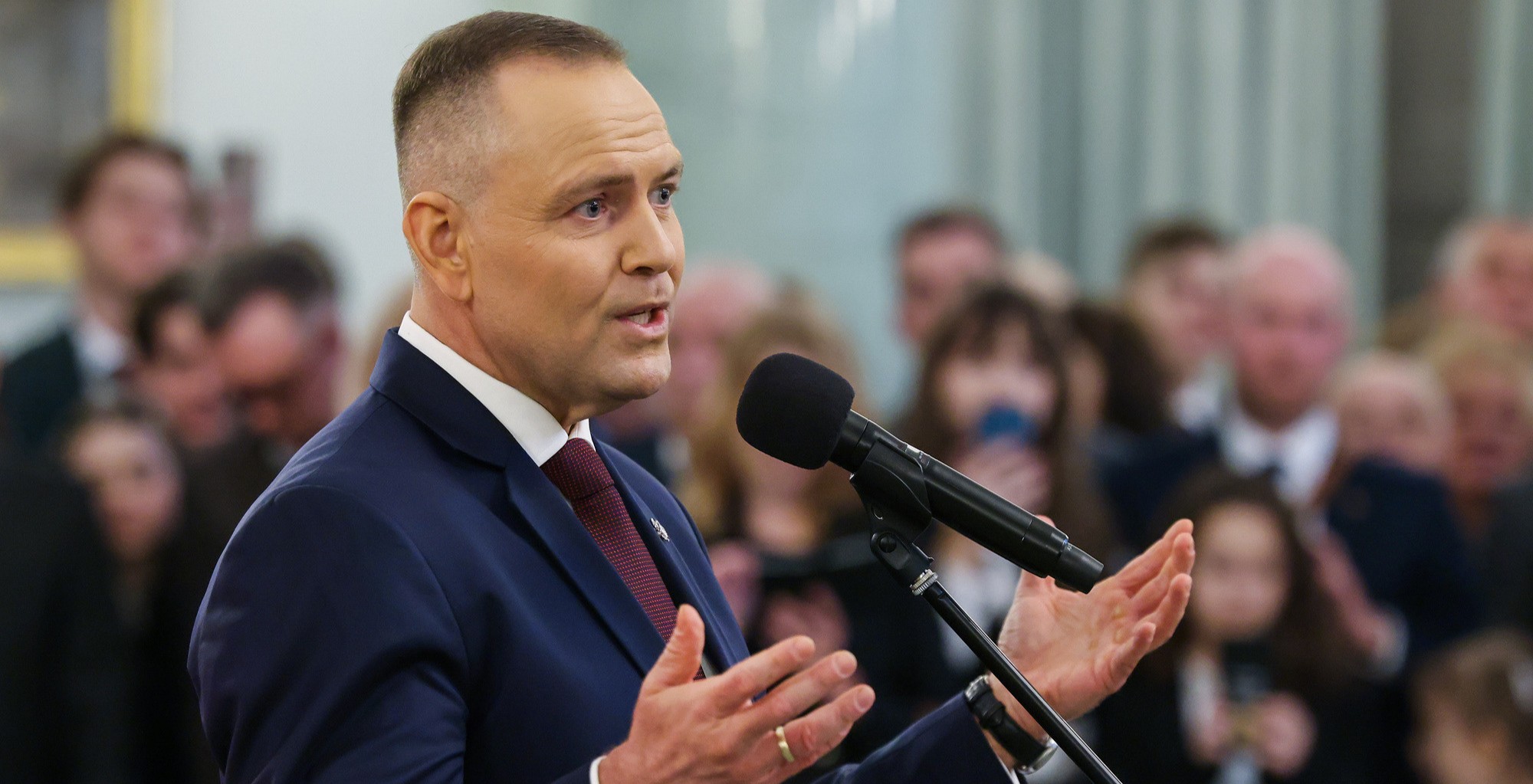
Nawrocki, who is aligned with the opposition, echoed those arguments on Thursday when announcing that he had exercised his right to veto the bill.
“Marriage is not simply an entry in a register. Marriage is one of the foundations of social life. It is the foundation of the family, the foundation of raising children, the foundation of the national community,” he said. “This bill is not a technical change. It diminishes the status of an institution explicitly protected by the constitution.”
The president argued that a legal process in court guarantees that a divorce is “well thought out and not harmful to either party.” A simple procedure at the civil registry office would lack such thorough evaluation, he added.
Moreover, knowing that such a possibility exists “will encourage people to treat marriage as merely a trial relationship” and to regard having a child as “an obstacle to its easy dissolution”, he added. “This is socially harmful”.
Nawrocki’s decision was criticised by justice minister Waldemar Żurek, who said that, as a result, many couples will continue having to wait months, even years, for divorce hearings.
“If these cases did not end up in court, judges could deal with many more difficult, contentious matters, and citizens would feel an improvement in the speed of their resolution,” he added.
Prezydent znowu zadziałał przeciwko obywatelom.
Po raz kolejny zawetował zmiany, które miały usprawnić postępowania sądowe.
Tym razem chodziło o najprostsze rozwody: dwoje dorosłych ludzi, bez małoletnich dzieci, bez walki o winę, bez konfliktu.
Często na pierwszą rozprawę… pic.twitter.com/zVm4s41BGm
— Waldemar Żurek (@w_zurek) April 30, 2026
Nawrocki on Thursday also vetoed a bill reforming Poland’s district electoral commissions. The law would have established the new position of secretary, who would help oversee elections and certify results, the Polish Press Agency (PAP) reports.
The president in particular criticised the fact that mayors or other heads of municipalities would play a role in appointing such secretaries. He also raised concerns over the powers that the legislation would grant them.
“Until now, the division of functions within the electoral commission has been based on the democratic election of commission members, and this is a very sound idea…I will not agree to solutions that may give rise to even a shadow of suspicion of political tampering with the elections.”
At the same time, Nawrocki announced that he had signed three other bills into law, one about supporting women in sport, another about water supply and sewage disposal, and one related to aviation.
— Kancelaria Prezydenta RP (@prezydentpl) April 30, 2026
Notes from Poland is run by a small editorial team and published by an independent, non-profit foundation that is funded through donations from our readers. We cannot do what we do without your support.
Main image credit: Grzegorz Jakubowski/KPRP
Olivier Sorgho is senior editor at Notes from Poland, covering politics, business and society. He previously worked for Reuters.