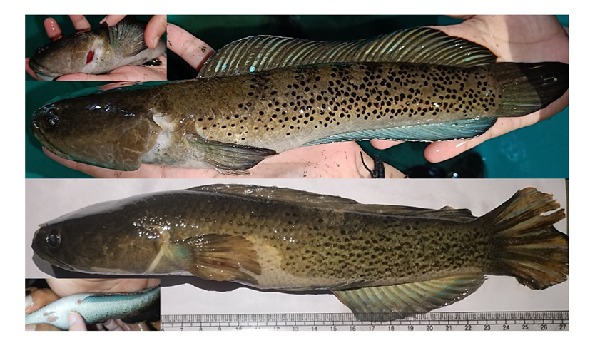
In a major boost to sustainable ornamental fisheries, scientists at the ICAR–Central Inland Fisheries Research Institute(CIFRI) have achieved India’s first successful captive breeding and larval rearing of Channa stewartii, a high-value ornamental fish native to the hill streams of Northeast India.
The breakthrough, accomplished at CIFRI’s Guwahati Regional Centre, marks a significant step towards reducing pressure on wild populations of the species, which has so far been largely sourced from natural habitats.
Popular in the ornamental fish trade and valued between ₹600 and ₹1,200 per pair, the Assamese snakehead has seen growing demand, raising concerns over overexploitation and ecological stress in fragile stream ecosystems.
The research began in April 2024 under the All India Network Project on Ornamental Fish Breeding and Culture, with scientists acclimatising nearly 30 wild-caught brooders under controlled conditions.
The fish were maintained in specially designed tanks that mimicked their natural habitat, using sand substrates, bamboo structures and earthen refuges to reduce stress and encourage breeding behaviour.
Through careful water quality management and a live feed-based diet, researchers were able to induce reproductive readiness and identify a mature breeding pair exhibiting clear sexual dimorphism.
The pair was then transferred to a semi-natural system, where successful natural spawning was achieved without the use of hormones.
The species recorded a fecundity range of 1,578 to 2,769 eggs, with a hatching success rate of 73 per cent.
The larvae, measuring around 8.4 mm, showed healthy development and active swimming behaviour, marking a crucial milestone in completing the species’ life cycle in captivity.
Scientists say the development demonstrates, for the first time, the feasibility of hormone-free breeding of Channa stewartii through habitat simulation and scientific broodstock management.
The achievement is expected to significantly reduce dependence on wild stocks while opening new opportunities for hatchery-based production and aquapreneurship in the Northeast.
CIFRI Director Pradip Dey said the breakthrough provides a pathway to scale up ornamental fish production under government schemes such as the Pradhan Mantri Matsya Sampada Yojana (PMMSY), while also emphasising the need for certification systems and regulated harvesting to ensure sustainability.
Beyond its technical success, the initiative is being seen as a model that links biodiversity conservation with livelihood generation, laying the groundwork for large-scale propagation and commercialisation of a species that was until now confined largely to the wild.
Also Read: On May Day, we must ask: Who really benefits from India’s growth?
Amit Kumar
Reporter, EastMojo
You just read a story that took days to report. Help us keep our reporters on the ground in the Northeast.
For Rs 83/month – less than a cup of coffee
Ad-free reading, support and keep important stories alive
Become a Member
OR
Support once (any amount)
or
Scan to pay via UPI