Reported by Mrinal Banik
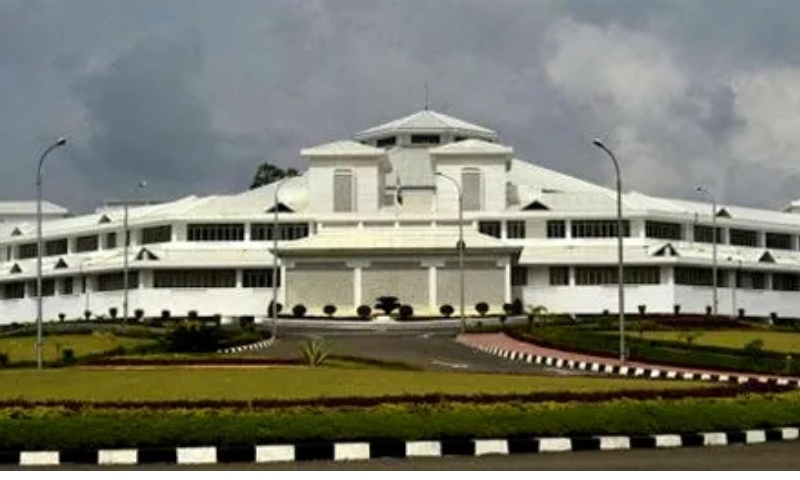
Agartala: The Tripura Legislative Assembly on Thursday witnessed a sharp but significant debate during a one-day special session over women’s parliamentary representation, with members across party lines broadly backing reservation for women while differing on its implementation and linkage with delimitation.
Chief Whip Kalyani Saha Roy moved a resolution calling for an all-party consensus across the country to operationalise the Constitution (131st Amendment) Bill, popularly known as the Nari Shakti Vandan Adhiniyam, and to carry forward the delimitation process.
The resolution urged all parliamentary political parties to unite to safeguard the constitutional rights of women. It also appealed to the Centre to initiate delimitation on the basis of the 2011 Census and renew efforts to implement one-third reservation for women in the Lok Sabha and state legislative assemblies.
Participating in the discussion, CPI(M) MLA Shyamal Chakraborty questioned the need for the resolution, alleging that it had been brought with political motives and to blame opposition parties.
He said there was no opposition to women’s reservation and asserted that his party would support even more than 33 per cent reservation, if required.
Chakraborty further said the women’s reservation law passed in 2023 could be implemented quickly with minor amendments. He accused the ruling party of lacking sincerity and criticised the delay despite commitments made in election manifestos.
He also highlighted gender disparity in public employment, claiming that women constituted only around 11 per cent of over 30 lakh central government employees.
Congress MLA Gopal Chandra Roy extended support to reservation for women and referred to what he described as the historical role of the Congress in empowering women at the grassroots level.
He cited measures taken during the tenure of former Prime Minister Rajiv Gandhi and subsequent initiatives that expanded women’s representation in the panchayat system to 50 per cent in several states.
Roy said updated and accurate census data would be essential to ensure adequate representation for Scheduled Castes, Scheduled Tribes, Other Backward Classes, and minorities while implementing the reservation measure.
He also cautioned against using delimitation or census exercises for political advantage. However, he made it clear that the Congress would not oppose the legislation if an inclusive framework was maintained.
Though the House saw broad agreement on the principle of women’s reservation, differences persisted over its timeline, method of implementation, and linkage with the delimitation process.
![Tripura Jobs 2026 : TPSC Recruitment [220 vacancies]](https://conven.org/wp-content/uploads/2026/04/Tripura-Jobs-2026-TPSC-Recruitment-220-vacancies.png)