Two judges of a division bench of the Allahabad high court have passed separate interim orders after disagreeing with respect to the functioning of human rights commissions in the country.
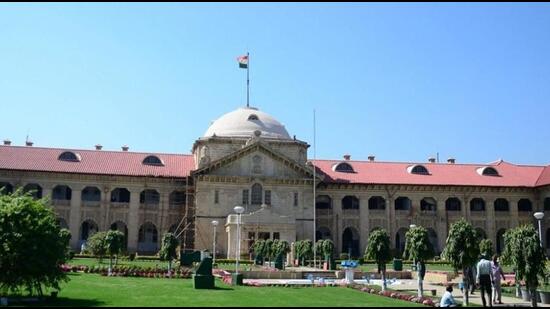
The Allahabad high court was hearing a petition moved by Teachers Association Madaris Arabia against certain orders passed by NHRC in relation to the functioning of madrasas. (REPRESENTATIVE IMAGE)
While Justice Atul Sreedharan observed that the human rights commissions across the country have failed to take suo motu cognizance in matters involving assaults and lynching of Muslims in the country, and issued notices to the National Human Rights Commission (NHRC) to file a reply in the case, Justice Vivek Saran said that he does not agree with such sweeping observations.
The court was hearing a petition moved by Teachers Association Madaris Arabia against certain orders passed by NHRC in relation to the functioning of madrasas.
The petitioner challenged the orders issued by NHRC on February 28, April 23, and June 11, 2025. These orders had directed the Economic Offences Wing (EOW) to investigate a complaint and submit an action report on it.
The probe was directed after an NHRC order in connection with a complaint filed by one Mohammad Talha Ansari alleging human rights violations in the functioning of these institutions. Acting on the complaint, the NHRC had passed orders on February 28, April 23, and June 11, prompting the state government to issue a consequential order for the inquiry on April 23 last year.
On September 22 last year, the high court had stayed the EOW investigation against 558 government-aided madrasas and had sought a response from the state government in the matter.
Justice Sreedharan, while questioning NHRC’s power to issue a direction for probe against madrasas, said that human rights commissions were focusing on matters beyond their jurisdiction, particularly those that can be agitated before the high court under Article 226.
Justice Sreedharan said, “Instead of taking suo-motu cognizance in which members of the Muslim community are attacked and at times lynched in some cases, and where cases are not registered against perpetrators or not investigated properly, the Human Rights Commissions are seen dabbling in matters that prima facie do not concern them.”
Both the judges authored the two orders dated April 27 separately.
Justice Sreedharan further said that the court was not aware of the National Human Rights Commission taking suo-motu cognizance in situations where vigilantes take the law in their own hands and harass the ordinary citizens of the country.
The judge emphasised on the harassment of people over the nature of relationships due to their different communities. Justice Sreedharan added that even having a cup of coffee at a public place with a person of a different religion becomes a fearful act sometimes.
“In such cases, no instance has been placed before this Court whether the State Human Rights Commission or the National Human Rights Commission took suo-motu cognizance. But instead it has the time to entertain matters which would fall within the precincts of the High Court under Article 226 and which could effectively render justice,” Justice Sreedharan said.
On other hand, Justice Saran, in order passed by him, said, “Since various facts have been mentioned in paragraph nos. 6 and 7, with which I do not agree, I differ from the order as has been dictated by brother Justice Atul Sreedharan.”
Justice Saran also said that if any order touching on the merits of the case or even touching on the role of the NHRC had to be passed, then all parties concerned ought to have been heard.
“I am also conscious of the fact that a writ court can pass an order even in the absence of any particular party, however, in the instant case, when in Paragraph Nos. 6 and 7, certain definite observations were being made, then it would have been in the fitness of things that parties were properly represented in the Court. In the absence of the parties, no adverse observations were required,” Justice Saran said.