The decision by the United States Supreme Court today in Louisiana v. Callais to fundamentally alter the understanding of the 1965 Voting Rights Act is surely one of those landmark decisions — like Dred Scott, like Plessy, like Brown — that will define the court for decades to come. And like those cases, it is undoubtedly a milestone in this nation’s long march toward racial justice. Or perhaps, if the court is to be believed, the end of that march as it reaches its destination.
In a 6-3 ruling, the court upheld the constitutionality of the Voting Rights Act itself, but it struck down Louisiana’s Sixth Congressional District, agreeing with plaintiffs that it is an unconstitutional racial gerrymander.
The district was created by the Louisiana Legislature in January 2024 in response to legal challenges to previous congressional maps that minority voters said unfairly diluted their power at the ballot box. At the time, Louisiana, which has six congressional districts, was using maps created in 2022 and had one Black representative in Congress.
A lawsuit argued that because the state, where one-third of the population is Black, did not have two seats, or one-third of the delegation determined by Black-majority districts, that indicated the maps were in violation of Section 2 of the Voting Rights Act, which prohibits discrimination in voting on the basis of race. Facing judicial pressure, the state created a second district, snaking from Shreveport to Lafayette to Baton Rouge, where Black voters were in the majority. That led to the current case, where a group of 6th District voters who described themselves as “non-African American” filed suit, arguing the new maps made them the victims of a racial gerrymander.
Writing for the majority, Justice Samuel Alito affirmed the court’s inclination in recent cases to move past race as the yardstick of fairness in American society. In cases involving affirmative action and criminal justice, it seems to be saying that it’s time to look to other measures of how our society is faring in upholding the rights guaranteed in our Constitution.
The ruling takes note that “vast social change has occurred throughout the country and particularly in the South, which have made great strides in ending entrenched racial discrimination.” It says that because of this, the framework of determining whether districts unfairly disenfranchise minorities needs to be updated.
In her dissent, Justice Elena Kagan, joined by Justices Sonia Sotomayor and Katanji Brown Jackson, said that the ruling ”will set back the foundational right Congress granted of racial equality in electoral opportunity.”
It’s hard to see how that won’t be the case, particularly in today’s hyperpartisan climate. While we feel the court may be right to declare that Section 2 was too broadly interpreted, we also find it disturbing that the court gave Louisiana and others little guidance as to the way forward. The Callais case now returns to the district court, which presumably will have to hash out how the state should proceed in the elections scheduled for May 16, with early voting starting Saturday, and beyond.
When the Supreme Court first held a hearing on Callais on March 24, 2025, we knew it was a momentous case. When the court asked for a rare rehearing Oct. 15, many felt the justices were deadlocked on key issues.
It is no surprise to us that Louisiana is at the center of a case so central to our civil rights. Our state has a history punctuated by racial strife as much as racial blending.
In the 1896 Plessy v. Ferguson decision, the court famously got in wrong, using the Louisiana case to enshrine “separate but equal” as the legal doctrine underpinning segregation for decades to come. In recent years, the descendants of Homer Plessy, a Black shoemaker from Treme, and John Howard Ferguson, the White judge who ruled that as Plessy could not sit in a rail car reserved for Whites, have united to promote racial justice in an only-in-Louisiana kind of story.
So we know that even when the Supreme Court rules, that’s not the end of the story. The arc of history still bends.
What the Callais ruling means in practical terms is still to be determined. Louisiana is likely to redraw maps eliminating its second majority-Black district. Florida is in the midst of approving new maps. Some other Republican-led states, like Mississippi, have vowed to redraw maps as soon as the ruling came down.
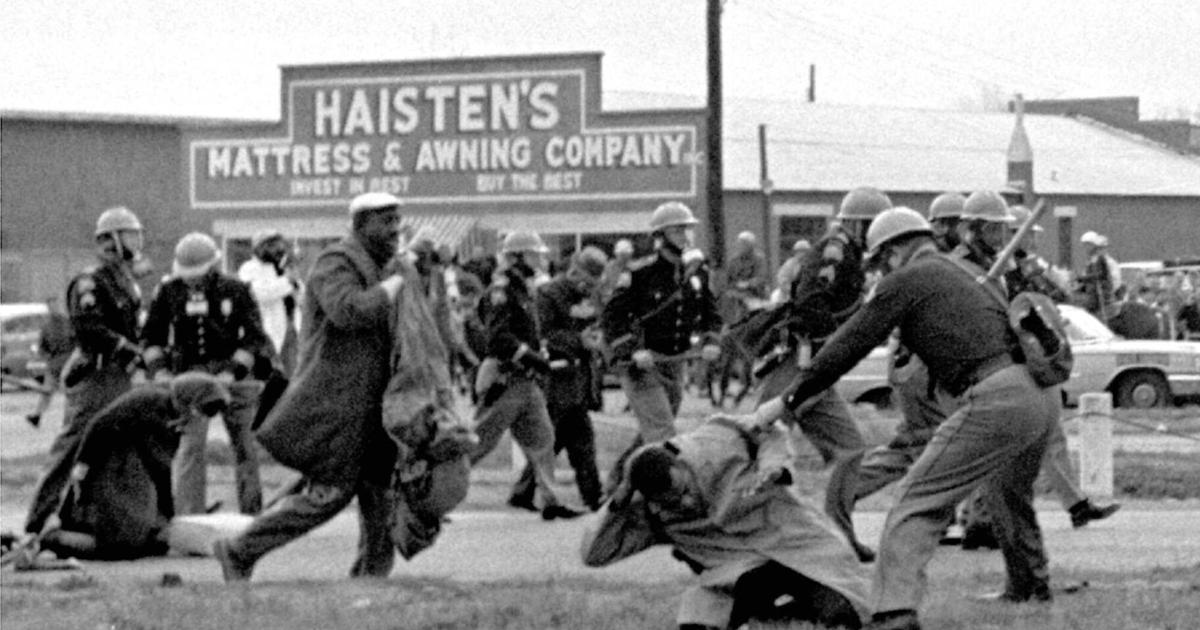
When the Voting Rights Act was passed, the means and methods of disenfranchising Black voters were perhaps more transparent. There were poll taxes and literacy tests designed with the specific intent of excluding minorities when lynchings and other brutal intimidation tactics of the Jim Crow era couldn’t.
Nowadays, however, barriers to voting can be more subtle. Politicians have powerful tech tools to pick their voters, and we have seen an aggressive push by President Donald Trump and Republicans countered by Democrats to redistrict in time for midterm elections to help their party gain seats. Will we see a frenzy of gerrymandering now that the gloves are off?
It is no secret that some politicians of both parties would rather a discouraged and apathetic electorate than one that holds them accountable. With this ruling, we must renew our commitment as voters. If politicians are certain that they can determine who holds power by slicing and dicing the electorate and pitting groups against one another, we still have the power to prove them wrong.
By doing so, we honor those who marched and fought and died for equal access to the ballot box.