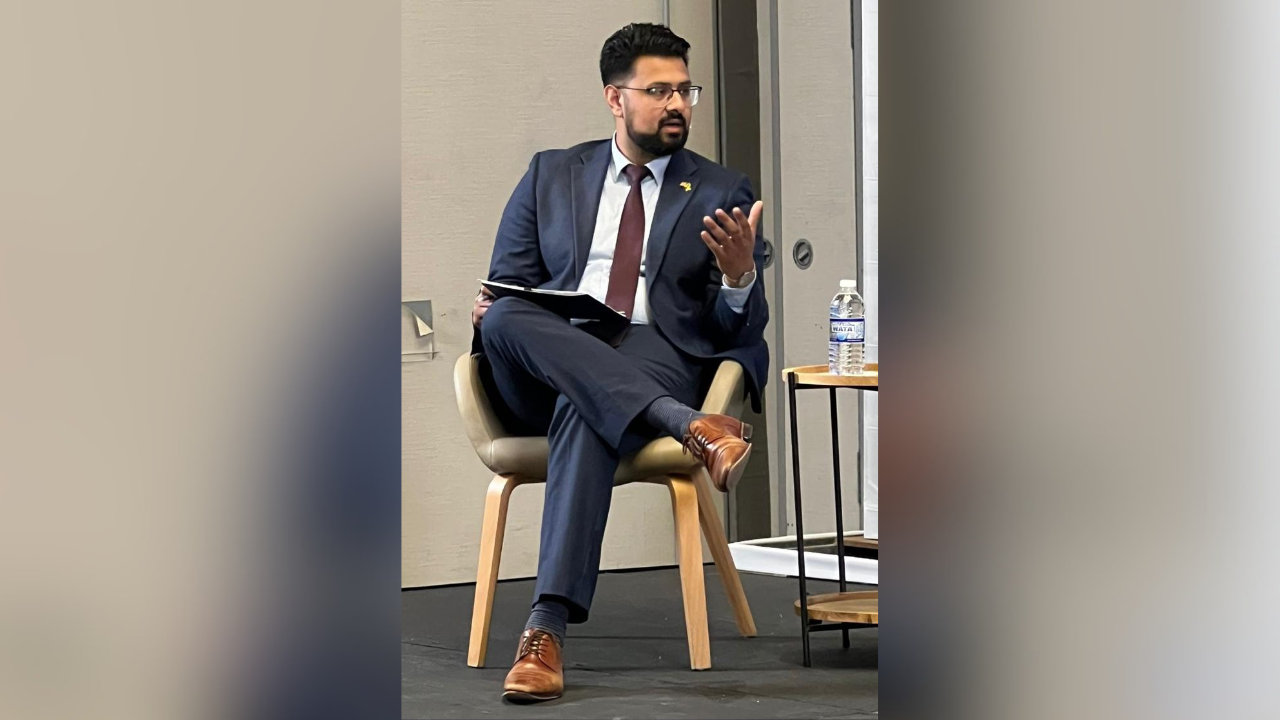
By Wazim Mowla
Advisor to the Embassy of Guyana in Washington DC and a Senior Fellow at Florida International University’s Jack D. Gordon School for Public Policy
Defense of Guyana’s sovereignty and territorial integrity is paramount to our national interests, our nationhood, and our right to development. Under President Irfaan Ali’s leadership, this has been front and center — from the strengthening of our defense capabilities to the speed at which we engage and secure support from international partners during moments of tension.
Despite these efforts, Venezuela’s unjust and egregious claims over two-thirds of our territory cannot be deterred solely via national policies. By virtue of the fact that a case currently sits at the International Court of Justice (ICJ) regarding the validity of the 1899 Arbitral Award that settled the border, Guyana has been calling on the international community to support this process.
This means that, at a minimum, there is an expectation that our regional partners not only vocally support the case at the ICJ but are quick to condemn efforts by Venezuela to undermine it. Most recently, Venezuela’s acting president undermined the ICJ process by wearing a lapel pin depicting a map of Venezuela that incorporates Guyana’s Essequibo region.
First, symbolism matters. The Venezuelan leader’s public display carries a weight that extends beyond photographs — particularly since this is the second such occasion, following appearances in Grenada and Barbados. On one hand, it emboldens the hardline Venezuelan elites and military officials who have historically posed threats to our border. On the other, Caribbean leaders who do not explicitly and publicly condemn its usage further incentivize its recurring use. As the saying goes: give someone an inch, and they’ll take a mile.
The Venezuelan leader’s movements are also widely covered in international media, given the significant attention Venezuela has attracted this year. Seeing such a map can create confusion among policymakers and potential investors who are not well-versed in the ICJ case or Venezuela’s posturing over the border dispute.
The severity of Venezuela’s claims over Essequibo therefore requires unambiguous support from regional partners and organizations. Ambiguity at this moment is not neutrality nor support but instead a failure to meet the occasion. CARICOM, as a regional grouping, will always be constrained by the need to find common ground among member states. But that should not deter individual members from making their own statements reaffirming support for Guyana and denouncing the public use of propaganda that undermines our sovereignty and territorial integrity.
Venezuela’s claims matter for neighboring Caribbean countries too. Venezuela’s threats could potentially impede our right to development–a development that benefits not just Guyanese but Caribbean citizens as well. This is not merely rhetoric. Since taking office, President Ali has taken national policies around energy, climate, and food security and adapted them for a regional context. President Ali’s plan to reduce CARICOM’s food import bill by 25 percent by 2030 is a prime example. Caribbean citizens, then, stand to miss out on the broader regional development that comes with Guyana’s rise.
Guyana has not asked for support from neighboring countries that would conflict with their own values. As small states in a volatile global system, we depend on adhering to and upholding international law to protect our shared values and rights.
The Caribbean is a shared region and one that has remained stable in a Western Hemisphere marked by instability for decades. Part of the reason has been a shared commitment to respecting international norms, upholding the rule of law, and condemning aggressive and illegal acts when they arise. That same commitment is being called upon now. Guyana’s territorial integrity is non-negotiable, and we expect our partners to say so, clearly and without hesitation.
*Wazim Mowla is an advisor to the Embassy of Guyana in Washington DC and is a Senior Fellow at Florida International University’s Jack D. Gordon School for Public Policy