Donald Trump’s recent behavior toward Iran reflects, above all, the clash of two different logics in foreign policy: on one hand, the logic of “pressure to compel negotiation,” pursued by Washington, and on the other, the logic of “rejecting negotiation under pressure,” which stands as a firmly established principle in the conduct of the Islamic Republic of Iran.
In this context, the key point is that Iran does not fundamentally reject negotiation; rather, it refuses a specific type of negotiation: a negotiation that takes shape in the shadow of threat, siege, and coercion. Past experience has shown that such negotiations not only yield no gains for Tehran but can also lead to the imposition of additional costs and even the weakening of the country’s strategic position.
In the recent episode, the imposition and continuation of the maritime siege by the United States can be analyzed precisely within this framework. This action is not merely a tool of economic or military pressure; it carries a clear political message: “Negotiate, but from a position of weakness.” In other words, Washington seeks to create conditions that place Iran before a binary choice: either accept negotiations under pressure, or bear mounting costs.
However, Tehran’s response to this equation has been predetermined. Iran has explicitly stated that as long as the maritime siege and simultaneous pressures persist, there will be no negotiations whatsoever. This position stems from a distinct doctrine in foreign policy; a doctrine grounded in the three principles of “Dignity, Wisdom, and Expediency.”
The principle of “Dignity” means that Iran refuses to be placed in a position where negotiation is interpreted as a sign of retreat or capitulation. In international relations, the manner of entering negotiations is as important as their outcome. If a country sits at the negotiating table from a position of weakness, the opposing side holds the upper hand from the very beginning and frames the dialogue to its own advantage.
The principle of “Wisdom” reflects the reality that any negotiation must be based on a precise cost-benefit calculation. A negotiation in which the opposing side simultaneously employs instruments of threat and pressure fundamentally lacks balance, and the likelihood of reaching a sustainable and balanced agreement is very low.
Finally, the principle of “Expediency” emphasizes the necessity of securing national interests. If entering a negotiation cannot yield tangible benefits for the country, or even leads to the weakening of its position, such a negotiation is fundamentally without justification.
With this framework, one can understand why Iran not only did not retreat in the face of recent American pressure but expressed its position more explicitly than before. This stance, in practice, disrupted the equation designed by Washington and confronted it with a strategic deadlock.
At this point, Donald Trump’s behavior once again reproduced the familiar pattern; a pattern that can be described as a combination of “maximum threats” and “retreat at the moment of decision.” In the initial days, he spoke in sharp and categorical terms about ending the ceasefire and attempted, by setting successive deadlines, to shape the psychological environment in his favor. The objective was clear: to drag Iran to the negotiating table by increasing pressure.
But when this pressure failed to yield results and Tehran refused to alter its position, Washington faced a difficult choice. Escalating tensions could bring consequences beyond its control—from disruptions in global energy markets to the expansion of the conflict’s scope in the region. In contrast, stepping back and extending the ceasefire, though politically costly, carried fewer risks.
The final choice was, once again, the latter option. This is precisely the point that analysts refer to with the phrase “Trump Always Chickens Out”; a pattern in which threats, rather than serving as a prelude to action, are treated as bargaining tools.
But the issue is not confined to Trump’s behavior alone. The more important point concerns the consequences of this pattern for the opposing side. When a country observes that standing firm against pressure ultimately leads the opposing side to retreat, it naturally gains greater motivation to continue this approach. This is the very cycle that can be clearly observed in Iran–US relations.
On the other hand, experience has shown that entering negotiations under pressure not only fails to secure concessions but can also result in a form of “political humiliation.” Under such conditions, the opposing side views the negotiation not as an equal process but as a tool to consolidate its own superiority. The result will be an agreement in which the balance is heavily skewed in favor of one side.
In reality, negotiations become meaningful when the two sides enjoy a minimum level of balance. This balance does not necessarily mean absolute equality of power, but it does mean that neither side can unilaterally impose its will on the other. In the absence of such a balance, what occurs is closer to “dictating terms” than genuine negotiation.
On this basis, Iran’s insistence on the removal of pressures prior to entering any dialogue is a strategic necessity. This stance is, in effect, an effort to restore a minimum level of balance to the equation; a balance without which any negotiation is doomed in advance to failure or inconclusiveness.
From a broader perspective, this confrontation also highlights the limitations of the “maximum pressure” policy. This policy rests on the assumption that increasing pressure will ultimately compel the opposing side to accept terms. But in practice, when the opposing side possesses a degree of resilience and deterrence, the result can be the opposite: more pressure, more resistance.
Under such conditions, continuing along this path not only fails to achieve the initial objectives but can also lead to the erosion of the credibility of threats. In international relations, credibility is one of the most important assets. If threats are repeated time and again without leading to concrete action, they gradually lose their effectiveness.
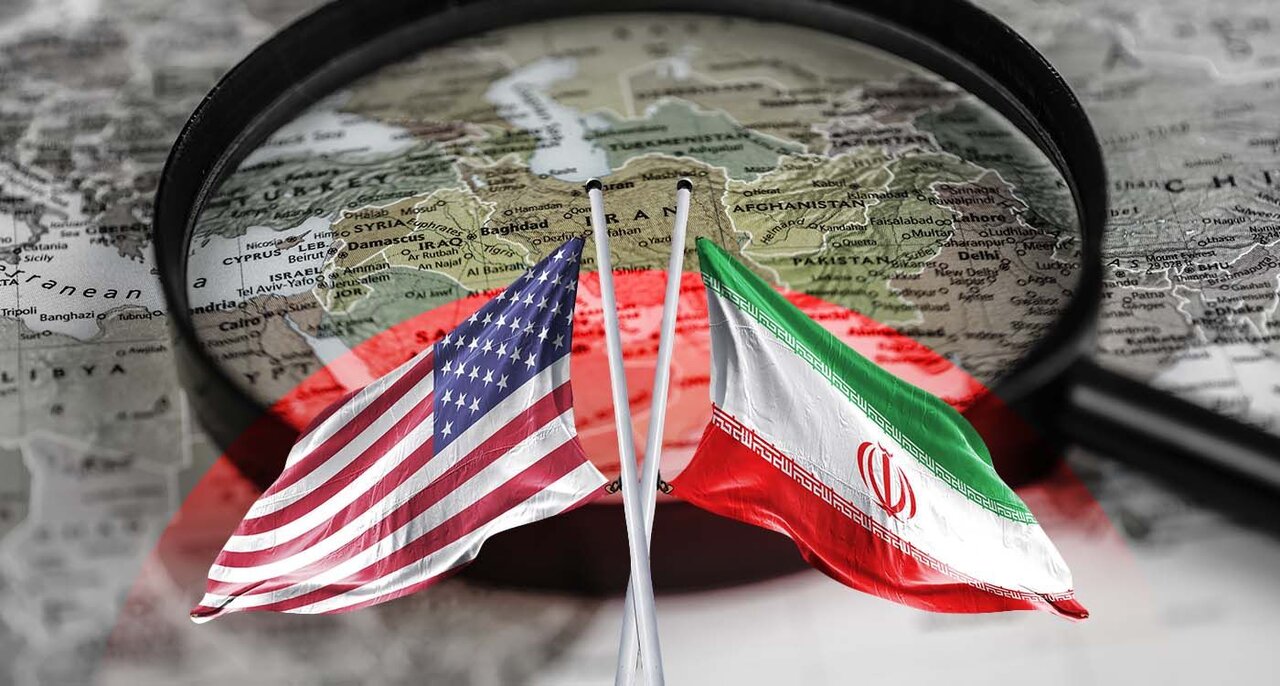
In sum, what has transpired between Iran and the United States in recent weeks is a manifestation of a deeper rift in the foreign-policy logics of the two sides. On one hand, an attempt to compel through pressure and threats; on the other, an insistence on the principle that negotiation is only meaningful when conducted from a position grounded in dignity, wisdom, and expediency.
In this context, experience has shown that whenever these principles have been disregarded, the result has been nothing but cost and humiliation. It is for this reason that Iran, at least under current circumstances, has clearly chosen its path: saying no to negotiation under pressure, and emphasizing the reality that any dialogue can only be meaningful when balance, mutual respect, and genuine interests are taken into account.
MNA