Shiloh Favreau is known as the tick person among his friends. And in the last couple of weeks, the calls have started coming in.
“It can be a really stressful moment when you realize you’ve been bitten by a tick,” he said. “The most important step, if you find a tick on you, is to remove it safely and as soon as possible.”
Favreau manages diagnostic services at the University of New Hampshire Extension. He said the lab, which tests ticks for pathogens, has seen a significant increase in submissions since the beginning of April – a normal uptick for this time of year.
“Tick season is well underway in New Hampshire,” he said. “Ticks become active when temperatures rise above 40 degrees.
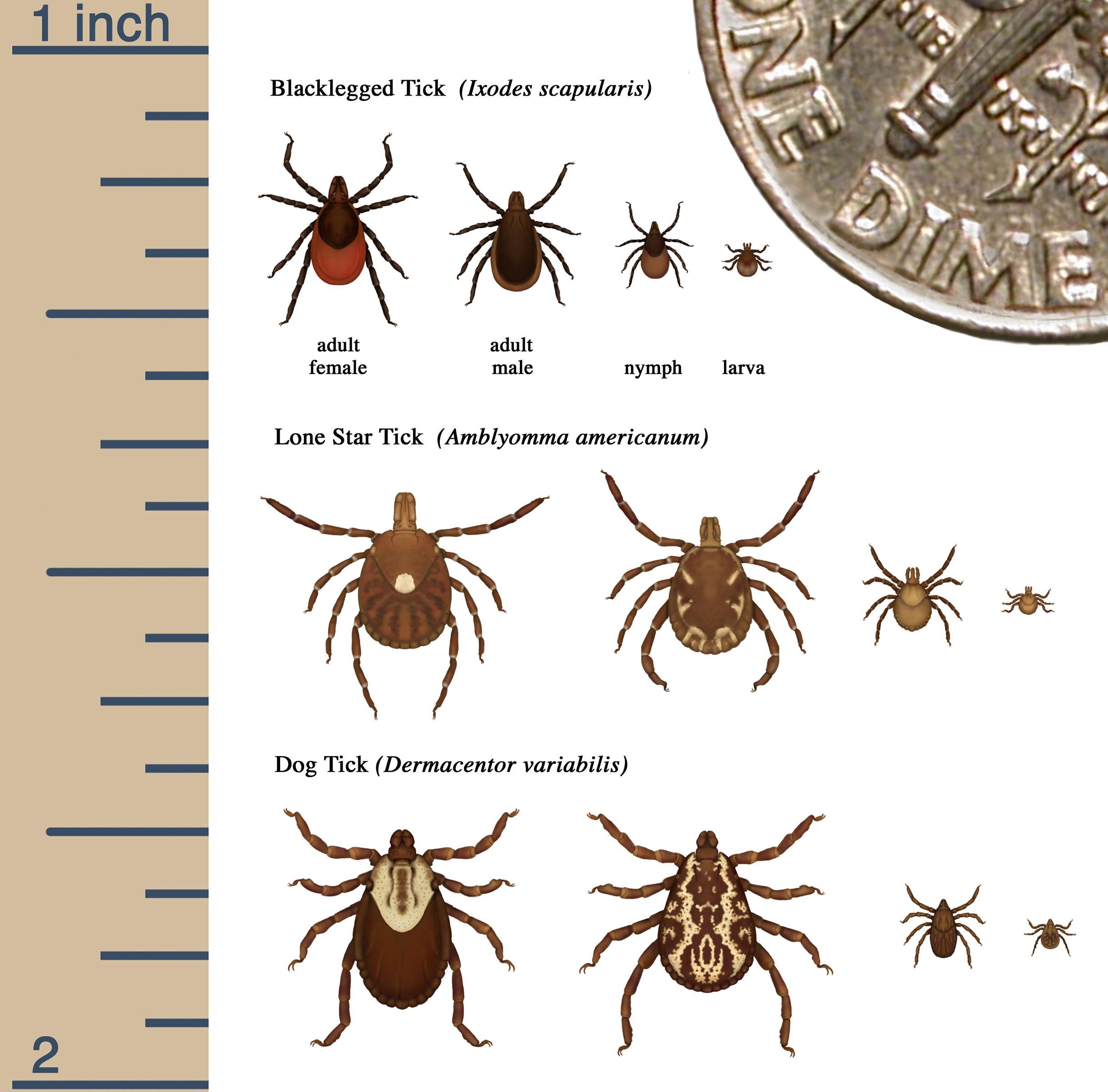
Tick identification chart from the CDC
As tick season gets underway, preventing bites becomes more important. Ticks don’t jump or fly – they crawl upwards. So wearing long pants, tucking pant legs into socks, and wearing light-colored clothing can help protect skin and make ticks more visible.
Narrow-nosed tweezers are good for removing ticks. And once you’ve removed a tick, Favreau said, it’s important to clean the bite with soap, water, and rubbing alcohol.
If you want to test the tick, put it in a Ziplock bag and send it to a lab. The UNH Extension tick testing lab and others, like the non-profit BeBop Labs, can test for pathogens such as the one that causes Lyme disease, which has increased in New Hampshire over the last forty years.
Kaitlyn Morse directs BeBop Labs. She said this time of year, she receives hundreds of ticks every week.
“The most important thing is doing your tick checks…and using the appropriate pesticides on your clothing,” she said.
Blacklegged ticks, which are smaller than dog ticks, can be harder to spot, but they are the predominant carriers of disease, Morse said. Those ticks are about the size of a sesame seed, and young ticks are about the size of a poppy seed.
Research from Dartmouth shows half of adult blacklegged ticks in the Northeast carry the bacteria that cause Lyme disease, according to data going back to 1989.
These articles are being shared by partners in The Granite State News Collaborative. For more information, visit collaborativenh.org.