AYV News, April 17, 2026
The Ministry of the Environment and Climate Change (MOECC), with funding from the European Union (EU) and Technical Support from the Food and Agriculture Organisation (FAO), is preparing to roll out the data collection exercise on mangroves around the Western Area, Part of the North-East and Southern Regions, as part of the National Forest Inventory Programme.
The “Support to Sustainable Forestry in Sierra Leone” is a collaborative project that aims to contribute to the Sustainable Development Goals in Sierra Leone and FAO’s Country Programming Framework by improving forest and land-use change information at the national and sub-national levels.
The information generated through this project is expected to support informed policy decisions, strengthen sustainable forest resource management, and improve the country’s capacity to understand forest cover dynamics and related changes.
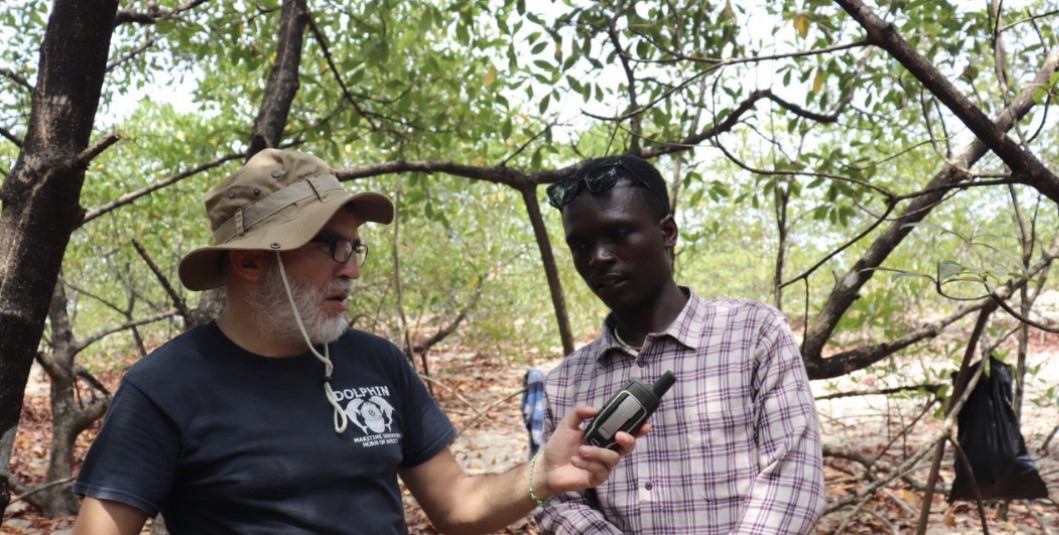
As part of the preparation for the mangrove data collection, the Ministry and FAO conducted a five-day mangrove-focused training to prepare participants to understand mangrove dynamics, organise fieldwork under challenging site conditions, apply the mangrove-specific cluster and plot procedures correctly, and carry out measurements consistently and safely.
According to Madam Kate Karemo-Garnett, Director of Forestry, the training aims to prepare the Sierra Leone NFI teams for the forthcoming mangrove inventory campaign by focusing on the specific technical and operational requirements of mangrove assessment.
She further stated that the training will strengthen their understanding of the mangrove-specific inventory approach, improve field readiness for accurate, safe, and consistent data collection, and prepare the teams for effective implementation of the mangrove campaign.
During the training, NFI International Experts, Anibal Cuchietti, Falgoonee Kumar Mondal, and Salis Antonello, together with National Expert, Dr Anthony Lamine-Samu, stressed the need for accurate data collection, noting that the outcome of the NFI exercise would inform policy decisions.
They further discussed issues around mangrove design and field set-up: differences between mangrove/swamp and upland clusters, line cluster versus L-shape, plot design, sub-plots, DBH thresholds, and review of relevant manual sections.
Also, they looked at measurement practice and safety: plot establishment in watery conditions, difficult stems, repeatable DBH decisions, species identification challenges, safety precautions, tide considerations, and key dos and don’ts.
After the training, the Ministry of the Environment and Climate Change is expected to deploy these data collectors in mangrove areas to collect mangrove-specific data for the National Forest Inventory.