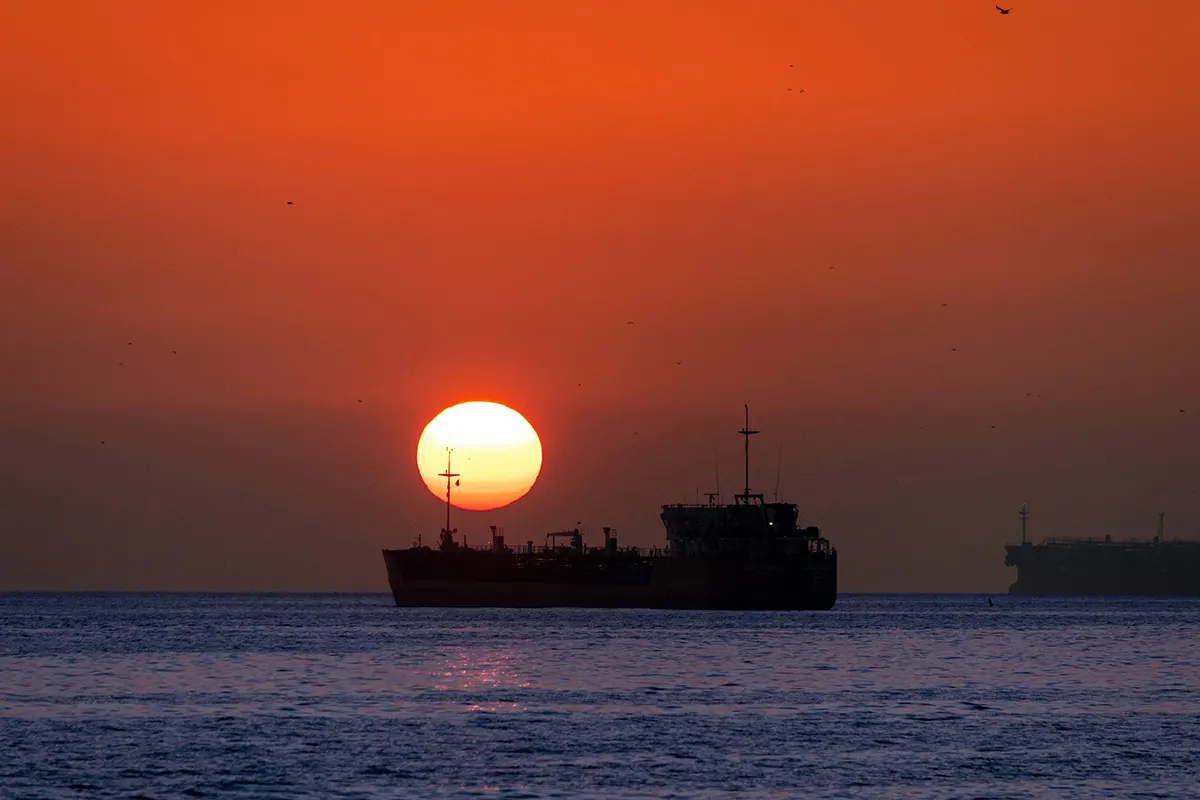
The U.S. Department of the Treasury has issued a new temporary waiver permitting the sale and transport of sanctioned Russian oil currently stranded at sea. The objective of this move is to stabilize global energy markets, which have been rattled by the ongoing conflict in the Middle East.
Issued on Friday (local time), this license authorizes countries to purchase Russian crude oil and petroleum products that were loaded onto vessels by April 17. This authorization remains valid until May 16. It replaces a previous 30-day waiver, the deadline for which expired on April 11.
However, strict restrictions regarding transactions involving Iran, Cuba, and North Korea remain in force under this waiver. This development follows remarks made on Wednesday (local time) by U.S. Deputy Treasury Secretary Scott Bassent, who had stated that the U.S. would not renew the general license that previously permitted limited transactions involving Russian and Iranian oil amidst ongoing geopolitical tensions. Speaking at a media briefing, Bassent said, “We will not be renewing the general license for Russian oil and Iranian oil. That was oil that was on the water prior to March 11. All of that has been consumed.”
According to Al Jazeera, Kirill Dmitriev, an envoy for the Russian President, had previously stated that the initial waiver could free up approximately 100 million barrels of crude oil—an amount roughly equivalent to one day’s worth of global oil production. This decision has drawn criticism from some Western leaders.
As reported by Al Jazeera, Ursula von der Leyen had previously expressed concern that such waivers could undermine the sanctions designed to curtail Russia’s revenue sources linked to its war in Ukraine.
According to CNN, oil markets witnessed significant volatility after Iran’s Foreign Minister announced that the Strait of Hormuz would remain open to all commercial vessels during the ceasefire period. Brent crude fell by more than 9 percent to $90.38 per barrel, marking its lowest level since March 10.
Meanwhile, Iran has asserted that Tehran will maintain strict control over maritime traffic through the Strait of Hormuz. Iran stated that, amidst escalating tensions with the U.S. regarding regional security and dialogue, passage through this route will be permitted only via designated channels and subject to Iran’s prior approval.
Iranian Parliament Speaker Mohammad Bagher Ghalibaf stated: “Passage through the Strait of Hormuz shall be conducted based on ‘designated routes’ and with ‘Iranian permission.’ Whether the Strait remains open or closed—and the regulations governing it—will be determined on the ground, not on social media.”
Conversely, U.S. President Donald Trump stated on Friday (local time) that no agreement with Iran would be considered fully binding until it has been completely finalized. However, he also claimed significant diplomatic and security breakthroughs involving Tehran, Israel, and Lebanon.
Speaking on ongoing developments in West Asia at the ‘Turning Point USA’ event in Phoenix, Arizona, Trump remarked: “This will be a truly magnificent and wonderful day for the world, as Iran has just announced that the Strait of Hormuz is fully open and ready for trade and unrestricted transit.”
“However, the naval blockade—executed by the world’s largest navy, itself a component of the greatest military force in history—was established by us. We built it during my first term. With regard to Iran, we will maintain our full strength and leverage until our dealings with Iran are 100 percent concluded and fully signed.”