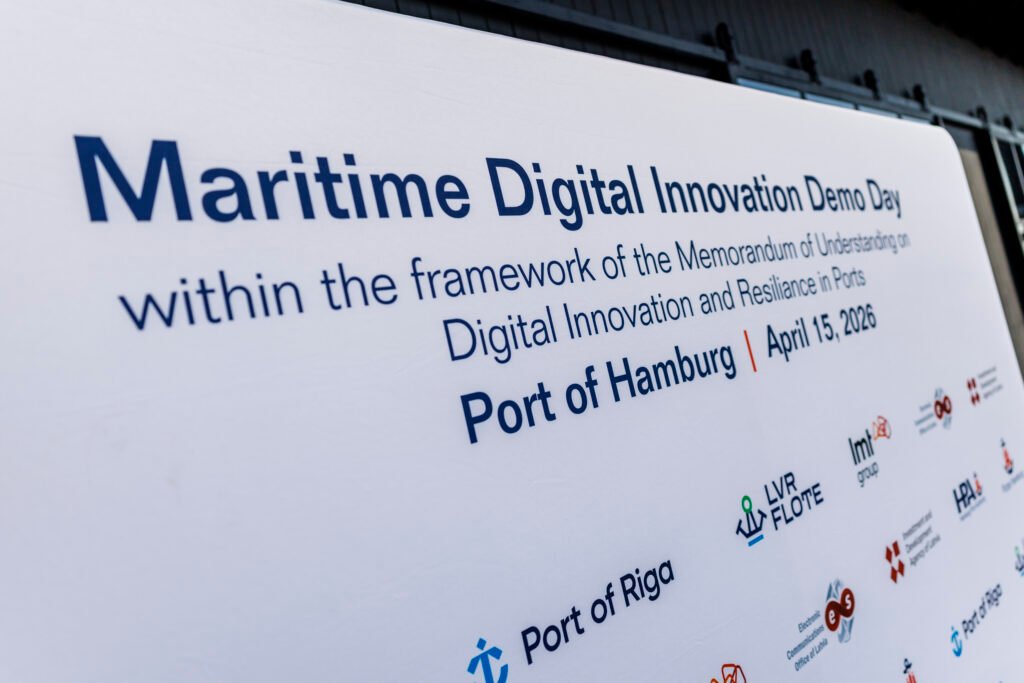
On April 15, 2026, at the Germany–Latvia Ports Days in Hamburg, LMT Group demonstrated a new solution for monitoring port equipment activity and estimating greenhouse gas (GHG) emissions using video analytics and vision-language models. At the demonstration, video feeds from the port territory were analyzed using computer vision to identify vehicle and other equipment movements. The information was then used to objectively estimate related emissions and to generate time-stamped data to evaluate port efficiency.
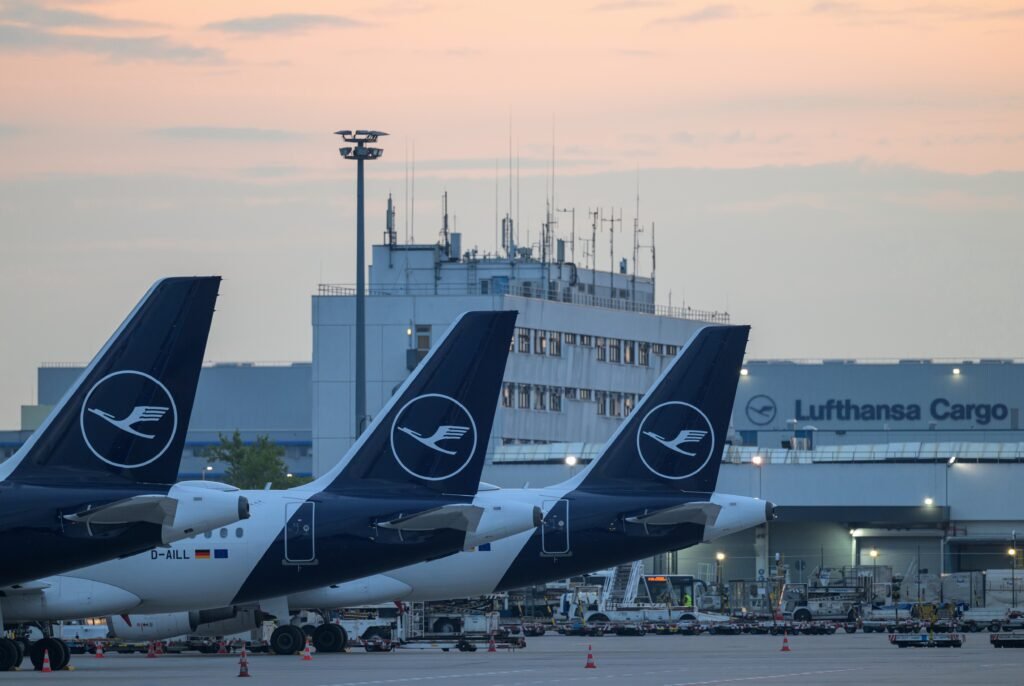
With port CO2 neutrality now a legal mandate in Europe, the maritime sector has entered a high-stakes era of compliance. As of 2026, shipping lines are responsible for ‘paying’ the EU for 70% of their carbon footprint, including previously unregulated gases like methane and nitrous oxide. While infrastructure upgrades are underway across the continent, they must be supported by precise data to be effective. LMT’s solution gives ports clearer insight into emissions from different greenhouse gases, helping them respond to increasingly complex regulatory requirements. The company has already developed a similar approach for airport environments, but this is a new application for the port sector.
LMT’s computer vision solution uses artificial intelligence to analyze real-time video from the port territory, recognizing vehicles, machinery, and operational activities. The video footage is then further analyzed to identify moving equipment in the port area, measure activity duration and intensity, link that information with emissions data, and create reports. As a result, ports can understand where emissions are generated, which equipment is used most heavily, and what should be optimized to move towards climate-neutral operations.
Unlike traditional computer vision, which relies on predefined datasets, this solution uses vision-language models that enable the system to interpret unstructured visual data and adapt to new environmental conditions without retraining.
“By leveraging vision-language models, we’ve moved beyond the rigid training requirements of traditional computer vision. This approach allows us to adapt instantly to new variables – like a new vehicle type entering a terminal – while maintaining a strict ‘privacy-by-design’ framework. We aren’t identifying people or license plates; we are analyzing visual characteristics to drive port efficiency without ever compromising individual anonymity,” Kārlis Kalniņš, Computer Vision & Edge AI Product Owner at LMT Group.
The solution was demonstrated during the Germany–Latvia Ports Days in Hamburg, marking a longstanding innovation partnership between the two countries. In June 2025, Latvian and German public and private-sector partners signed a Memorandum of Understanding on Digital Innovation and Resilience in Ports (MoU) to promote cooperation and digital innovation in maritime technologies. The MoU was signed by the Port of Riga, the Hamburg Port Authority, LVR Flote, Flotte Hamburg GmbH & Co. KG, LMT Group, and the Electronic Communications Office of Latvia.
“Today’s demonstrations clearly illustrate the potential of data-driven technologies to support the transformation of ports toward greater sustainability. For Flotte Hamburg, it is clear that the path to climate neutrality requires not only investments in infrastructure, but also precise and reliable data as a basis for decision-making. Innovative approaches like this can make a significant contribution to improving both efficiency and environmental performance in port operations,” Karsten Schönewald, Managing Director of Flotte Hamburg.
LMT Group has developed a wide range of connectivity solutions for the maritime industry. Those include a method for providing 5G connectivity offshore and in open waters based on a unique multi-hop principle, and a private 5G network customized for the needs of port infrastructure, which is currently operational at the Baltic Container Terminal in Freeport of Riga and is being tested in several European ports.