Estonia is seeking to delay the European Union’s pay transparency directive by two years and rewrite its terms, even though the country still has one of the widest gender pay gaps in the bloc; ministers say the rules would burden businesses with red tape, while opponents say the government is sacrificing principle for convenience.
By 7 June 2026, Estonia is due to transpose the EU’s Pay Transparency Directive into national law. The directive, formally adopted in 2023, is designed to narrow gender pay gaps across the bloc by forcing greater openness around salaries and requiring employers to investigate unjustified disparities.
But rather than pressing ahead, Tallinn now wants Brussels to delay the deadline and revisit the legislation altogether.
The government’s argument is straightforward: the principle of equal pay is not in dispute, ministers insist, but the mechanism chosen by the EU is too burdensome for employers and out of step with the European Commission’s newer emphasis on competitiveness and deregulation.
Erkki Keldo, Estonia’s minister of economic affairs and industry, said the government’s objection lay not in the goal of reducing the gender pay gap, but in the method prescribed by the directive.
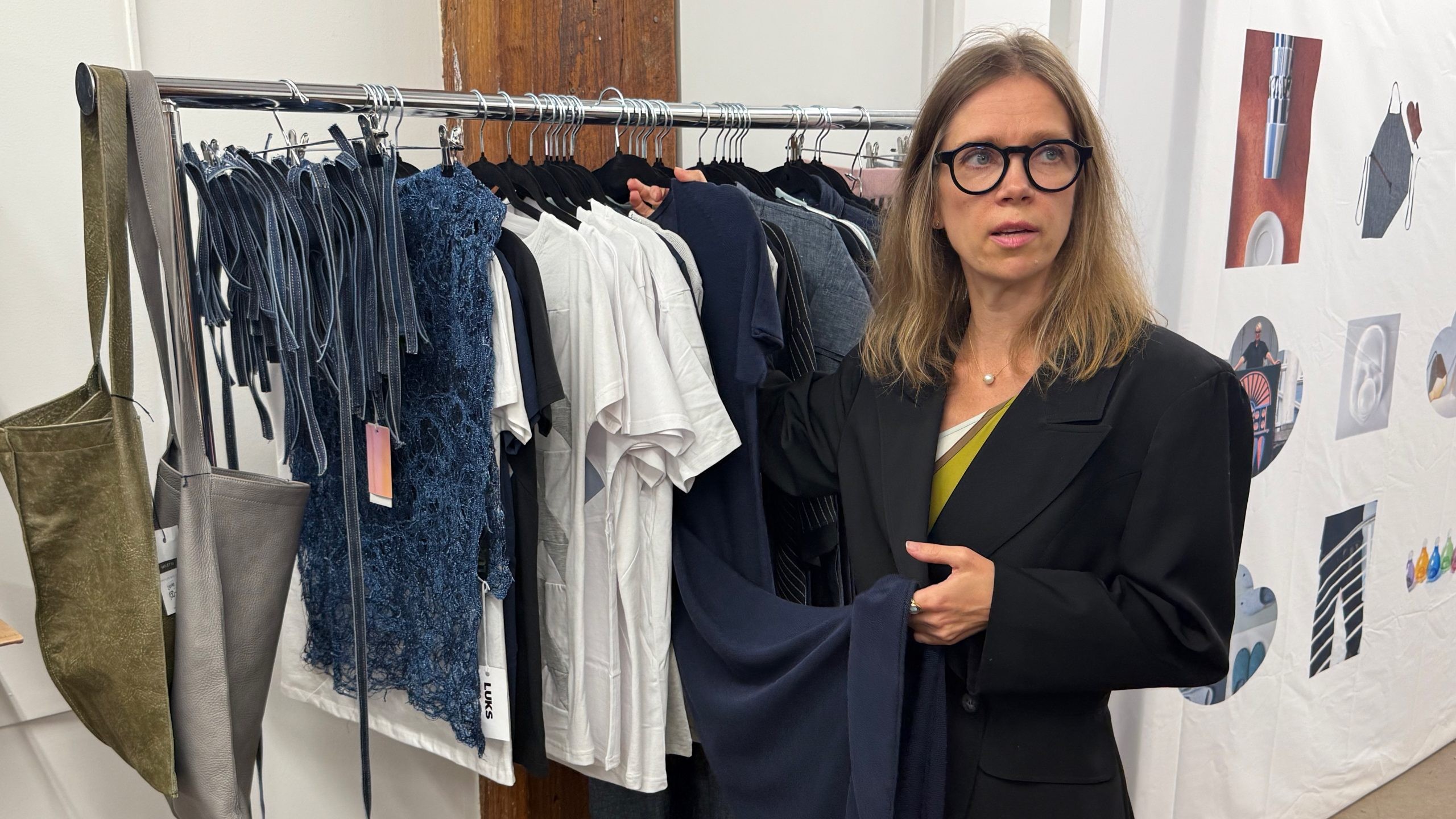
Estonia’s economy minister, Erkki Keldo, says Tallinn wants to delay the EU’s pay transparency directive and reopen its terms. Photo: Facebook.
“For us, the fundamental problem is the way the directive provides for pay transparency – unfortunately, it increases the administrative burden on businesses,” Keldo said. Estonia, he added, wanted to strengthen competitiveness and cut reporting requirements, not add to them.
A directive aimed at closing the gap
Under the directive, employers would be required to disclose salary ranges in job adverts or before the first interview. They would also be barred from asking applicants about their previous pay – a provision intended to stop workers, especially women, from being penalised by historically lower salaries.
Companies would also face tougher obligations once disparities emerge. If the average pay gap between men and women doing work of equal value exceeds five per cent and cannot be objectively justified – for example by education or experience – employers would have to carry out a joint pay assessment with employee representatives and remedy the imbalance. Larger companies would also need more structured pay frameworks.
For supporters, these are long-overdue corrections. For the government, they are a bureaucratic thicket.
Women at work in an office – Estonia is seeking to delay the EU’s pay transparency directive despite its wide gender pay gap. The image is illustrative. Photo by CoWomen on Unsplash.
Keldo said Estonia had already raised the issue both domestically and at EU level. He has met the relevant European commissioner and said he would follow up in writing, with the immediate aim of securing a postponement of at least a few years. Only then, in the government’s preferred scenario, would the directive be reopened and redrafted.
He has also signalled that Estonia may be prepared to accept the consequences if Brussels refuses.
“If the situation were genuinely to lead to fines, the amount would be difficult to predict,” Keldo said. “But it would certainly be smaller than the cost of transposing the directive in its current form.”
That remark – effectively suggesting that fines might be cheaper than compliance – has handed critics an easy line of attack.
Critics say Tallinn is abandoning principle for convenience
Karin Paulus, president of the women’s association of the Social Democratic Party, dismissed the government’s talk of excessive red tape as unconvincing and politically convenient. In her view, it is less a serious economic argument than a gesture towards influential employer lobby groups ahead of elections.
“Anyone with even basic computer skills would not find this a major extra burden,” she said. “To my mind, this is a move away from Europe’s shared values.”
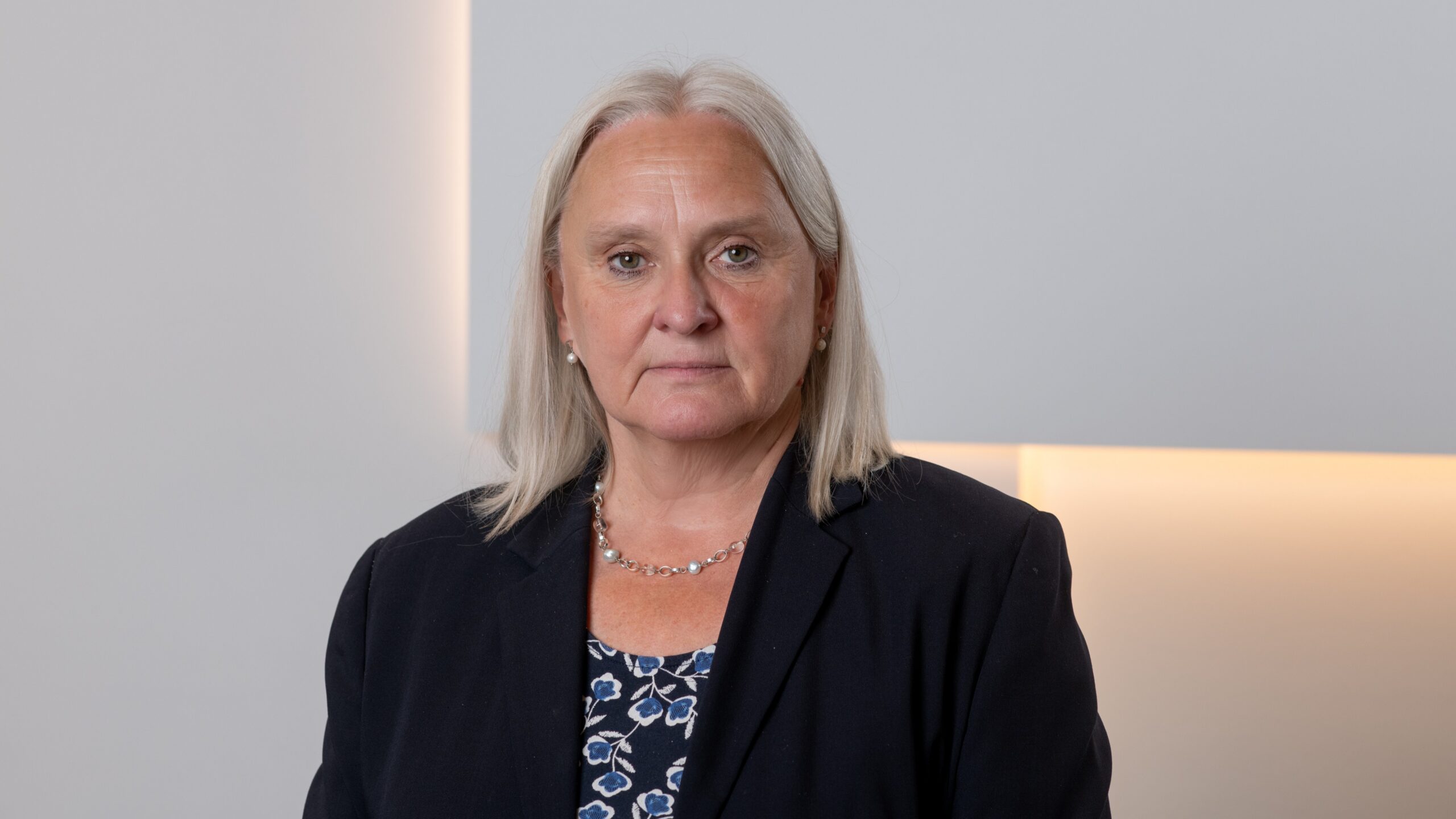
Karin Paulus, head of the Social Democratic women’s association, has criticised the government’s attempt to postpone the EU’s pay transparency rules. Photo: Facebook.
Paulus argued that Estonia’s weak trade union culture leaves workers particularly exposed in pay negotiations. In such a setting, she said, transparency is not an ideological luxury but a necessary correction in a labour market where employers often hold the stronger hand. The directive, she suggested, would help end a situation in which companies can benefit from employees knowing too little about what others are paid.
The row touches a sensitive nerve in Estonia, which continues to record one of the widest gender pay gaps in the European Union. Critics say that makes the government’s stance politically awkward as well as morally fraught.
Lauri Läänemets, leader of the Social Democrats, said the [governing] Reform Party was retreating from European values “in great strides”. Lower pay for women, he noted, means not only smaller salaries today, but lower pensions, lower sickness benefits and greater long-term insecurity. In a country where women still tend to shoulder more childcare responsibilities, he argued, such inequality has broader social consequences.
“A significant shift in itself is that the Reform Party would rather waste taxpayers’ money on fines than stand up for more equal opportunities for women,” he said, effectively accusing the government of preferring to spend public money on penalties rather than back fairer pay.
Divisions inside the government
Yet the government is not speaking with one voice.
Margus Tsahkna, the foreign minister and a leading figure in Eesti 200, Reform Party’s coalition partner, took a far sharper line, describing the directive as “ideological” and over-regulatory. Speaking at the government’s press conference, he praised Keldo and the cabinet for taking a firm stand against what he portrayed as a Brussels-driven command-and-control measure.
The Estonian foreign minister, Margus Tsahkna has described the EU pay transparency directive as ideological and overly prescriptive. Photo by the Estonian foreign ministry.
“This is one of those very concrete cases where we must say that what comes from Brussels does not suit us,” Tsahkna said. He went further still, suggesting the directive was bound up with European social democratic politics and might do more to suffocate entrepreneurship than to improve fairness.
That rhetoric, however, exposed tensions within his own party.
Kristina Kallas, the chair of Eesti 200 and Estonia’s education minister, later struck a notably different note, arguing that Estonia should in fact adopt those parts of the directive that would genuinely help reduce unjustified pay gaps. She pointed to the ban on asking applicants about previous salaries and to the requirement to publish salary figures in job adverts – both measures she described as reasonable and necessary.
“Estonia’s gender pay gap is among the largest in the European Union and has not changed significantly in recent years,” Kallas said. “The gender pay gap is an indicator of weakness in our economy, not strength.”
Kristina Kallas, the chair of Eesti 200 and Estonia’s education minister, says key parts of the EU pay transparency directive should still be adopted. Photo by Estonia 200.
Kallas also suggested that ministers may be overstating the compliance burden. Much of the necessary data, she argued, can already be produced from Estonia’s digital systems with relatively little effort, and the country has already met several related requirements concerning monitoring and complaints mechanisms.
Her intervention hinted at a more pragmatic line emerging within government – not wholesale rejection of the directive, but an attempt to negotiate changes around the margins while preserving its core equal-pay provisions.
A political gamble with European consequences
Sweden’s position has offered Tallinn some political cover. Keldo noted that Stockholm, too, wants the directive reopened and its requirements softened, though he conceded that Sweden differs from Estonia in one important respect: gender equality issues are already far more firmly embedded in Swedish domestic pay arrangements.
The employers’ side has nevertheless rallied behind the government. Ain Käpp, head of the Estonian Employers’ Confederation, said that while the organisation supported the general aim of equal treatment, the practical challenge of determining when different jobs are truly of equal value becomes formidable in larger firms. Once the rules begin to bite at companies with 100 employees or more, he said, the administrative impact could spread widely across the economy.
Estonia’s gender pay gap by economic activity, 2023–2024. Chart by Statistics Estonia.
Others are unconvinced that softer approaches will work. Christian Veske, Estonia’s gender equality and equal treatment commissioner, has argued that talking alone is not enough. Sometimes, he said, countries must be willing to take the next step.
That Estonia’s government did not inform Veske in advance of its plans has only sharpened criticism. To opponents, it suggests not merely an administrative omission but a deeper political message: that equality policy is slipping down the government’s list of priorities.
For now, Estonia appears set on testing Brussels’ appetite for compromise. The government hopes that a European Commission more attuned to deregulation and business competitiveness may prove receptive to delay and revision.
But the gamble is a bold one. If the Commission refuses to budge, Estonia could find itself caught between legal obligation, political embarrassment and the very fines ministers have already suggested they may prefer to pay.
And beneath the procedural wrangling lies a more uncomfortable question: whether a country with one of Europe’s widest gender pay gaps can credibly argue that now is the moment to slow down.
Read also: Liina Laas: Estonia’s shameful resistance to pay transparency