Essex Community Players has never been known for producing edgy or avant-garde plays. Since its founding in 1958, the nonprofit theater company has been more Godspell and It’s a Wonderful Life than The Book of Mormon and Hedwig and the Angry Inch.
Still, when Patrick Cope of South Burlington decided last June to pitch The Rocky Horror Show as the group’s spring 2026 production, he assumed that the musical’s gender-fluid themes and transgressive sexuality wouldn’t get anyone’s fishnet stockings in a twist.
He was wrong, and local audiences never got to see Dr. Frank-N-Furter and his motley crew of gender-nonconforming aliens “shiver with antici … pation.” By the first week of April, The Rocky Horror Show had been canceled, four of the Players’ nine board members had resigned, and Essex Police were investigating threatening texts sent anonymously to members of the board and production team. The all-volunteer nonprofit theater company was out more than $11,500 in expenses, which it won’t be able to recoup through ticket sales and concessions for shows that were supposed to run from April 17 through May 2 in Essex Junction’s Memorial Hall.
Who expected so much drama from a beloved musical comedy that’s all about sexual liberation, queer identity and raucous fun?
For the uninitiated, The Rocky Horror Show is a satirical blend of 1950s sci-fi B-movie and ’70s glam rock. Richard O’Brien’s 1973 cult-classic stage show and the 1975 film it inspired, The Rocky Horror Picture Show, follow the travails of Brad Majors and Janet Weiss, a wholesome and naïve couple whose car breaks down during a rainstorm. Newly engaged, the pair chance upon the mansion of Dr. Frank-N-Furter, an alien scientist and “sweet transvestite from Transsexual, Transylvania” who’s built his ideal male specimen, Rocky, in a laboratory. Frothy sexual antics, acts of betrayal and cartoonish violence ensue, as do rousing song-and-dance numbers.
The Rocky Horror Picture Show boasts the longest-running theatrical release in movie history, largely due to its worldwide cult following. Fans, many of whom have seen it hundreds of times, attend screenings in costume, sing and dance to the music, participate with props, and call back to the characters on-screen. And despite some outdated language and gender stereotypes, the movie and play remain cornerstones of queer culture.
All of which make Rocky Horror an odd choice for the Essex theater company, especially given that it hasn’t put on a musical in years. But according to Cope — who was both the company’s board president and the show’s director — Rocky Horror was chosen only after a planned production of Murder on the Orient Express had to be shelved because Vermont Stage got the rights to it first.
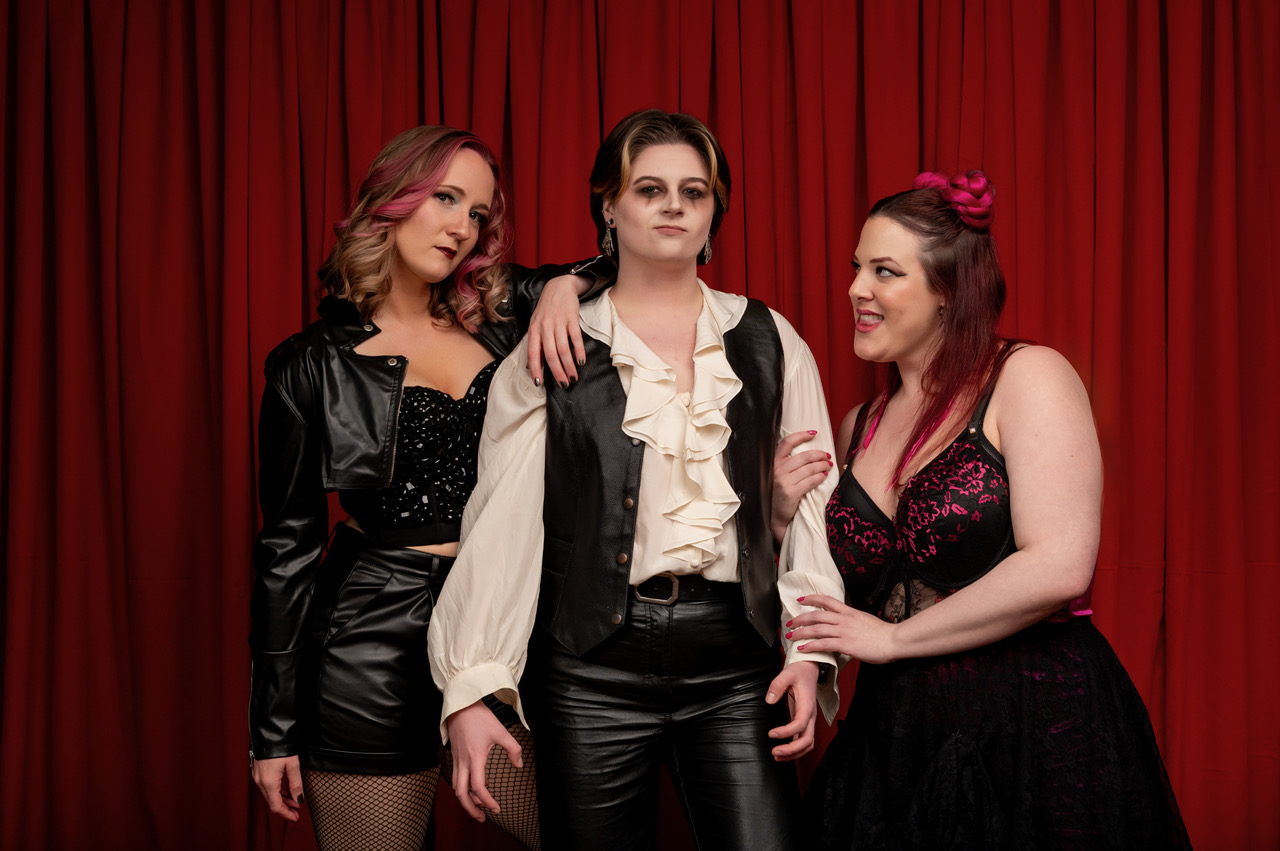
Members of the Essex Community Players’ ‘The Rocky Horror Show’ cast perform at Winter Is a Drag Ball Credit: Anne Lattrell
Putting on Rocky Horror was also part of a larger effort to infuse new life into the theater company. According to people familiar with it, Essex Community Players has struggled in recent years to attract volunteers and audiences, which skew older and have dwindled, especially since the pandemic. Moreover, there were reportedly tensions between younger and older board members, the latter of whom have served for decades in some cases.
Almost none of the cast and crew would discuss the Rocky controversy on the record, citing the anonymous threats and the police investigation. Said one former cast member, “We all just want to put this ugly shit behind us.” Nevertheless, conversations with eight people associated with the Players, as well as provided texts, emails and board minutes, painted a picture of the doomed production.
Rocky Horror’s rockiness began during casting in mid-December when Cope and executive producer Jane Healy — the board’s vice president — published audition notices that promised “gender-blind casting.” Actors would be considered for roles regardless of whether their gender matched the characters’. Ultimately, all those who were cast were female, trans and/or nonbinary.
“With Rocky, I cast someone who is female-presenting and uses she/her pronouns,” Cope said. “I wanted to make that character a girl. That didn’t seem like much of a controversial idea.”
Evidently, the decision didn’t sit well with some board members. According to the minutes of a January 12 board meeting, several expressed concern that the changes could result in a cease-and-desist order, financial penalties and even blacklisting by Concord Theatricals, the New York City company that licenses the show. Board member Billie Hall described the change to Rocky’s gender as “disrespectful.”
It’s not known who told Concord about the script changes; Cope said he doubts anyone in the cast did. But in mid-March, board treasurer Don MacKechnie received a letter from Concord reminding the theater company of its contractual obligation not to make changes to the script or characters, including their genders and pronouns. MacKechnie, a longtime board member, didn’t respond to a Seven Days interview request.
Cope was disappointed with Concord’s stance. “I think there’s something fun about the fact that Frank-n-Furter’s ideal version of a man is actually a woman,” he said. “We could have had a lot of fun with that.”
After some back-and-forth with Concord, the production team agreed to portray Rocky as male, even if the actor playing him was not.
Meanwhile, the show was plagued with other problems. Neither Cope nor Healy had ever put on a musical, and Cope had only one previous directing credit. According to him, their inexperience resulted in miscalculations in managing time and money.
Actors, many of whom covered expenses out of their own pockets, complained about unproductive rehearsals that weren’t keeping pace with the show’s tight schedule. When the production team realized that the Players didn’t own body microphones to accommodate a performance with a live band, they had to ask the board for more money. Several cast and crew members left the show, resulting in a scramble to fill positions in makeup, costuming and choreography.
Kara Raynoha as Eddie and Kyla Paul as Columbia Credit: Courtesy of Jenn Adams
Then things got weird. On March 30, musical director Kenny Grenier and board member Holly Biracree received text messages from someone claiming to be Billie Davis, senior vice president of amateur licensing and compliance at Concord. The texts warned that if the script wasn’t performed exactly as written and Rocky wasn’t recast with a male actor, Concord would revoke the Players’ rights to the show. Another text got eerily personal: “Patrick and Kenny need to be gone.” A spokesperson for Concord confirmed to Seven Days that those texts didn’t come from its staff and has referred the matter to its legal department.
The Players’ board called an emergency meeting on April 1. Because of the text messages’ suspicious content, Cope and Healy forwarded them to the Essex Police Department, which opened an investigation.
The following morning, the production team received another text that read: “I’m part of the cast and I heard you guys went to the police. Well Patrick and Kenny need to go. They are weak human beings.” When Cope confronted the cast, no one stepped forward to confess and many were offended by the insinuation.
Then came an even more ominous text: “Oh just you wait for rehearsal tonight. It’s coming and you deserve it.” At that point, the production team and board agreed that the situation had become untenable and pulled the plug.
No one interviewed for this story believes that the threats, which came from spoofed, out-of-state phone numbers, were aimed at Vermont’s LGBTQ community, as some have suggested on social media.
“They seemed very personal in nature,” said Cope, who has since resigned from the board. “It seems like they just wanted to get the show canceled, which is such a shitty thing.”
Healy, who joined Essex Community Players in February 2024 and has been involved in every production since, also resigned as board vice president. She declined to discuss the controversy but lamented the harm it’s done to the volunteers who put in long hours learning the script, music and choreography.
“They were a wonderful cast. They were so extremely talented,” she said. “I really wish it could have come to fruition but … it was not a safe environment for anybody to continue.”
Healy also noted that the production had planned to sell 600 bags of Rocky Horror props at the shows, with the expected $3,500 in proceeds to be donated to Pride Center of Vermont. Members of the cast have since launched an online fundraiser to recoup that money.
For now, it’s unclear whether the Essex cast will ever perform The Rocky Horror Show before a live audience. As the line goes in the song “Time Warp,” madness takes its toll.