Assam has developed a sophisticated caste-denial — not the violent, explicit untouchability of other regions, but a quieter erasure that works through silence, through symbolic gestures, through the claim that ethnicity has replaced hierarchy. The 2026 elections are a test of whether that erasure will continue.
Though there is an increase in the number of Scheduled Caste (SC) reserved seats in the Assam Legislative Assembly from 8 to 9 for the 2026 elections, can we find any space for Dalit politicians or leaders to raise the community’s concerns in Assam politics?
Even if we forget about the larger, visible politics, can we see communities raising their concerns in private life within state politics?
The answer remains in a bizarre state of not even recognising that caste exists, and, in a most convenient way, remains silent on the voices of Dalits in Assam.
During our recent visit by AIISCA_Assam (All India Independent Scheduled Castes Association) to Jorhat, we witnessed the repercussions of inter-caste marriages in the villages, which isolated the family from participating in hokam (community rituals) to invite guests to bestow blessings on the newlywed couple and the family.
The bride, who comes from the Kaibartta (one of the prominent SC groups in Assam), married an OBC man, only to find some respite when a handful of media intervened in the case.
The gaonbura was adamant in pressurising the groom’s family to abandon the couple, as they violated the caste norms of limiting endogamy practices in their society. Which is this society? Can we identify this society without any ill practices of caste hierarchy, even when located within Assamese society?
This is no inaccessible case of caste atrocity, but rather cases that find no concern or are pushed out from any further discussion.
Similarly, growing up in a Bengali caste society in Assam, I can attest to the omnipresence of caste division in the mentality of my neighbours in Guwahati city, which no ethnic identity can save them from.
The cases of both regions are similar: if the Bengali caste society denies its existence, then the case of Assam reinforces the popular assumption of no rigid caste system.
In the case of the Northeast, especially in Assam, as understood, politics lies in ethnic division; linguistic division is the only measuring tape to decide who can have a political voice.
Does that mean all the 16 SC communities in Assam — Bansphor, Bhuinmali (Mali), Brittial Bania (Bania), Dhupi (Dhobi), Dugla (Dholi), Hira, Jalkeot, Jhalo (Malo/Jhalo-Malo), Kaibartta (Jaliya), Lalbegi, Mahara, Mehtar (Bhangi), Muchi (Rishi), Namasudra, Patni, and Sutradhar — are availing all the possible benefits?
I am not even comparing them to the average Brahmin class, but rather to the mostly land-holding middle-caste society, who might be performing rituals of purity and pollution in their day-to-day life activities, and suppressing the voices of “ex-untouchables” from ownership of resources — here, in the case of politics and political leadership in Assam.
Are there any political parties that will intervene in these issues? Not to mention, the ruling party’s mention of the caste census in its election manifesto, when it was in the Centre, had been announced earlier.
The Cabinet Committee on Political Affairs (CCPA), chaired by Modi, decided on April 30, 2025, to include caste data alongside the delayed Census 2021 (now slated for 2026–2027), as announced by Railway Minister Ashwini Vaishnaw.
The case of Assam, in recognising Ambedkar’s work, is growing in popularity, adopted by all the major political parties, but it denies any ground-level work to develop anti-caste sentiments. The silences of overpowering ethnicity and religion over caste-based resources could not find any place for discussion.
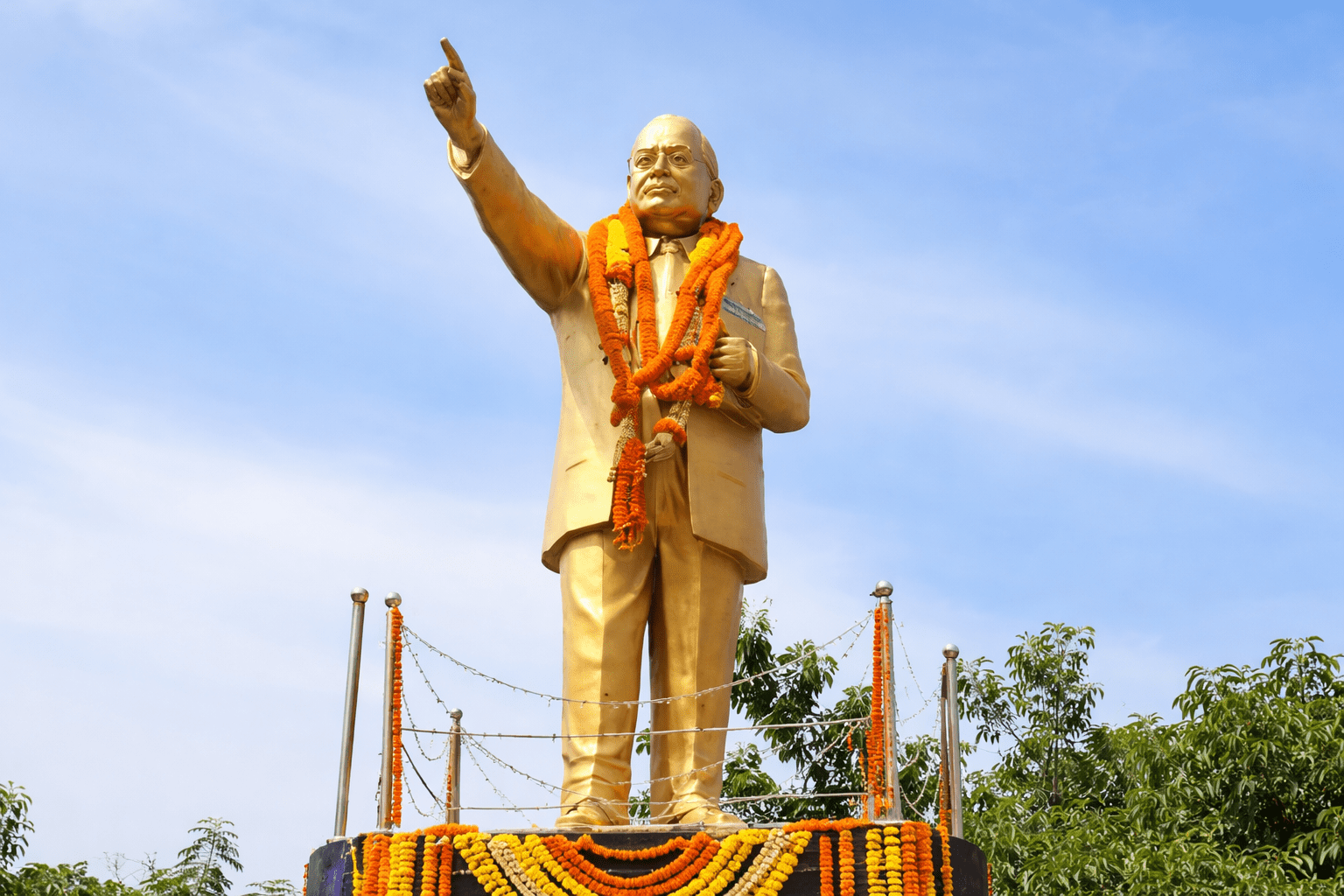
This remains even more true in present times, as we see politicians time and again failing to utilise the SC sub-plan in Assam to empower the historically marginalised community, failing to stop the out-migration of labourers, or to hold accountable the false promises to build the Dr. B.R. Ambedkar statue being installed in Assam in 2025 near the Assam Secretariat (Janata Bhawan) by the current Chief Minister, Himanta Biswa Sarma, in February 2025.
The announcement to install a life-size statue at the entrance of Janata Bhawan by August 15, 2025, gave a sigh of relief, finally allowing a tribute to Ambedkar’s contributions.
It became even more a matter of pride when a minister from the community himself, Pijush Hazarika, confirmed and inspected the site and urged PWD officials to stay on track, but now it only shows that the clock is ticking and nothing is moving for us.
This all boils down to one question: if there is really no caste system that discriminates against the people of Assam, are the constitutionally recognised 16 Scheduled Caste communities without any problem in the region?
An unrecognising voice from the community often asks: what about the divisions among followers in Namghar (religious sites of Sankardev) that existed through separate Namghars in the villages? What about the pandas in Kamakhya temple?
The most famous public intellectuals or bureaucrats — the most popular faces — often come from the ruling caste community, who are enjoying their position without mentioning these 16 communities from which their humanitarian work exists. But strategically, the crisis under which Assam is witnessing growing polarisation is increasingly evident.
The recent Assam election of 2026 saw a typical case of the rise of Hindutva politics versus the rise of ‘merit’, which is no coincidence. The dominant party, limiting state politics to linguistic divisions into religion and the party in opposition, again fails to address how its politics of merit and the meritorious class benefit from these linguistic divisions to celebrate ethnic identity.
This is a rotten factor for the state’s political culture. It forecloses any honest reckoning with the caste question — and the poverty that runs through it. Moreover, it is difficult to find any voices that give enough space to the majority of SCs in Assam.
Though one can well argue how the life and work of Babasaheb are important, as well as necessary, to celebrate for any human being living under the radar of the caste system, without the institutionalisation of such spaces, the meaning of democracy and human rights gets lost.
Once again, when there is Ambedkar Jayanti, popularly celebrated on 14th April on the birth anniversary of Dr B.R. Ambedkar all over India, and the celebration is growing outside India, we will see selective silences in Assam’s public life.
The cultural celebration, which is intended to develop political voices among historically marginalised societies, can be seen to arise organically as Dalits recount the resources they are denied access to. It finds its meaning in celebrations in a few pockets of Assam, in their reclamations over that access which is otherwise universal but denied in typical settings.
One such celebration can be seen being managed by a few dedicated localities, like Ambedkar Colonies (even reclaiming their caste-based spatial identity as residents of Harijan Colony).
Views expressed are those of the author and do not reflect EastMojo’s stance on this or any other issue. The author is a PhD scholar in Women’s and Gender Studies at Dr B.R. Ambedkar University Delhi.
Also Read: Why a ‘revised’ Sümi Bible has sparked controversy in Nagaland
Dona Biswas
Reporter, EastMojo
You just read a story that took days to report. Help us keep our reporters on the ground in the Northeast.
For Rs 83/month – less than a cup of coffee
Ad-free reading, support and keep important stories alive
Become a Member
OR
Support once (any amount)
or
Scan to pay via UPI