The Office of the Prime Minister and Permanent Secretary Ronald Mizzi are refusing to disclose how many millions of euros have been spent on the controversial Vision 2050 “cube” installed at the entrance to Valletta, with Prime Minister Robert Abela insisting that the information is “still being gathered” nearly two months after the project’s launch.
Freedom of Information requests submitted by The Shift seeking a detailed breakdown of public funds used for the ‘artistic’ installation have so far yielded no answers. Instead, the OPM has requested an extension, effectively delaying transparency on what is widely believed to be a multi-million-euro marketing exercise funded from state coffers.
Parliamentary questions tabled by Opposition MPs have also gone unanswered.
Abela has limited his replies to stating that the data is still being compiled – a justification usually used to postpone the publication of politically sensitive financial details.
Responsibility for the expenditure remains unclear.
Finance Minister Clyde Caruana, who is tasked with overseeing public spending, has declined to provide figures, directing all queries back to the OPM. His refusal to engage has further fuelled concerns over accountability and governance and his frosty relations with Abela.
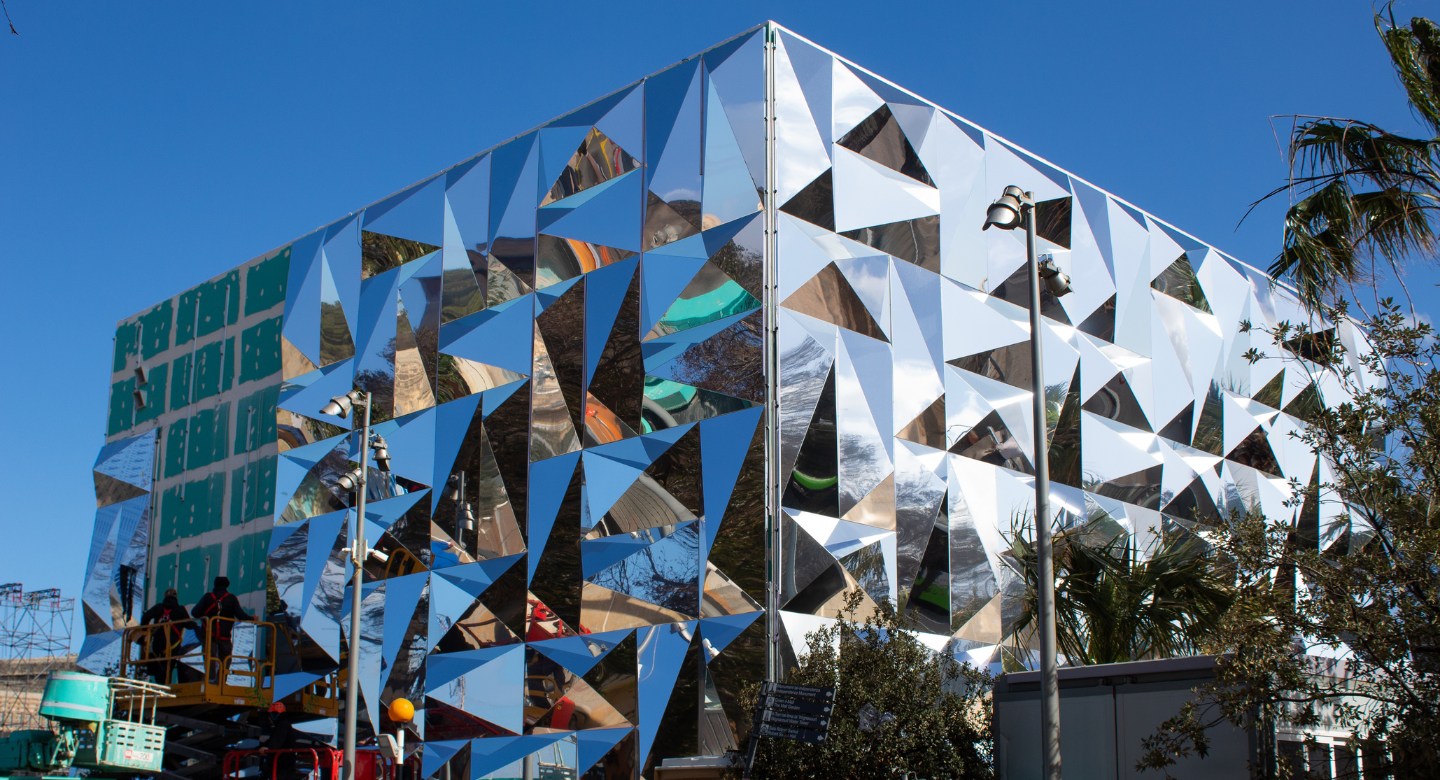
The cube installation, a large, high-profile structure unveiled in Valletta as part of the government’s Vision 2050 initiative, has been widely criticised as an expensive propaganda tool timed ahead of upcoming elections. The project was launched with a high-budget spectacle and accompanying events, reportedly costing taxpayers millions in a single evening.
Joseph Calleja – a permanent fixture in government events.
Oversight of the project’s procurement was entrusted to Ronald Mizzi, the OPM’s Permanent Secretary, who is currently facing court proceedings on charges related to alleged misappropriation of public funds and fraud.
Despite repeated questions, Mizzi has refused to disclose key details about the procurement process, including how contractors were selected and awarded contracts.
Concerns are mounting over the use of direct orders and the apparent involvement of a small circle of government-linked contractors.
Sources within the industry have indicated that companies such as Greatt Ltd, Mad About Video, TEC, Nexos and others secured significant portions of the project. However, no official confirmation or breakdown has been provided.
Questions about Mizzi’s personal connections to individuals from his Żabbar hometown linked to some of the beneficiary companies remain unanswered.
Allegations that he maintains close relationships with at least one contractor involved in the project have not been addressed, with Mizzi refusing to respond to requests for clarification.
Meanwhile, public reaction to the installation has been overwhelmingly negative.
The cube, prominently positioned at the capital’s entrance, has sparked widespread criticism on social media, with many describing it as an eyesore and a symbol of wasteful spending.
In response to the backlash, Castille has launched an extensive communications campaign aimed at promoting the Vision 2050 initiative and countering criticism.
This has included coordinated media efforts and promotional content across various platforms, including traditional newspapers and their websites, billboards and sponsorships to events organised by NGOs.