Meanwhile, on Thursday, the UK led a virtual meeting that gathered officials from 40 countries, including Qatar, to discuss the Strait of Hormuz.
Iran and Oman are reportedly drafting a protocol to “monitor transit” through the Strait of Hormuz, as the United Kingdom led a virtual meeting involving Qatar to discuss the vital waterway.
Iranian official Kazem Gharibabadi, cited by Iranian state news agency (IRNA), said on Thursday that the proposed mechanism would require ship movement to be “supervised and coordinated” with Tehran and Muscat.
“Of course, these requirements will not mean restrictions, but rather to facilitate and ensure safe passage and provide better services to ships that pass through this route,” Gharibabadi said, as quoted by IRNA.
The news offered a glimpse of hope for global trade, which was reflected in higher oil prices, according to The Wall Street Journal.
The average gas prices in the U.S. saw a more than 30 percent spike since the war erupted between Iran, the U.S. and Israel on 28 February. The price of gasoline surpassed $4 per gallon for the first time in years due to the war.
Iran maintains that the strait was not completely closed but barred to American and allied ships, while others are allowed to pass. The Strait of Hormuz, located between Oman and Iran, is one of the world’s most critical routes for crude oil shipments, and its closure has become a key issue in the negotiations.
The critical waterway is used for roughly 20 percent of the world’s oil and liquefied natural gas (LNG) trade.
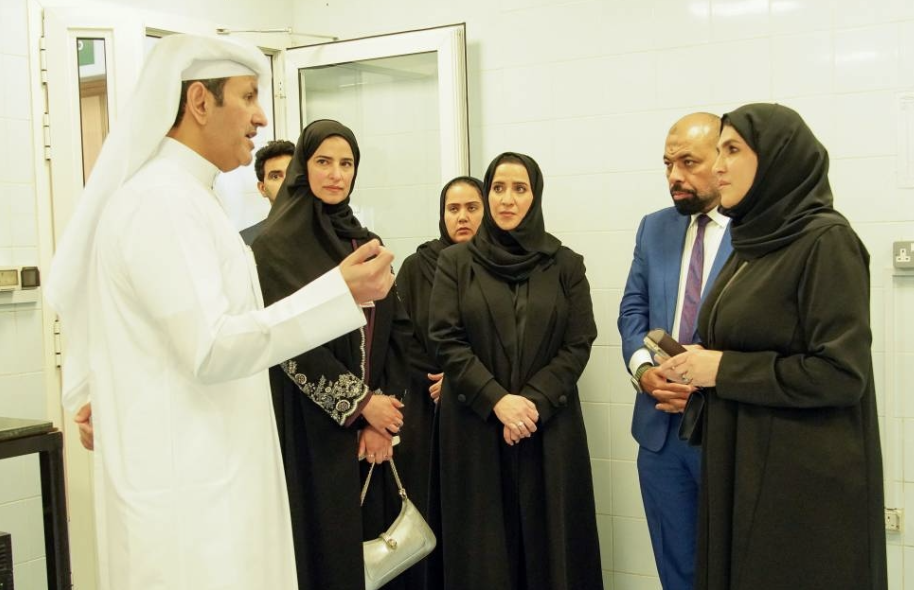
Meanwhile, on Thursday, the UK led a virtual meeting that brought together officials from 40 countries, including Qatar, which was represented by its Minister of State at the Ministry of Foreign Affairs, Mohammed Al-Khulaifi.
Qatar Participates in Ministerial Meeting on Developments Related to Strait of Hormuz
Doha | April 02, 2026
The State of Qatar participated in a ministerial meeting on developments related to the Strait of Hormuz, held on Thursday via video conference at the invitation of the… pic.twitter.com/ZmRunnZtAQ
— Ministry of Foreign Affairs – Qatar (@MofaQatar_EN) April 2, 2026
During the meeting, Al-Khulaifi stressed that the Strait of Hormuz’s security is an international issue, given its close link to global energy security and the safety of international supply chains, according to Qatar’s foreign ministry.
He also underscored the importance of reaching a consensus on a comprehensive security framework that ensures freedom of navigation through the Strait. The top Qatari official also emphasised that the Strait of Hormuz must not be “used as a tool of coercion or political pressure by any party”.
Iran’s attacks have targeted vital oil and gas infrastructure in the Gulf, including in Qatar, under claims that its targets have been U.S. interests in the region.
U.S. President Donald Trump also called on countries relying on the Strait, especially when importing oil from the Gulf, to “build up some delayed courage” in order to reclaim it.
“[They] should have done it before, should have done it with us, as we asked. Go to the strait and just take it, protect it,” he said during his speech on Thursday (Qatar time).
As he concluded his speech, Trump warned of strikes on Iran’s power plants if no deal is signed.
“If during this period of time, no deal is made, we have our eyes on key targets. If no deal is reached we are going to hit every one of their electric generating plants very hard, and probably simultaneously,” Trump said.