- April 3, now recognized as Jane Goodall Day, is intended as a day of action—an invitation to carry forward the habits and responsibilities she encouraged, rather than simply commemorate her life.
- From Roots & Shoots to community-led conservation models like Tacare, her work continues through people who apply her approach locally, linking the well-being of people, animals, and the environment.
- Colleagues at the Jane Goodall Institute describe a consistent throughline in her thinking: start small, stay attentive, and build change through actions that accumulate over time.
- The day reflects a broader idea at the center of her life’s work—that progress depends less on scale or certainty than on individuals choosing to act, where they are, with what they have.
See All Key Ideas
April 3 now carries a different kind of weight. It was always Jane Goodall’s birthday. Now it is also a marker—a point in the year when people are asked not just to remember her, but to do something with what she set in motion.
The idea behind the first Jane Goodall Day is simple. Take one action. It can be small. It should be real. The intent is to treat her life as something still in motion and to see those habits she cultivated continue in others.
That framing feels appropriate. Goodall resisted the idea that her work belonged to her alone. Even at the height of her recognition, she redirected attention outward—toward the forests she had studied, the chimpanzees whose lives she had made visible, and the people who would decide what came next. In later years, when asked what she wanted to be remembered for, she returned to two things: changing how we see animals, and starting Roots & Shoots.
The second of those matters more than it first appears. Roots & Shoots was designed as a way of distributing responsibility. It asked young people, and eventually adults, to look at their immediate surroundings and act on what they saw. It requires no permission and begins at any scale. The premise was that agency begins locally, and that it grows through repetition.
Jane Goodall. Courtesy of Moby
Anna Rathmann, who leads the Jane Goodall Institute in the United States, describes Jane Goodall Day in similar terms. The goal, she says, is to “make good” on the belief that each person can make a difference, by inviting people to take a single action that benefits people, animals, and the environment. It functions as a demonstration: a way to show the movement she began still works.
That continuity can be traced through individuals whose work began with Goodall’s influence and has since taken on its own direction.
Emmanuel Mtiti, for example, worked with Goodall in the 1990s to develop what became Tacare, a model that starts from a simple premise: conservation cannot be separated from the needs of the people who live alongside wildlife. Rather than imposing protection, Tacare begins with listening—understanding local priorities, then building solutions that address both livelihoods and ecological pressures. Over time, this approach helped restore forest around Gombe and expand into dozens of villages.
Here, the method matters as much as the outcome. Goodall did not arrive with a fixed blueprint. She adapted. She treated local knowledge as a source of insight rather than an obstacle. The result was slower than top-down approaches, but more durable.
Goodall. Image courtesy of the Jane Goodall Institute
Lilian Pintea, who leads conservation science at the Institute, recalls a moment that captures this shift. Sitting with Goodall in Gombe, looking at satellite images by candlelight, he remembers her describing the technology as “magic.” What interested her was what it made possible: the ability to see long-term changes in forest cover, to understand how human land use shaped chimpanzee habitat, and to translate those insights into practical decisions.
Today, those tools have advanced. Satellite imagery, GIS, and real-time data allow conservationists to track habitat loss as it happens, to identify its drivers, and to respond more quickly. But Pintea is careful to frame these as extensions of Goodall’s original approach, not replacements for it. The core remains observation, curiosity, and a willingness to work with people on the ground.
This continuity appears across the Institute’s work. It is visible in the career of Michael Jurua, who first encountered Goodall’s ideas as a child in Roots & Shoots and now leads conservation science efforts in Uganda. It appears in the work of Rebeca Atencia, whose management of the Tchimpounga sanctuary has set new standards for animal welfare. It shows up in smaller, less visible efforts as well—local coordinators, field researchers, community leaders—each carrying forward a piece of what Goodall began.
The scale of that network can make it difficult to see the individual decisions that sustain it. Goodall herself was attentive to those details. She noticed small acts. She treated them as meaningful because they created momentum, even when they were small.
That perspective shaped how she spoke about hope. She treated it as something that had to be constructed, often from modest beginnings. A restored hillside, a protected wetland, a group of students organizing a cleanup—these were not symbolic gestures. They were proof that change was possible, and therefore worth attempting again.
Jane Goodall with Rebeca Atencia (far left) releasing Wounda the chimp after rehabilitation. Photo by Michael Cox
Dr. Deus Mjungu, who directs the Gombe Stream Research Center, puts it more plainly. Jane Goodall Day, he says, represents hope and passion at a time when both can be difficult to sustain. The challenges are evident—habitat loss, climate change, conflict. In his view, the response is to continue acting anyway, on the assumption that small efforts accumulate.
This insistence on action without certainty is one of Goodall’s more practical contributions. It steers clear of two common traps: the belief that individual actions are meaningless, and the expectation that change must be immediate to be valid. By focusing on what can be done now, in a specific place, she offered a way forward that did not depend on large-scale agreement or coordination.
Priscilla Shao, who works as a veterinary lab manager in Gombe, describes carrying that forward as a daily choice. Protect nature. Encourage others. Trust that even limited actions can have effects beyond what is visible.
There is a discipline to that approach. It requires paying attention to both global trends and local conditions. It requires accepting that progress may be inconsistent. It also requires resisting the tendency to defer responsibility—to assume that someone else, somewhere else, is better positioned to act.
Goodall’s own path reflects this. When she arrived in Gombe in 1960, she had little formal training and few resources. What she had was patience, curiosity, and a willingness to stay. Over time, that was enough to change how scientists understood chimpanzees, and by extension, how people understood themselves.
Her later work followed a similar pattern. Faced with deforestation around Gombe, she began with conversations. Policy and enforcement came later. She asked what people needed, and what they were willing to try. The resulting programs were not quick fixes, but they worked. Forest began to return. Communities gained a stake in maintaining it.
This part of her legacy is easy to overlook. The discoveries about chimpanzees are well known. The shift toward community-based conservation is less visible, but it has shaped how many organizations now operate.
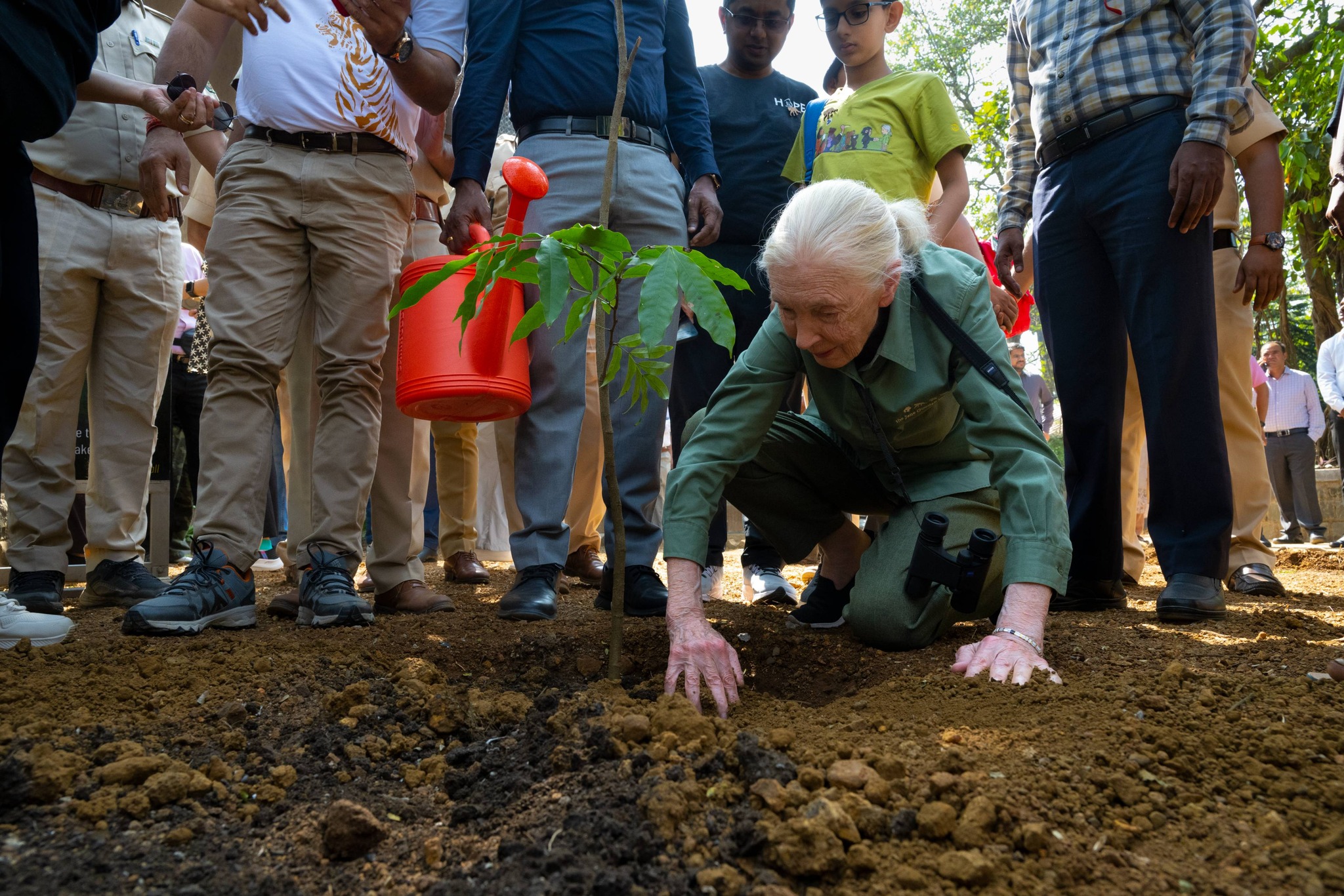
Jane Goodall Day draws on that less known legacy. It asks for participation—something immediate, something practical. The action can be as simple as picking up litter, volunteering, planting something, or sharing an experience that encourages others to act. The point is not the scale of the effort, but the habit of doing something.
Courtesy of the Jane Goodall Institute
Rathmann frames it as an invitation. Goodall, she notes, was rarely prescriptive. She encouraged people to look around, identify a problem they could address, and start there. “Think local, act local,” she would say. The accumulation of those actions, across places and over time, is what produces larger change.
The results are already visible. They appear in restored landscapes, in protected habitats, in communities that have found ways to balance development with conservation. They appear, too, in less tangible ways—in the expectations people bring to questions about animals, land use, and responsibility.
Success is uncertain. Goodall was clear about the scale of the challenges. She did not deny the damage already done, or the difficulty of reversing it. What she offered instead was a way of proceeding that did not depend on certainty.
Jane Goodall with Roots & Shoots members. Photo by Mary Paris/JGI
In one of her recurring images, she described humanity standing at the entrance of a long tunnel, with a single point of light at the far endcontinue the work, in whatever way you can manage, wherever you are.
That may be the most durable way to understand her legacy. As a set of practices to be repeated, again and again.
Jane Goodall. Photo by Catalin Mitrache
Responses from the Jane Goodall Institute team:
Anna Rathmann, Executive Director, Jane Goodall Institute USA
What is the goal of Jane Goodall Day?
Jane Goodall frequently reminded us that every individual makes a difference and we all have the power to make positive change. On what would have been her 92nd birthday, April 3rd, we thought that the best way to honor Jane is to literally “make good” on that belief through a collective day of positive action. On our first-ever Jane Goodall Day, we are inviting everyone to take one action, big or small, that benefits people, animals, and our shared environment. Our goal is to demonstrate that what Jane started is far from over.
For those who may be encountering Jane Goodall’s work for the first time, what is the one idea or insight you hope they take away from her legacy?
Jane’s legacy is not just what she accomplished, but what she set into motion. She worked tirelessly to inspire hope for our planet, and to compel us to take action. That was intentional. Her legacy is a movement that continues through us all.
Of course, her accomplishments were vast. Jane often said she wanted to be remembered for two things: for changing our understanding of the animal kingdom and our relationship to it, and for her youth program, Jane Goodall’s Roots & Shoots.
What is one story or moment from Jane Goodall’s life that you find yourself returning to most often?
Jane was the most insatiably curious person. She was someone who never lost the childlike wonder and curiosity of our remarkable world. That curiosity carried her far and changed our world. It is a good lesson for all of us to remember: never stop wondering and never stop asking questions. There is so much more to learn.
If Jane were speaking to young people today, what do you think she would urge them to focus on right now?
Part of Jane’s magic was that she was never prescriptive. Instead, she challenged you to look at the problems around you, and to find something small that you can do to make a positive change. She often told young people to “think local, act local” — recognizing that the problems of the world can feel overwhelming, which can make you lose hope. Starting small builds momentum, and when we all do our part, it adds up to a big change.
Jane’s own story is proof that starting small can make an impact. When she first noticed deforestation around Gombe National Park, the site of her landmark research, she engaged a group of local Tanzanians to start going into the community, listening to their problems, and working to develop solutions that benefitted both them and the local environment. It worked — and slowly, the forest started growing back. This tactic was so successful that it became the cornerstone of Tacare, JGI’s community-led conservation approach. Through Tacare, much of the forest landscape surrounding Gombe is now under community protection, and we have expanded to over 100 villages, and other countries in Africa.
What is one small action individuals can take today that reflects the spirit of her work?
Jane’s decades of wildlife research taught her that everything is interconnected — people, other animals, and the environment — which is why her own work evolved from animal behavior science to conservation advocacy. Jane would want you to pick a positive action that is meaningful to you, but perhaps the best way to honor her work is to reflect on that interconnection. If you pick up trash in your local park, you are benefitting the people who go there, the animals who live there, and your local environment. If you volunteer at an animal shelter, you are supporting not just the animals who are recovering there, but the people who work there. If you share your experience, you may inspire others to take action, and to follow in Jane’s footsteps too.
Jane Goodall’s Roots & Shoots offers resources and support to help get you inspired. While it is the youth program of the Jane Goodall Institute, there is something for everyone who cares about making a difference!
Lilian Pintea, Vice-President, Conservation Science, Jane Goodall Institute USA
What is one story or moment from Jane Goodall’s life that you find yourself returning to most often?
For me the moment is when we met first time 25 years ago in Jane’s house in Gombe National Park, Tanzania. Jane and I sat around a small table in a dark room lit by candles, sipping a little whiskey, and looking at the latest aerial and satellite images of Gombe. These images from space and from historical aerial photos enabled us to go back in time to 1948 and understand how forests, chimpanzee habitats and human land use changed inside and outside the park, helping us to better understand long-term changes in chimpanzee feeding and raging patterns and conservation needs. I remember Jane saying, “This is magic” and I felt that we were at the beginning of a special journey. Over the next 25 years this journey led us to the development of our community led approach that we call Tacare, and profound insights and discoveries into how we could work together with local communities, governments, private sector and other partners to unlock the power of advanced and emerging technologies. Today, “the magic” is more powerful than ever and is enabling us to accelerate our science, education, and conservation impact, securing and carrying Jane’s legacy forward.
What is one way technology has changed how we understand and protect chimpanzees, and their habitat, in recent years?
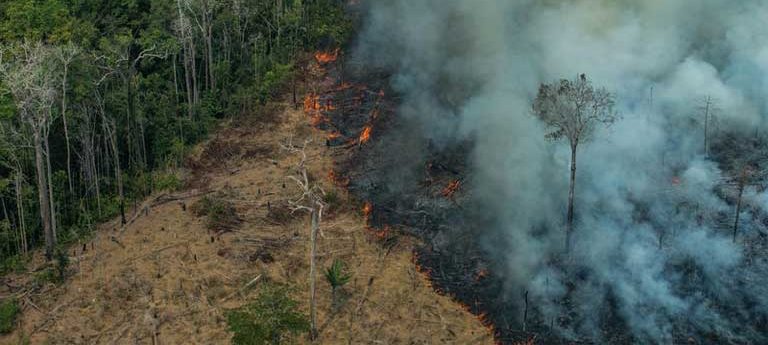
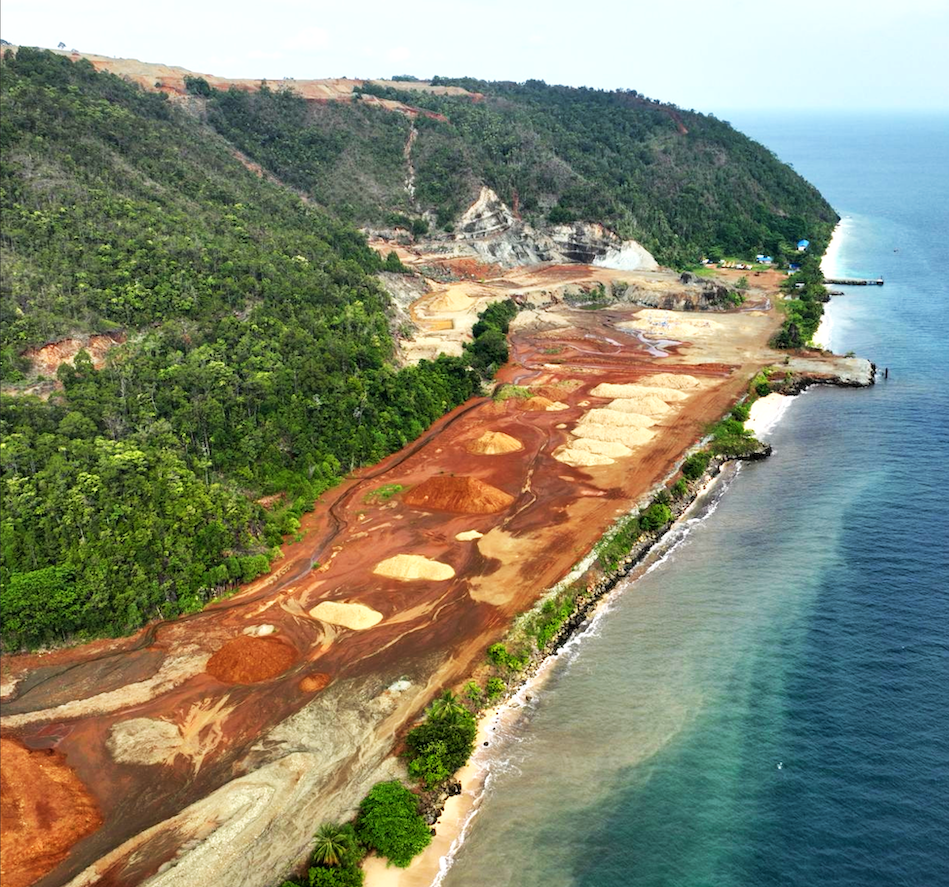
Geospatial technologies, especially satellite images, Geographic Information Systems (GIS) and cloud web mapping technologies are revolutionizing the way we understand and protect chimpanzee habitats. Habitat, loss, degradation and fragmentation driven by conversion of forests to farming, settlements, charcoal, mining, logging and other human land uses are the major threats to chimpanzees.
First, using different types of sensors, satellite images enable us to map chimpanzee habitat characteristics at unprecedented resolutions and scales. For example, we can use Vantor or Planet satellite data to map individual trees species, tree heights, phenology and other habitat characteristics and combine it with chimpanzee field observations and surveys to model and predict in detail habitat suitability, viability and health across larger chimpanzee range.
Second, the same technologies enable us to not only map chimpanzee habitat loss but also identify human activities driving that loss. These insights are important to help conservation practitioners select the most cost-effective strategies and actions to address those specific threats.
Third, we can access some of these data in near-real time by enabling conservation practitioners on the ground to not only confirm but detect habitat loss as it happens and do something about it to prevent future loss.
Finally, these high-resolution satellite images enable all stakeholders to see what is happening on the ground, providing a level of transparency and opportunity to develop trust with local communities and governments that we did not have before and to agree on how we work together and measure success.
When you think about the future of conservation science, what gives you the most reason for optimism right now?
Most of the chimpanzee habitats in Tanzania and across the range are outside National Parks and managed by the local communities and local governments. I am very excited that in the last 30 years we learned as part of Tacare model how to work together with local communities to unlock the power of conservation science data, knowledge and tools and to convert those insights into conservation impact.
If you could accelerate one innovation or approach at the Jane Goodall Institute, what would it be and why?
What gives me the most optimism is to see forests and watersheds restored by local communities driven by conservation science data and tools as part of community-led efforts, improving the lives of people, animals and their shared environment. If we could have the right resources allocated to the last mile of conservation, we could scale Tacare community-led model across the entire chimpanzee range or globally.
How do you see Jane Goodall’s approach to observation and fieldwork evolving in an era of satellites, AI, and real-time data?
When Jane arrived on July 14, 1960, in what is now Gombe National Park, Tanzania, she had nothing more than a simple pair of old binoculars, a pen, and paper. Satellites, AI, mobile apps etc are just tools that enable us to continue to observe and understand nature, just from different perspectives and at different scales. Jane thought us that these technologies should be considered as tools that should be used to address the needs of local communities and support them in their stewardship of the land so that it will improve the lives of people, animals and the environment, all of which is interconnected.
Dr. Deus Mjungu – Director, JGI’s Gombe Stream Research Center
What does Jane Goodall Day represent to you?
To me, this Jane Goodall Day represents hope and passion. It reminds me that while the world is facing with many challenges—from habitat loss and climate change to global conflict—we must not give up hope. Similarly, with passion, we can achieve great things. Everyone has a role to play, and because every small action matters, we can eventually change our world for the better—for animals, people, and the environment.
How should we carry Jane’s legacy forward?
We can carry Jane’s legacy forward by spreading her message of hope. By remaining hopeful, we are better equipped to overcome even the most daunting challenges. Likewise, we can uphold this legacy by ensuring that our daily actions leave a positive mark, whether on animals, people, or the environment. By supporting the JGI, we help ensure that her mission of protecting chimpanzees and other wildlife becomes a reality. Finally, because Jane also believed in the power of young minds, we must engage the youth, particularly through programs like Roots & Shoots.
Priscilla Shao – Veterinary Lab Manager, JGI’s Gombe Stream Research Center
What does Jane Goodall Day represent to you?
It is a day we celebrate an incredible figure in conservation and science. She has inspired so many people around the world to pursue careers in conservation or to take action to preserve our natural world. On this day, I honor her memory by taking action to protect the planet by raising awareness about conservation issues and encouraging others to take responsibility for caring for our planet.
How should we carry Jane’s legacy forward?
I believe we can carry Jane’s legacy forward by choosing every day to protect nature, inspire others, and believe that even small actions can change the world.
Dr. Rebeca Atencia, Executive Director of JGI Republic of the Congo & Head Veterinarian of Tchimpounga Sanctuary
What does Jane Goodall Day represent to you?
Jane Goodall Day represents the power of one person to inspire millions, and how she has left us with lasting hope and a motivation to continue working toward her vision of a better future.
How should we carry Jane’s legacy forward?
We will carry on Jane’s legacy by grounding our work in both science and compassion, turning empathy into action and by continuing to ensure that both wildlife and local communities have the support they need to live safely and sustainably.
Alice Macharia, Vice President, Africa Programs, the Jane Goodall Institute:
Jane Goodall Day represents resilience, hope and compassion. This day reminds me that in the face of challenges, frustration and anger, we need to remain steadfast in our mission and act to make the change we need to secure our future and that of our environment…they are inextricably linked. Jane showed us that “we are part of nature and not apart from it.
Everlyne Lelei, GIS Coordinator, the Jane Goodall Institute
What does Jane Goodall Day represent to you?
For me it is a day to celebrate all the good work and lasting impact of Jane Goodall, honoring her contributions to conservation, science, and our understanding of the world.
How should we carry Jane’s legacy forward?
We carry Jane Goodall’s legacy forward by using science and technology such as GIS (Geographic Information Systems) to turn data into insights that help us make better decisions that create real conservation impact on the ground.
How to carry Jane Goodall’s light forward