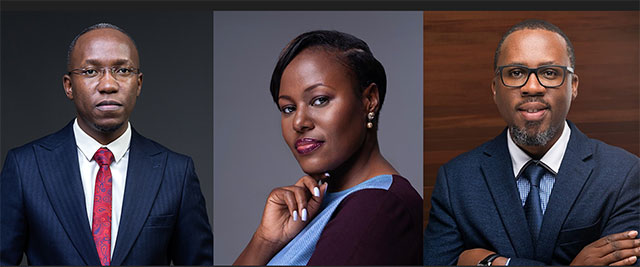
1st Annual Digital Marketers Roundtable panelists. John Ssenkeezi – President Uganda Digital Society; Charity K Asiimwe – President – Uganda Marketers Society and Rommel Jasi – Chairperson – Uganda Advertising Association
COMMENT | RHODA MUSIIMA | There is a habit in our industry that we need to outgrow. We often speak about digital and traditional media as if they are in constant conflict. As if one must win and the other must disappear. As if progress only happens when the old is pushed aside to make room for the new.
But that framing is too shallow for the work in front of us.
Digital and traditional media are not enemies. They are not rivals fighting for relevance. They are tools. Different in form, different in speed, different in measurement, but still tools in service of one goal: helping brands connect with people in ways that matter.
That is the real conversation. And if we are honest, the audience has already moved beyond this false divide.
The latest Ipsos National Audience Measurement findings in Uganda make this clear. Radio remains the most widely consumed medium at 70%, even though that is down from 89% in 2019. Television has held relatively steady, moving from 38% to 37%. Print has declined slightly from 8% to 7%. At the same time, internet use, particularly through social media, has grown significantly from 10% in 2019 to 26% in 2024.
This is not a story of replacement. It is a story of expansion.
Traditional media still carries power. Radio builds familiarity. Television creates shared moments. Print signals weight and credibility in the right context. Out of home places brands in public memory. These platforms have not become irrelevant simply because newer channels exist.
At the same time, digital media has changed what is possible. It has introduced speed, responsiveness, sharper targeting, richer data, and the ability to learn from audiences in real time. It has made experimentation easier and feedback faster. It has opened doors that traditional media alone could never open.
So the question is not which side to choose. The question is whether we are mature enough as marketers to stop choosing sides at all.
The strongest marketing thinking today is moving toward integration, not rivalry. It recognizes that impact becomes clearer when we look at the full system, not isolated channels. What matters is not the platform in isolation, but how each one contributes to a larger, intentional journey.
That is the shift our industry needs. Not louder arguments about which channel is superior. Better questions.
Who is the audience?
What do they trust?
Where do they pay attention?
What stage of the journey are they in?
What kind of message is needed at this moment?
What combination of platforms will move them from awareness to belief to action?
Because the truth is, people do not live in categories. No one experiences life as “traditional” on one day and “digital” on another. They move fluidly. They hear a radio mention in traffic, see a billboard on the road, search online later, watch a short video in the evening, and make a decision days after a conversation with a friend.
The journey is already integrated. Marketing must catch up. And perhaps this is where humility comes in.
In our rush to sound current, we sometimes dismiss what came before us. We act as though every new platform replaces wisdom, instead of building on it. But good marketing has never only been about platforms. It has always been about people. Attention. Trust. Relevance. Timing. Emotion. Repetition. Meaning.
Those fundamentals have not changed. What has changed is the number of channels available to express them.
So the future of marketing does not belong to those who defend digital the loudest. It belongs to those who think more clearly. Those who understand that strategy is not about chasing novelty, but about alignment. Knowing what each channel does best, and having the discipline to make them work together.
That is where maximum impact lives. Not in choosing between digital and traditional. But in integrating both with intention.
As the 1st Annual Digital Marketers Roundtable approaches, this is the conversation worth having. Not a debate driven by ego or trends, but a grounded reflection on what effective communication demands of us now.
Because the future of marketing will not be built by camps.
It will be built by bridges.
And the marketers who understand that will do more than run campaigns.
They will build brands that people can see, hear, remember, and trust.
Join us on Friday, 3rd April 2026 at 5:00 PM, Bight of Benin.
****
Rhoda Musiima – Founder, Phos Creatives, Brand Building & Growth Enthusiastic, Digital Educator