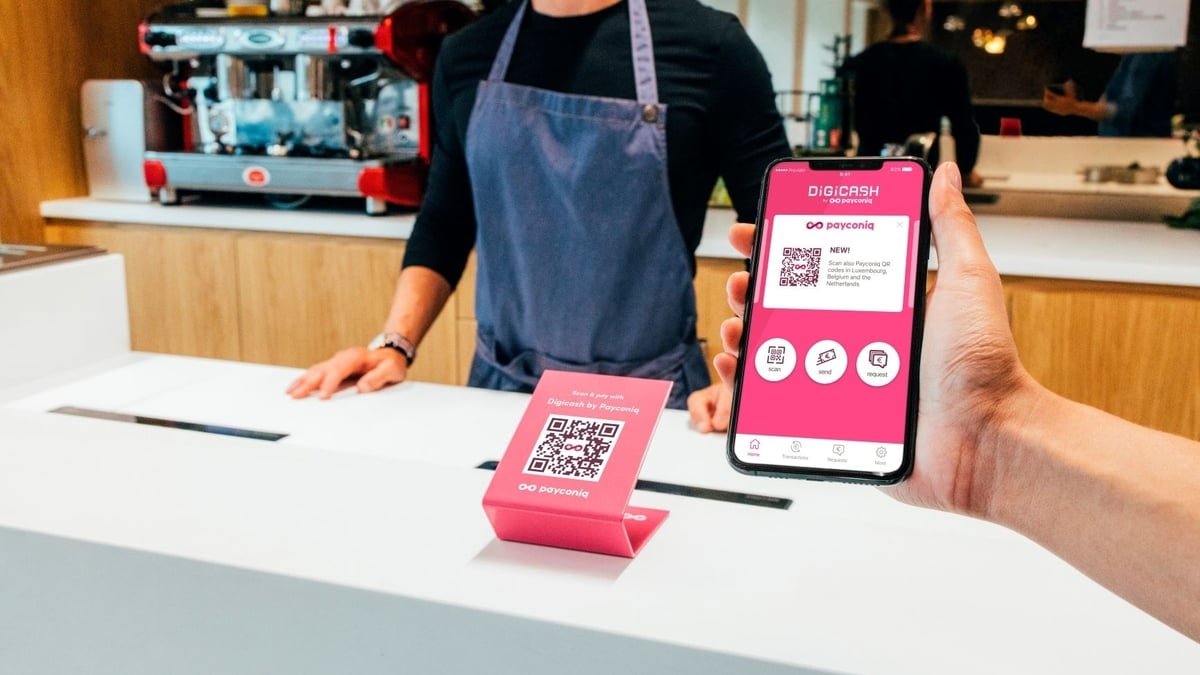
Luxembourg’s Payconiq payment app will be permanently shut down on 30 September 2026, with users required to register on its replacement Wero before that date.
“On September 30th, 2026, the Payconiq platform will be decommissioned, resulting in the withdrawal of the PQ app from the Luxembourg market,” Luxembourg’s major retail banks said in a joint statement in March.
The closure marks a hard deadline for a transition that has been underway since the European Payments Initiative (EPI) acquired Luxembourg-based Payconiq International in October 2023. The EPI was launched by 16 European banks to offer payments via a digital wallet (Wero).
The pan-European digital wallet is built on instant account-to-account payments, designed as a European alternative to card networks such as Visa and Mastercard. The project is supported by the European Commission.
Consumer rollout
“BGL BNP Paribas, BIL, Raiffeisen and Spuerkeess will be ready by the end of June 2026 to offer the Wero app to their respective clients. Post Luxembourg should be ready by mid-August 2026 at the earliest,” the banks said.
Users will need to download the Wero app and complete an onboarding process to link their bank account before they can make or receive payments. The transfer from one system to another will not be automatic.
Once registered, they will be able to send money using a phone number or email address, scan QR codes for in-store payments, pay invoices, and make e-commerce purchases.
During the July–September transition period, both apps will remain active, allowing users to continue using Payconiq while setting up Wero. From 1 October, Payconiq will be gone and Wero will be the sole option.
Wero digital wallet coming to Luxembourg in mid‑2026
Merchant transition
The situation is slightly different for businesses. Merchants that were directly contracted with Payconiq have already been transferred to the Dutch payment service provider Buckaroo. The company completed the takeover of Payconiq’s Luxembourg merchant portfolio on 26 January 2026, following regulatory clearance.
Buckaroo is now the primary point of contact for merchant services during and after the transition.
The migration of merchant acceptance from Payconiq to Wero is scheduled to run from 1 July to 30 September 2026. During that period, merchants will need to replace their Payconiq-branded QR codes with Wero-branded ones.
The banks described Wero as “an important step forward in the development of European payment solutions” that would “contribute to further enhancing the customer experience in Luxembourg.” EPI is set to begin communicating about the migration from April 2026 through Payconiq’s own channels.
What the future of payments in Luxembourg could look like
What are Payconiq and Wero?
Payconiq entered Luxembourg in 2017 through the acquisition of Digicash Payments, which had been operating since 2012. The service continued under the Digicash brand before being gradually rebranded as “Digicash by Payconiq”, and eventually fully renamed Payconiq in 2021.
It allows users to make QR code-based payments in stores and online, settle invoices, and transfer money between individuals using a phone number – all linked directly to a bank account rather than a card.
Wero operates on broadly similar principles, with account-to-account payments, QR codes and no card intermediary, but is designed for pan-European scale.
While Payconiq was primarily used in Belgium and Luxembourg, Wero is already live in Germany, France and Belgium, with a cross-border rollout as a core objective. In theory, this should allow users to make payments across participating countries using the same system, although availability may still depend on banks and merchants joining the scheme.
Nearly half the workforce in Luxembourg commutes daily from neighbouring countries, according to Statec.
The European Payments Initiative says Wero has more than 50 million users across its active markets.
In Luxembourg, users will be able to access Wero through a standalone and unified mobile application, where previously different banks all had their own version of the Payconiq app for customers. Every transaction is supposed to be processed instantly, that is, in less than 10 seconds, according to the EPI.
To send money, a user enters a recipient’s phone number and confirms the amount, without needing an IBAN. In-store and online payments are made by scanning a QR code and approving the transaction through the app.
Beyond the basic payment functions familiar from Payconiq, Wero’s broader roadmap includes features such as subscription management, loyalty programme integration and buy now, pay later schemes.
These form part of the platform’s longer-term development in Europe. The EPI has not said whether any of these features will be rolled out in Luxembourg, or when they could become available.