Veronica Fregoso and another doula begged their patient, who was in labor, to go to the hospital. The patient was terrified of leaving her home and possibly encountering immigration agents. Her husband had been deported weeks earlier, leaving the woman alone in the U.S. with their 5-year-old child.
Eventually, Fregoso got the patient to the hospital, where she safely delivered her baby. But she was so traumatized by her husband’s deportation that she only stayed for a day before returning home — behavior Fregoso is seeing more and more from her pregnant clients.
Fregoso has worked as a doula in the San Francisco Bay Area since 2018. She loves the work she does and finds it extremely rewarding. But Fregoso’s work has shifted dramatically in the last year. The type of support her clients now require has intensified — she is increasingly spending time counseling patients who are too scared to seek maternal health care because of U.S. Immigration and Customs Enforcement.
“It’s very hard for us, because how can we completely say that you’re gonna be fine? We cannot do that,” Fregoso said. “So what do we say? We say God is going to protect us and we’re here for whatever you want to do.”
Fregoso is the director of Birth Companions Community Center, which oversees nearly 70 doulas who aid women throughout their pregnancies and postpartum care. Last year, the organization supported 746 newborn deliveries for its patients, 95% of whom were low-income immigrant families.
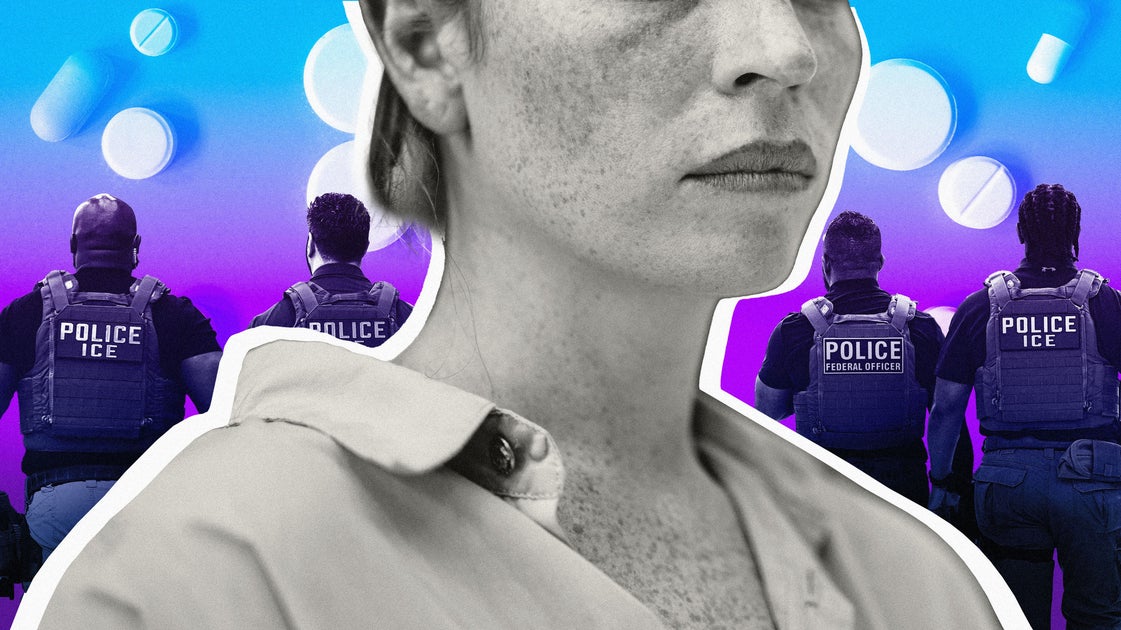
As President Donald Trump’s immigration crackdown spreads across the U.S., patients are forgoing reproductive health care of all kinds. HuffPost spoke with abortion providers, OB-GYNs and family medicine physicians from across the country who are seeing major disruptions in reproductive and sexual health care because of the constant fear and surveillance of immigration enforcement.
Reproductive health care providers told HuffPost they’re seeing patients miss prenatal appointments and not pick up prescriptions when they need them. Some are scared to go to the hospital when they’re in labor, while others are scared to leave with their newborn after giving birth. Two care providers said patients are declining to enroll their newborns in Medicaid or otherwise share their medical information with hospital and insurance systems. Abortion patients are choosing to spend more money to travel to less-populated cities where ICE presence may be smaller. Others are saving up money and booking travel to get care in another state, only to cancel at the last minute because they’re worried about being detained.
“There is enough evidence that has come out that tells us there is a group of specifically Latina women who are caught in an intersection of aggressive immigration enforcement and shrinking reproductive access,” Paula Avila-Guillen, a human rights lawyer and executive director of the Women’s Equality Center, told HuffPost.
“They are being forced to choose between their freedom or their health.”
“This fear of criminalization is real. This is what it looks like in real time: patients disengaging from care and families struggling to meet their basic needs.”
– Dr. Josephine Urbina, a San Francisco OB-GYN
One of Trump’s first moves as president was rolling back protections that barred ICE arrests at sensitive locations, including hospitals and medical clinics. The result has been catastrophic for people seeking reproductive health care. A recent poll of more than 500 pregnant women found that 1 in 5 said immigration enforcement activity has stopped them from seeking prenatal care.
During the recent surge of federal immigration officials in Minneapolis, Planned Parenthood clinics in Minnesota saw an 8% rise in no-show appointments for abortion, contraception and STI testing.
“I saw a patient just last week who said, ‘Yeah, I’m skipping my prenatal appointment because I’m so worried about immigration officials,’” Dr. Erin Stevens, a Minneapolis-area OB-GYN, told HuffPost in February. The pregnant woman was too scared to leave her house, and Stevens worried about her getting enough nutritious food and exercise to remain healthy during pregnancy.
The concern is justified: In February, a pregnant woman was detained by ICE while waiting for her Uber after a prenatal visit, and later deported. Last summer, a pregnant woman and her mother were detained outside of her OB-GYN’s clinic following a check-up. Between January 2025 and February 2026, 363 pregnant, postpartum or nursing women were deported, according to the Department of Homeland Security. A total of 498 pregnant, postpartum or nursing women were detained during that same time period, with 16 reported miscarriages.
Amber Pugh has been a hotline case manager at the National Abortion Federation for 11 years, working with abortion-seekers to find funds and coordinate travel to get abortions in states where it’s still legal. Since Roe v. Wade fell, most of the callers Pugh works with are from the Southeast, traveling north for care. Pugh has worked with several abortion-seekers who do all that planning — finding the money, paying for travel and lodging, taking time off work, finding child care — only to cancel their appointments.
“They are making their own assessment as to whether they can risk deportation, at best, or incarceration and death, at worst, to access an abortion, if they can risk being ripped away from their families and their communities,” Pugh said. “And sometimes people do make the decision that they’re going to be forced to continue a dangerous or a longer pregnancy.”
Pugh suspected that some of these patients had turned to telehealth abortion care, but not all.
Fregoso has seen an increase in requests for home birth, a decrease in prenatal visits and delays in labor and delivery care — all because pregnant patients are terrified of leaving their homes because of the constant fear and surveillance of immigration officials.
Usually, nurses carry out home visits, especially prenatal or postpartum house calls. But these days, many patients won’t answer the door without a doula confirming they know the nurse, because they’re scared it could be an ICE officer pretending to be a nurse.
“We have many, many cases where the moms don’t want to go to the hospital to have the babies, but they don’t want to open the door for the nurses,” Fregoso said. Fregoso herself is a U.S. citizen, but she carries her passport everywhere now in case she is stopped, because she is Latina.
Dr. Josephine Urbina, a San Francisco OB-GYN who works with Fregoso, has seen a deepening distrust between her patients and the health care and insurance systems. Although they are legally entitled to certain benefits despite immigration status, some of her patients are declining to enroll in coverage, including signing up their newborns for Medi-Cal, California’s Medicaid program.
Last year, the Trump administration gave the Department of Homeland Security access to around 70 million Medicaid enrollees’ personal information to aid officials in tracking down immigrants in the U.S.
“This fear of criminalization is real,” Urbina said. “This is what it looks like in real time: patients disengaging from care and families struggling to meet their basic needs, not because these services and resources don’t exist but because my patients don’t feel safe accessing them.”
Physicians and care providers are now relying on their own community networks to help people get the reproductive health care they’re too afraid to access because of immigration enforcement. Fregoso and the doulas she works with do essentially everything outside of the hospital: drive patients to clinic appointments, make home visits, deliver food and diapers and formula, accompany moms to get birth certificates for their newborns, connect women with immigration attorneys, make emergency plans if the family is separated, and work as interpreters for Spanish-speaking clients. It’s common practice now for Fregoso and her doulas to call ahead to midwives and trusted physicians at the hospital to make sure ICE is not there before bringing patients in.
These types of community networks are not new — they were first started in Argentina and El Salvador by the Green Wave feminist movement. Some of the first community networks helping people in Texas when Roe fell actually originated in Mexico.
“They are very much our bridge to the community,” Urbina said.
The level of anxiety and fear has increased so dramatically that some physicians believe it’s impacting pregnant patients’ physical well-being. They’re seeing more women with high blood pressure or preterm labor. The never-ending cycle of stress is becoming unbearable.
“Taking care of your pregnancy is something that should be a right, not a privilege,” Avila-Guillen said. “It’s one of the most essential protections that the state should care about, especially if states are now considering themselves pro-birth.”
“But in reality,” she added, “they know exactly what they’re doing. They are specifically targeting the people they don’t want to have children.”