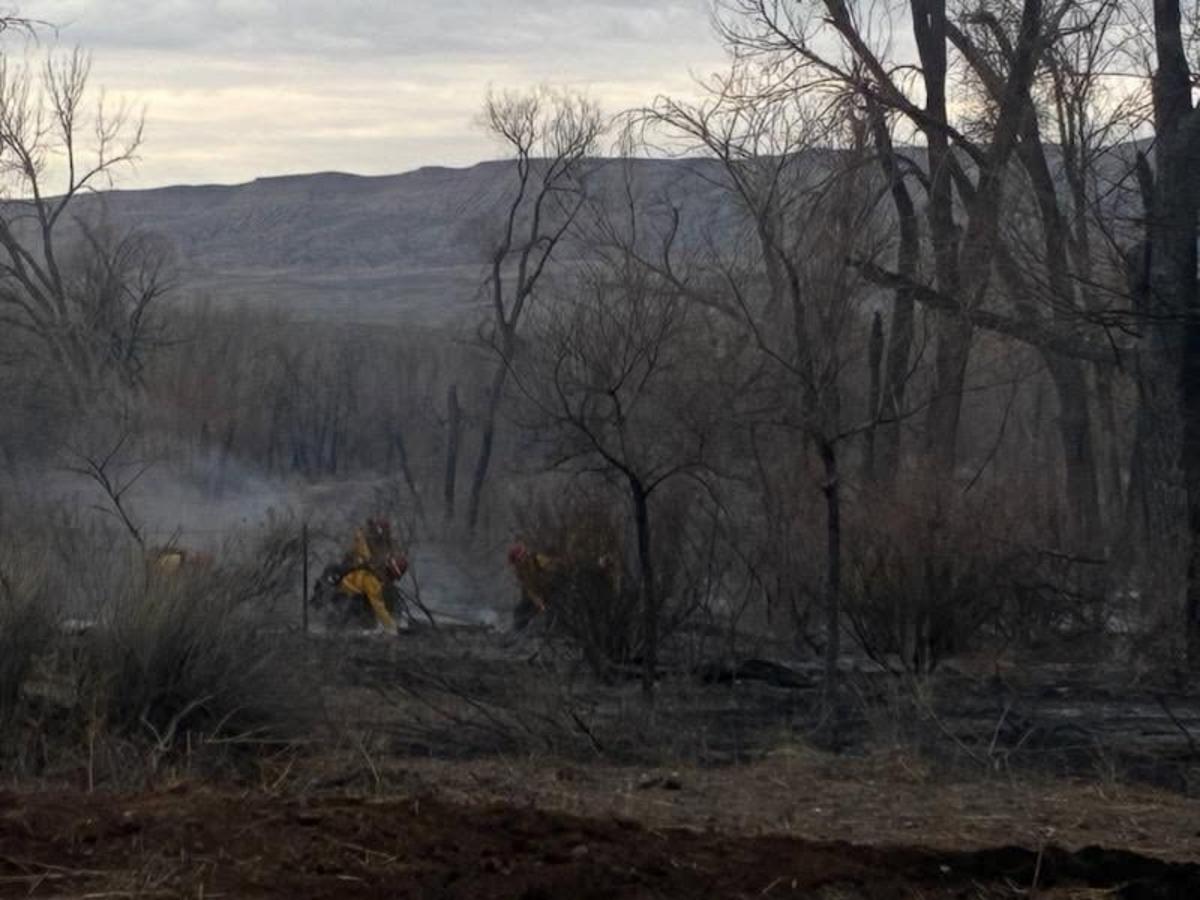
Firefighters battling the Kane Fire near Bighorn Canyon are making significant progress, with containment now reaching 75 percent. Officials say decreasing fire activity has allowed about half of the personnel assigned to the incident to begin demobilizing and leaving the area starting today.
Safety remains the top priority for crews and the public as operations shift into the next phase. Over the weekend, firefighters will continue patrolling the burn area, extinguishing lingering hot spots, and strengthening containment lines to prevent flare-ups. Some of that work is focused in areas with cottonwood trees, where heat can remain trapped and standing dead trees can pose additional hazards.
Weather conditions are expected to support continued progress. Forecasters say conditions today will be cool, sunny, dry, and breezy. Warmer temperatures and lighter winds are expected over the weekend, which should help crews continue securing the fire perimeter.
Meanwhile, all roads within the Yellowtail Wildlife Habitat Management Area remain temporarily closed. Officials are urging the public to respect those closures to protect both firefighters and visitors and to allow crews to operate safely and efficiently.
Beginning tomorrow, officials say updates on the Kane Fire will be released only as needed, based on significant changes in fire activity, containment, or public safety conditions. Firefighters will continue monitoring and mopping up within the fire perimeter as they work toward full containment.
Officials Urge Vigilance as Drought Keeps Wyoming at High Fire Risk
As of early March, roughly 79 percent of Wyoming is experiencing drought conditions, with additional areas classified as abnormally dry.
State and federal forecasters also warn that drought is expected to persist across the region, particularly in eastern Wyoming, increasing the likelihood of an extended and more active fire season.
Compounding the risk is an ongoing snow drought, with little to no snowpack across many lower elevations. That lack of moisture can lead to landscapes drying out earlier in the year, lengthening the wildfire season and increasing fire intensity.
Recent wildfire activity across the Great Plains — including Wyoming — is already raising alarms among fire officials, who say unusually dry and windy conditions are contributing to an earlier-than-normal start to the fire season.
Officials are reminding residents that prevention remains critical. Simple actions like following fire restrictions, avoiding open burning during windy conditions, and reporting smoke quickly can help reduce the risk of large wildfires.
In short, fire managers say the 2026 wildfire season could be longer, more active, and more dangerous than usual, making vigilance from the public more important than ever.
Bevy of Semis Fall Victim to Wyoming Wind
Between December 9 and 12 the Wyoming Highway Patrol posted pictures showing the power of Wyoming wind. During the winter months (November through March), winds commonly reach sustained speeds of 30 to 40 mph, with gusts often soaring to 50 or 60 mph or more. High wind warnings often cover portions of central Wyoming, with peak gusts sometimes reaching 100 mph or higher.
Branding Day at Casper College
Gallery Credit: Kolby Fedore, Townsquare Media