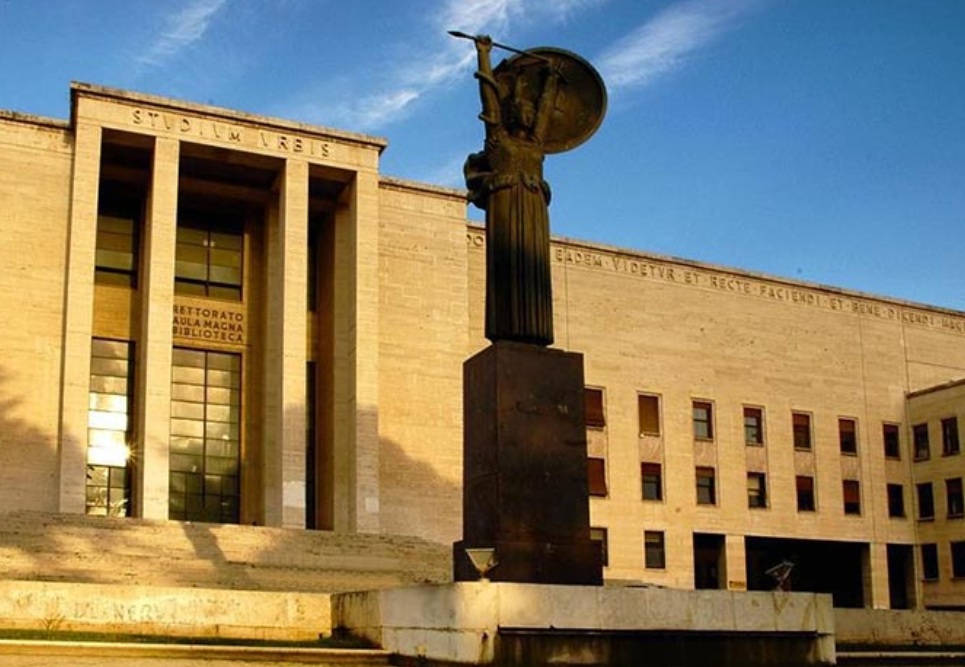
Rome’s vast Sapienza University has again claimed first place globally in Classics and Ancient History in the QS World University Rankings by Subject 2026. For the first time, an Italian university has placed three subjects simultaneously in the top ten.
For the sixth year in a row, the Sapienza University of Rome has been ranked the world’s best institution for the study of Classics and Ancient History, according to the sixteenth edition of the QS World University Rankings by Subject, published on 25 March 2026. The university, widely regarded as Europe’s largest by student enrolment, achieved a near-perfect score of 99.1 in the subject placing it ahead of Fudan University and Peking University, both based in mainland China.
The achievement is more than a successful defence of a title. This is the first time an Italian university has placed three subjects simultaneously in the top ten of the QS World University Rankings by Subject. Alongside its number-one position in Classics and Ancient History, Sapienza climbed to seventh place in both Archaeology and History of Art, the latter an especially dramatic rise from 18th place in 2025.
These results are tangible evidence of the constant scientific commitment, passion, and dedication of an academic community capable of preserving a millennial cultural heritage and projecting it into the future.— Rector Antonella Polimeni, Sapienza University of Rome
Sapienza also improved in the number of subjects ranked in the global top 50, rising from four in 2025 to six in 2026. In addition to its humanities trio, the university features in the top 50 for Physics and Astronomy (38th), and newly for Modern Languages (42nd) and Pharmacy and Pharmacology (48th).
University Rankings by Subject
Italy as a whole continues to improve its standing in the rankings. Sixty Italian universities appeared in this year’s edition, up from 56 in 2025, accumulating 769 entries across 55 subject rankings and five major study areas. The country ranks third among EU nations by number of universities featured, behind France and Germany, but second by total number of entries, surpassed only by Germany.
Italy is also one of only three EU countries to have a subject ranked first in the world, alongside Sweden and the Netherlands. It is second among EU countries for entries in both the top ten and top twenty, bettered only by the Netherlands.
In other disciplines, Bocconi University continued to lead Italy in business-related fields, placing 9th in Marketing and 10th in Economics and Management. Luiss University ranked first in Italy for Politics and International Studies, achieving 23rd globally. In the emerging field of Data Science and Artificial Intelligence, Italy grew from three ranked universities in 2025 to seven in 2026, with Politecnico di Milano leading nationally in 32nd place.
Commenting on Italy’s broader performance, QS president Nunzio Quacquarelli said Italy’s results “show a robust university system with global visibility and some highly distinctive strengths,” highlighting Sapienza’s record in Classics as “an example of sustained global excellence in a field deeply linked to the country’s intellectual and cultural heritage.”
Results come with a caveat
Yet the broader picture for Italy carries a note of caution. According to QS, the 2026 results “show an Italian university system capable of producing globally recognised excellence, but still less effective at turning it into systemic strength. Alongside peaks of outstanding performance, there remain disparities in research capacity, pressure on resources, international competition for talent, and difficulties in consolidating results on a broader scale. The challenge for Italy,” QS observed, “is not to prove it has excellence, but to sustain it over time, expand it, and make it more widespread across disciplines, institutions, and strategic areas of global academic competitiveness.”
For Sapienza, founded in 1303 and home to over 100,000 students, the sixth consecutive global title in the field most closely associated with Rome’s own history represents both a vindication of investment in the humanities.