- Not long ago, Australia’s ampurta, also known as the crest-tailed mulgara, hung on the precipice of extinction. Now, a new study has mapped its dramatic resurgence.
- This small marsupial increased its range by an area the size of Denmark between 2015 and 2021, building on an ongoing re-expansion.
- The ampurta resurged thanks to an introduced disease that drastically reduced the population of nonnative rabbits. That led to a drop in the number of foxes and feral cats that prey on small animals, including ampurtas.
- Despite the good news, Australian scientists have serious concerns about a lack of investment in the ongoing biological control of both rabbits and feral cats.
See All Key Ideas
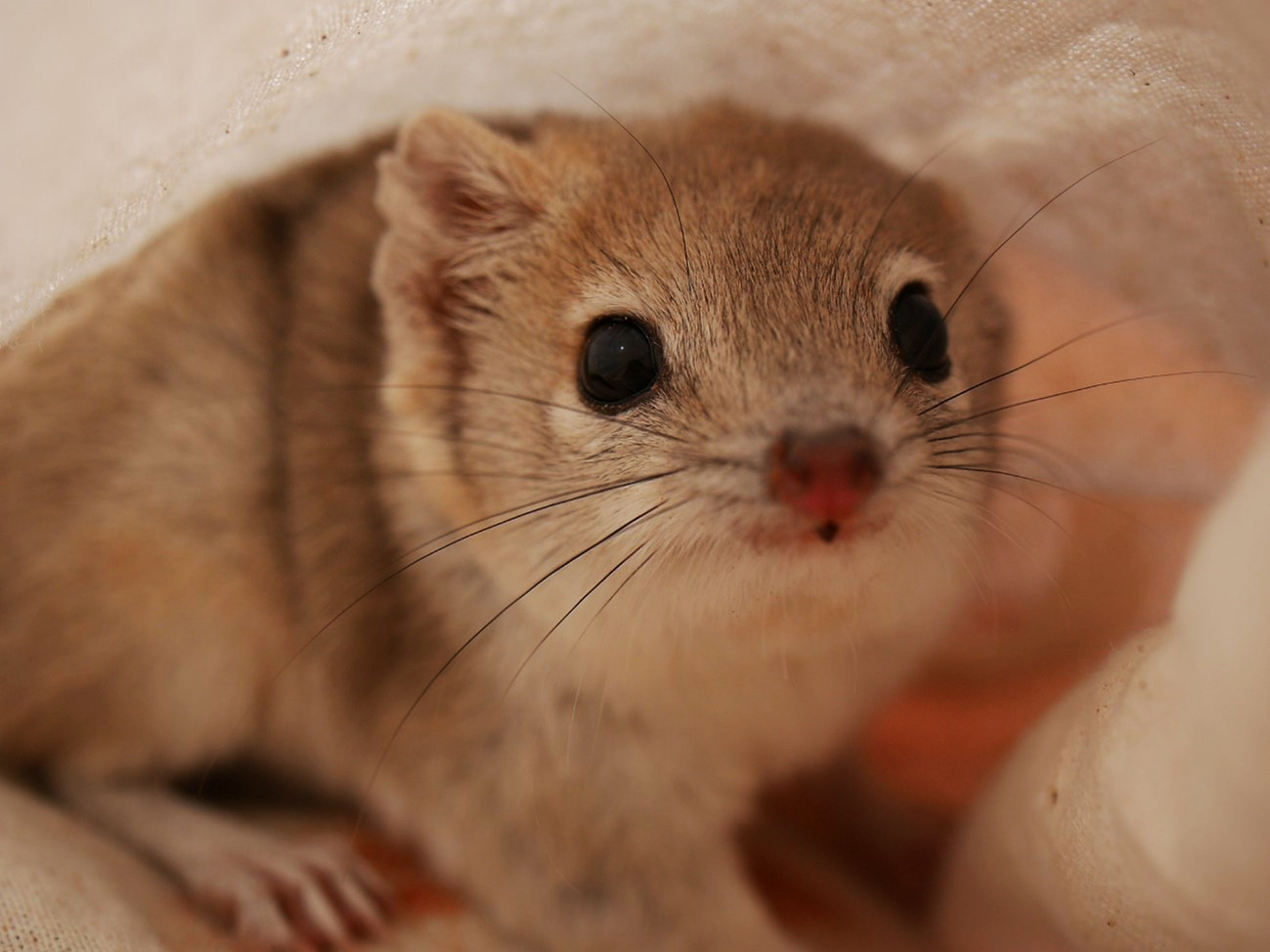
The ampurta, a blond or brown guinea pig-sized marsupial, is distinctive for its short, fat tail that becomes a black mohawk at the tip. This micro-predator, also known as the crest-tailed mulgara, was once abundant in the arid, sandy landscapes of Central Australia as well as Western Australia. But by 1994, it had been listed as nationally endangered.
Humans were behind the decline of the ampurta (Dasycercus hillieri). A wave of dramatic wildlife declines and extinctions occurred in Central Australia from the 1930s to the 1960s as colonizers spread into the continent’s interior, converting land for agriculture and bringing in foreign animals, Chris Pavey, a wildlife ecologist at government research agency CSIRO, told Mongabay.
The British had imported red foxes (Vulpes vulpes) and European rabbits (Oryctolagus cuniculus) for hunting parties, and the domestic cats (Felis catus) they brought along sometimes went feral. These introduced species altered the ecosystem and took a deadly toll on ampurtas and other small animals.
But unlike most impacted species, ampurtas are making a big comeback. Their resurgence has occurred over the course of three decades, happening despite unprecedented, prolonged drought, which itself drives wildlife declines, and which tends to be more acute in arid regions. Research documenting the recovery was published in the journal Biological Conservation.
Ecologist Dympna Cullen, who was then working on her Ph.D. at the University of New South Wales (UNSW), led the inquiry. She built on a 2016 study that tracked the ampurta’s initial bounce-back after rabbit hemorrhagic disease virus, also known as calicivirus, spread in Australia flooding its release in 1995.
Cullen wrote that while species recovery is rare, in this case, the drought-resilient ampurtas had “capitalize[d] on extreme conditions to re-invade their former range, where competition and predation were reduced.”
A juvenile ampurta captured for this study. Image by Dympna Cullen.
The impact of introduced species
Despite its diminutive size and cute appearance, the nocturnal, sand dune-dwelling ampurta is a voracious, carnivorous micro-predator with very sharp teeth. It, like the Tasmanian devil, is a member of the Dasyuridae family, often called the “marsupial carnivores.”
They mostly eat invertebrates, but “will basically eat anything,” Cullen said: spiders, moths, ants, beetles, scorpions, lizards and even small birds such as zebra finches. Like any predator, they play an important role in maintaining balance in their ecosystem.
For ampurtas and many other native animals, the extinction tide began when domestic cats first arrived on ships from Britain in 1788. By the late 1860s, feral cats had ravaged native bird and small animal populations across much of the continent.
It was then that rabbits and foxes were introduced from Europe, primarily Britain, for sport hunting. The rabbits became abundant prey for both cats and foxes that then spread across Australia’s central arid zone, decimating small native mammals and nearly wiping out ampurtas.
The rabbits ravaged the vegetation that’s important for insects, small mammals and other ampurta prey, altering these ecosystems beyond recognition. Nationwide, the damage they caused threatens some 322 Australian plants and animals, according to research published in Pacific Conservation Biology,
According to Cullen, they “destroy the habitat and provide a major food source for introduced predators, with devastating consequences for native mammals.”
Australia has the world’s highest rate of mammal extinctions: 39 have disappeared forever and at least 52 others are at risk of extinction.
The continent lacks large, native land-based predators, and many of the extinct or threatened species were, or are, small, weighing between 35 grams and 5.5 kilograms (just over an ounce up and to 12 pounds), which is the “optimal prey size” for introduced predators.
With invasive species dramatically transforming the landscape and the ecosystem — and the local extinction of its former predator, the western quoll (Dasyures geoffroii), the ampurta has taken over the role of a mid-range or meso-predator. It now ranks just under dingoes in the hierarchy of predation, Cullen says.
Dympna Cullen holds the first ampurta captured during field surveys in 2019. Image by Jack Dickson.
A rare resurgence
Cullen’s 2025 good-news research built on arid-zone ecologist Reece Pedler’s 2016 study that tracked the dramatic increase of ampurtas caused by the “indirect suppression” of cats and foxes due to calicivirus.
By 2019, the ampurta’s surging numbers prompted an improvement in conservation status from endangered to vulnerable — and in 2024, to least concern.
Part of this marsupial’s resurgence can be attributed to an “adaptive advantage” to extreme temperatures. Inside their shallow burrows, ampurtas slip into torpor, what Cullen calls “a daily hibernation,” dropping their body temperature to as low as 10° Celsius (50° Fahrenheit) to slow their metabolism and conserve energy.
Wildlife populations in Australia’s arid regions are also influenced by unpredictable rainfall, with species having evolved amid “extreme boom and bust dynamics,” Pavey said. Periods of heavy rain drive “trophic cascades” where the landscape greens and blooms, birds come in, and rodents multiply, along with their predators. “So, all of a sudden, the ecosystem changes,” with more and more varied animals.
When the bust period comes, Pavey said, there are usually very few animals, with those that are present confined to discrete areas of the landscape.
But not the ampurta: Cullen’s study shows the marsupial continued its resurgence, regardless of conditions.
It has reoccupied huge areas of its traditional habitat. From the arrival of calicivirus after 1995 until 2016, Pedler’s study reported a 70-fold increase in its potential range and a 20-fold increase in areas of that range where it actually occurs. That range now covers 189,878 square kilometers (73,312 square miles).
From 2015 to 2021, the ampurta’s range expanded by another 48,000 km² (about 18,500 mi²) — an area the size of Denmark — to 238,441 km² (92,0626 mi²) in the central Australian desert.
The fact that a small Australian mammal that is vulnerable to predation has expanded its range so much is very unusual, Cullen said. “It’s just an incredibly rare story as far as Australian mammals are concerned.”
The feather-like tail crest used to identify ampurtas. Image by Dympna Cullen.
Looking to the future
Cullen’s study noted that “Recoveries of native species are rare, often requiring intensive and costly species-specific conservation interventions.”
The ampurta’s “good-news story” is even better, Pavey said, because it happened without significant local interventions.
However, long-term action is needed to maintain the ecological balance.
Study co-author and conservation biologist Richard Kingsford, who leads the UNSW Wild Desert project and supervised Cullen’s Ph.D., also noted that landscape-level management of feral threats is key. “If we’re really going to get our desert ecosystems back, and some of the animals that used to be in there, we’ve got to really think about managing those big threats of cats and foxes at scale,” he said.
Biocontrol of rabbits, which requires long-term funding commitments that aren’t currently being made, remains the only practical strategy for tackling the feral cat problem at scale, the scientists say.
But the new research, Kingsford said, offers a supremely hopeful message for conservation.
“While Australia has a particular problem with invasive species, I think the more general lesson here is that if you can manage the threats to native species from humans, whatever those threats may be — some of them direct and some of them indirect — these species will come back if they’ve got the habitat,” he said.
“So in other parts of the world where we’re cutting down forests or destroying wetlands … as long as we can bring that habitat back, we can [help] species to bounce back.”
The distinctive tracks of ampurta in the sand offer an effective and time-efficient survey method. Image by Dympna Cullen.
Banner image: An adult ampurta caught for measurements, reproductive assessment and genetic analysis during field surveys. Image by Dympna Cullen.
Release the cats: Training native species to fear invasive predators
Citations:
Cullen, D., Kingsford, R. T., Bino, G., West, R., Letnic, M., & Pedler, R. (2025). Bucking the trend — recovery from near continent-wide extinction by a marsupial micro-predator during drought. Biological Conservation, 311, 111411. doi:10.1016/j.biocon.2025.111411
Pedler, R. D., Brandle, R., Read, J. L., Southgate, R., Bird, P., & Moseby, K. E. (2016). Rabbit biocontrol and landscape‑scale recovery of threatened desert mammals. Conservation Biology, 30(4), 774-782. doi:10.1111/cobi.12684
Kearney, S. G., Carwardine J., Reside A. E., Fisher D. O., Maron, M., Doherty, T. S., … Watson J. E. M. (2019) Corrigendum to: The threats to Australia’s imperiled species and implications for a national conservation response. Pacific Conservation Biology, 25(3), 328. doi:10.1071/pc18024_co
FEEDBACK: Use this form to send a message to the author of this post. If you want to post a public comment, you can do that at the bottom of the page.