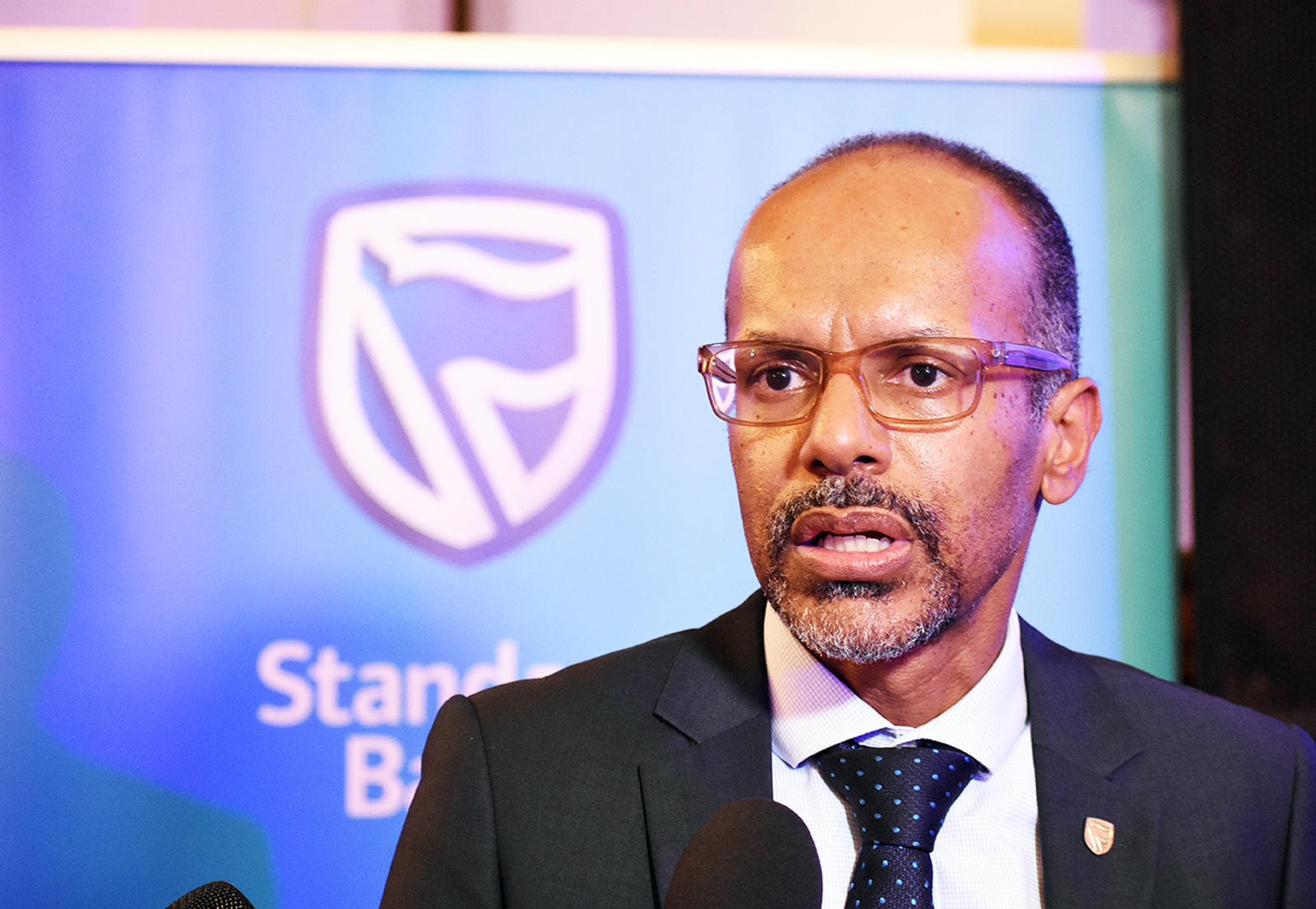
The macroeconomic environment defines the context in which companies and investors operate. It is within this framework that Faúsio Mussá, Chief Economist at Standard Bank Mozambique, offers a critical assessment of the present and future business environment in the country.
Faúsio Mussá warns that 2026 will be a challenging year, with recovery expected only in 2027, requiring strategic attention from now. How will the various factors shape the economic landscape?
When you say 2026 will be a difficult year, how will this impact companies and the business environment?
It is worth examining what the numbers tell us. From a macroeconomic perspective, GDP growth has been negative since Q4 2024. Our estimates indicate that, excluding the extractive industry, Mozambique’s economy will register negative growth in 2025—after already weak growth in 2024—and that this negative trajectory may continue in 2026. In practical terms, this means aggregate demand is very weak. People are consuming the bare minimum due to very low incomes. This recessionary environment, outside the extractive industry, is what businesses will have to navigate.
Isn’t the progress of gas projects enough to offset this scenario?
There are certainly positive elements associated with natural gas, but we do not expect these projects to have sufficient scale in the short term to generate meaningful business or stimulate the economy in 2026. The positive impact exists but is limited in terms of linkages with the broader economy. In our view, 2027 could be a recovery year, as the advancement of gas projects should then contribute more significantly to macroeconomic stability, foreign currency supply, and a more favorable business environment.
In this context, how do you assess the recent trajectory of interest rate reductions?
Successive interest rate cuts are, first and foremost, consistent with the downward inflation trajectory. The Central Bank has maintained clear discipline in this area, taking advantage of controlled inflation to reduce the cost of money. These cuts can have two positive effects. First, they can help ease some pressure on the government’s debt service, particularly if domestic debt balances decrease. However, this effect is limited, as the state continues to increase domestic debt, eroding potential savings from lower rates. Second, lower rates can improve disposable income and increase credit to the economy.
What effects have these rate cuts had on companies and households?
The prime rate has fallen about 830 basis points to its current level of 15.7%. This is a significant reduction, lowering financing costs and enabling access to credit for companies that would otherwise struggle to qualify under higher rates.
On the household side, the impact has been positive and is already visible. In December of last year, consumer credit grew at an annual rate of 6.3%. This growth has been key to keeping total credit to the economy in positive territory.
From a macroeconomic perspective, GDP has been negative since Q4 2024. This recessionary environment, outside the extractive industry, is what businesses will have to face.
Lower interest rates may help stimulate some consumption, but the most important factor for Mozambique’s economy is investment—and that is still lagging. One major constraint is access to foreign currency. Under current legislation, companies that are not exporters can only finance themselves in local currency. This means foreign currency scarcity limits equipment and goods imports and constrains companies’ demand for credit. This, among other factors—including post-election unrest, kidnappings, and extreme weather events—reduces companies’ appetite for financing. Still, in our view, credit demand has likely hit its bottom and should increase as natural gas projects progress.
Recently, we heard about the relaunch of the Mozambique LNG project led by TotalEnergies. What effects can be expected?
The official relaunch, attended by the President, is extremely important, as it is currently the largest construction project in Africa. There is also the ExxonMobil project, which in size will surpass this one. Beyond financial scale, the relaunch sends a positive signal: it creates confidence that investment conditions exist. This sector could help transform the economy in the long term if investments are well directed toward infrastructure, human capital development, and other strategic areas.
Regarding numbers, what impact is expected from the initial phase of the project?
The state projects revenues of around $35 billion over the 25-year life of the project—a very significant figure for a country whose preliminary 2025 GDP is estimated at $24–25 billion. There is a positive effect during the construction phase, but the major economic impact is not immediate. As noted previously, the transformative effect will materialize once these projects begin contributing substantially to state revenue.
How does this project fit into Mozambique’s broader gas portfolio?
It should not be viewed in isolation. There is the Coral Sul project, exporting since 2022, and Coral Norte, under construction and expected to start exporting in 2028. Potentially, by 2029, Mozambique could have three simultaneous gas production projects. From Q4 2028 onward, GDP growth is expected to reach double digits, reflecting the combined impact of Coral Norte’s production and the advanced construction phases of Total and Exxon projects.
Is this growth pace sustainable?
Not indefinitely. Output increases until projects reach full capacity. Once capacity is reached, gas-driven growth stabilizes, and further economic growth will depend on other sectors’ ability to attract investment and expand activity.
How will this economic growth affect Mozambicans’ lives?
A clear timeline perspective is crucial. Early benefits include some job creation and local content, but this is not transformative. Assessing whether this growth is transformative and inclusive helps gauge the real impact of these figures, which are enormous by Mozambican standards. For many years, most Mozambicans will not see their lives change significantly. Some groups will benefit more than others, but the immediate impact on overall well-being is limited.
“Our estimates indicate that, excluding the extractive industry, the Mozambican economy will register negative growth in 2025.”
Even from a public finance perspective, is the effect immediate?
No. Significant contributions to state revenue will likely only materialize by 2033–2034, as initial years are focused on repaying invested capital. Only after 7–10 years will projects release substantial resources to the state.
What positive fiscal impact can be expected in the meantime?
During construction, there are positive fiscal effects, mainly through VAT, personal income tax, and corporate tax associated with local economic activity, employment, and project operations. These effects sustain some economic momentum and contribute to state revenue under challenging conditions.
However, these effects are limited and insufficient to structurally ease fiscal pressure, marked by high payroll obligations and debt service. Debt service consumes nearly 30% of state revenue, while salaries absorb roughly 50%—meaning 80% of public revenue goes to salaries and debt. This structure severely limits the government’s budget flexibility and response capacity to shocks, public investment, and stimulus policies.
From a public finance perspective, how would you classify 2026?
It has the potential to be one of Mozambique’s most difficult years. The year begins with floods, infrastructure damage, and a complex humanitarian situation, requiring substantial budgetary response.
From a fiscal standpoint, 2026 will be especially demanding, with domestic treasury obligations expected to rise by about 23.3%. The government faces significant pressure to repay or restructure these obligations, creating strain on public finances and treasury operations.
Are there other factors intensifying this scenario?
A major factor is the high volume of short-term debt rollover. The state heavily relied on Treasury bills (short-term instruments maturing within a year) in 2025. As these mature in 2026, they must be rolled over, creating additional risk given liquidity pressures.
What signals has the market given regarding domestic debt?
The Central Bank Monetary Policy Committee noted that delays in Treasury bill and bond repayments are reducing investor appetite for public debt and disrupting interbank rates. From a fiscal perspective, 2026 will be a year of major pressure affecting both the state and the financial system.
See Also
What role can external support play?
The state is negotiating a new IMF program, but no start date is set. The IMF classifies Mozambique’s public debt as “unsustainable,” implying protracted negotiations. The World Bank recently announced a new $2.5 billion program for 2026–2031, including $450 million for climate resilience—a critical priority given frequent extreme weather events.
We need investors outside the natural resources sector, as over 90% of investment flows to extractive industries.
What are the currency outlook signals for 2026?
While 2026 may be fiscally more challenging than 2025, the exchange rate could see slight improvement, though risks remain high. Since 2021, the metical has been relatively stable against the dollar, despite underlying liquidity constraints. This trend is expected to continue in 2026.
Does this stability mean foreign currency scarcity is resolved?
No. Foreign currency deficits worsened in 2025 and may continue in H1 2026 due to import pressures from extreme weather, export impacts, and reduced contributions from Mozal. As gas projects advance, local expenditures may provide some foreign currency supply, estimated at $200–500 million annually during construction.
Are there risks to foreign currency supply?
Yes. A key risk is the potential halt of Mozal by the end of March. As a project representing 2–3% of GDP and over 12% of exports, a stoppage would significantly reduce foreign currency availability, especially as traditional exports are already weather-affected.
What is Mozambique’s structural investment challenge?
Mozambique needs fiscal and institutional efficiency to attract external investment, which has consistently declined outside the extractive sector. FDI reached $5.8 billion in 2025, up from $3.6 billion in 2024 and $2.5 billion in 2022—a growth trajectory.
The main constraint is that over 90% of investment goes to extractive industries, limiting benefits to the broader economy. This pattern underscores the need for reforms to improve the business environment and make Mozambique more competitive against economies like South Africa and Tanzania.
Text by Pedro Cativelos • Photo by Mariano Silva