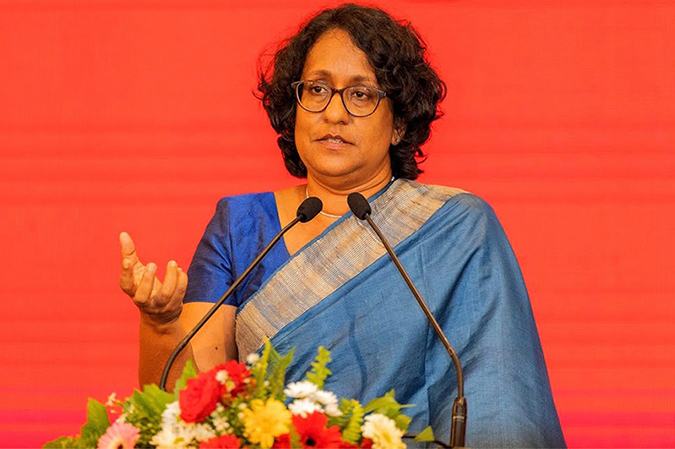
The newly appointed Cabinet Committee tasked with ensuring the uninterrupted functioning of Sri Lanka’s public service held its inaugural meeting on Thursday (19) at the Presidential Secretariat under the patronage of Prime Minister Dr Harini Amarasuriya.
The Committee convened to discuss strategies to maintain seamless government operations in the face of potential disruptions caused by the ongoing conflict situation in the Middle East, with particular focus on energy resource management.
According to officials, the discussions emphasised sustaining essential government services, ensuring continued service delivery to the public, and addressing the operational challenges faced by public sector employees during the current circumstances. The Committee also examined measures to mitigate any disruptions that could affect day-to-day administrative and service functions across ministries and departments.
Key attendees at the meeting included the Minister of Public Administration, Provincial Councils and Local Government A. H. M. M. H. Abayaratne; Secretary to the President Dr Nandika Sanath Kumanayake; Secretary to the
Prime Minister Pradeep Saputhanthri; Chief of Staff to the President Prabath Chandrakeerthi; and senior secretaries from key ministries including Health and Mass Media, Transport, Highways and Urban Development, Energy, and Digital Economy.
Representatives from state institutions such as the Ceylon Petroleum Corporation were also present, highlighting the government’s focus on energy security as a central priority. The Committee’s deliberations underscored a coordinated approach to balancing uninterrupted public service delivery with effective management of limited energy resources amid the ongoing geopolitical uncertainties.
Observers note that the formation of this Cabinet Committee reflects the government’s proactive stance in safeguarding national administrative functions and ensuring that critical public services remain resilient during times of external pressures.The Committee is expected to meet regularly to monitor developments, evaluate emerging risks, and implement practical measures to maintain operational continuity across the public sector.