
The Ministry of Communications and Transport of Bosnia and Herzegovina has issued a statement regarding the transporters’ protests announced for Monday, March 23.
As stated in the statement, the Ministry of Communications and Transport of Bosnia and Herzegovina understands the dissatisfaction and concerns of the transport sector, especially in the context of the announced protests, and notes that this is a “healthy economic sector of Bosnia and Herzegovina that is facing serious challenges”.
The Ministry notes that it is also important to be precise – that a significant part of the demands that the transporters’ associations are in focus today cannot be resolved by a single institution or level of government. As stated, these are issues that include the competences of the Council of Ministers, entities and entity governments, the Indirect Taxation Administration and the European Union.
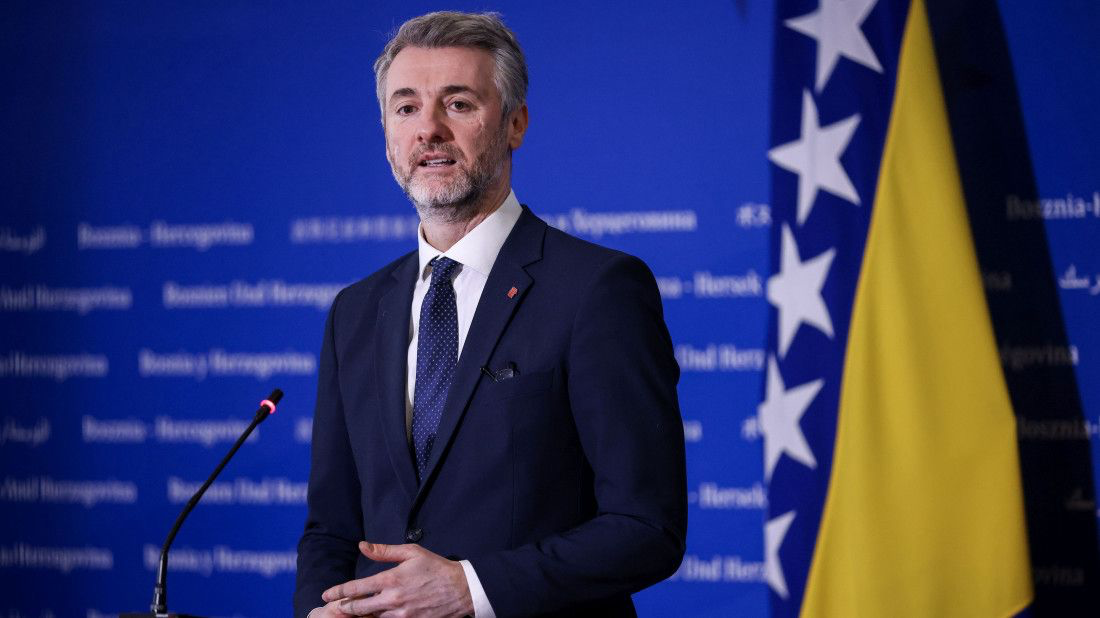
“We have done what is within our competence. And we continue to work for better working conditions for our transporters,” said the Minister of Communications and Transport Edin Forto.
The Ministry recalls that on the occasion of the Status of Professional Drivers in the EU (Rule 90/180), Minister Forto initiated regional coordination with the Western Balkan countries, sent a request to the Chairwoman of the Council of Ministers of BiH to hold an urgent meeting with the Government of the Republic of Croatia, as well as a request to the Government of Croatia for more tolerant treatment of our drivers at the Schengen border.
“A series of meetings were held with competent officials of the European Commission as well as ambassadors of EU member states in BiH, where the Minister advocated for a solution to this issue. Minister Forto coordinated the first interdepartmental meeting of the Council of Ministers working group to resolve this issue, which also included representatives of the Logistics Consortium,” the statement says.
Regarding the international transport permit, the Ministry emphasizes that the digitalization of CEMT permits has been initiated and electronic CEMT has been introduced, continuity in issuing permits to domestic carriers has been ensured, the transparency of the process has been improved and all permits in BiH have been public since 2019.
As highlighted, digitalization and further improvement of transparency are to follow – digitalization of transport and introduction of electronic consignment note (e-CMR), accession to the e-CMR protocol has been initiated, consultations have been conducted and key procedural steps have been completed. The Presidency of BiH has made a decision to accede to the e-CMR protocol. Ratification of the e-CMR protocol follows.
The Ministry underlines that the possibility of issuing the so-called “third plate” has been introduced, the system of qualification cards has been improved and the establishment of centers of excellence for training professional drivers has been enabled. The Regulation on the registration of professional qualifications (Code 95) has been finalized and published, and the Regulation on licensing has been amended.
“By order of the Minister, we are finalizing the analysis in order to optimize all fees with the intention of reducing costs for carriers where possible,” the Ministry announced.
The Ministry of Communications and Transport of Bosnia and Herzegovina remains open to dialogue, but also clearly emphasizes that key issues within the competence of the Ministry have mostly been resolved.
“Also, we appreciate that it will be difficult for our carriers to achieve their demands, especially those towards the EU, if these protests are not of a regional nature, and the damage to the BiH economy will be extremely great. Solutions for other open issues exist, but they require the joint work of all competent institutions as well as a proactive approach by the European Union and member states. In that process, the Ministry headed by Minister Forto will, as before, be an active and responsible partner to the transport sector of BiH,” the Ministry’s statement says.


