A 50-meter (164-foot) mountain of waste at Indonesia’s Bantargebang landfill, the country’s largest, recently collapsed following days of extreme rainfall that destabilized the massive, saturated pile. The tragedy resulted in seven confirmed deaths.
The head of Jakarta’s search and rescue office, Desiana Kartika Bahari, said the victims included two garbage truck drivers, three scavengers and two food stall sellers who had been working or resting near the landfill at the time of the collapse. Six people managed to escape the disaster. As of March 10, Bahari confirmed that no additional missing people had been reported by families.
Environment Minister Hanif Faisol Nurofiq characterized the tragedy as the “tip of the iceberg” of Jakarta’s failed waste management. After inspecting the site, he emphasized that the disaster was a serious warning to the provincial government to immediately end open dumping, the practice of illegally piling waste without proper containment.
“This incident should not have happened if waste management had been carried out in accordance with regulations,” Nurofiq told Antara, a state news agency in Indonesia. According to the ministry, the site currently holds 80 million tons of waste, which far exceeds its safe capacity.
Nurofiq noted that a 2009 law states that negligence resulting in death carries a prison sentence of 5-10 years and fines of up to 10 billion rupiah (US$590,000). The ministry has since initiated a formal investigation into alleged negligence from the site management.
Local residents also voiced their frustration. Putri Yorika, who lives 2 kilometers (1.2 miles) from the site, noted that the 110-hectare (272-acre) facility is essentially a ticking time bomb. “Every day more trash is dumped and piled without treatment,” she told “The soil sinks, the waste doesn’t decompose, and these accidents keep happening, endangering both the community and workers.”
The Bantargebang site has a history of tragedies, including a residential landslide in 2003 and a collapse in 2006 that buried dozens of waste pickers. More recently, in January 2026, a foundation collapse dragged three garbage trucks into a riverbed. Environmental watchdog Walhi told The Jakarta Post this was at least the fifth trash avalanche in the Greater Jakarta region over the past six months.
Wiratni Budhijanto, a chemical engineering professor at Gadjah Mada University, argued the underlying issue is how the city views waste. “The root of the problem is actually because waste management is still considered disposal, not processing,” she said in a university release. She noted that without source-reduction efforts, landfills will continue to reach dangerous heights.
As a long-term strategy, the Jakarta government plans to transition Bantargebang to store only inorganic waste. This plan relies on strengthening waste separation and optimizing the refuse-derived fuel facility in Rorotan, North Jakarta, which is designed to process 1,000 tons of waste per day.
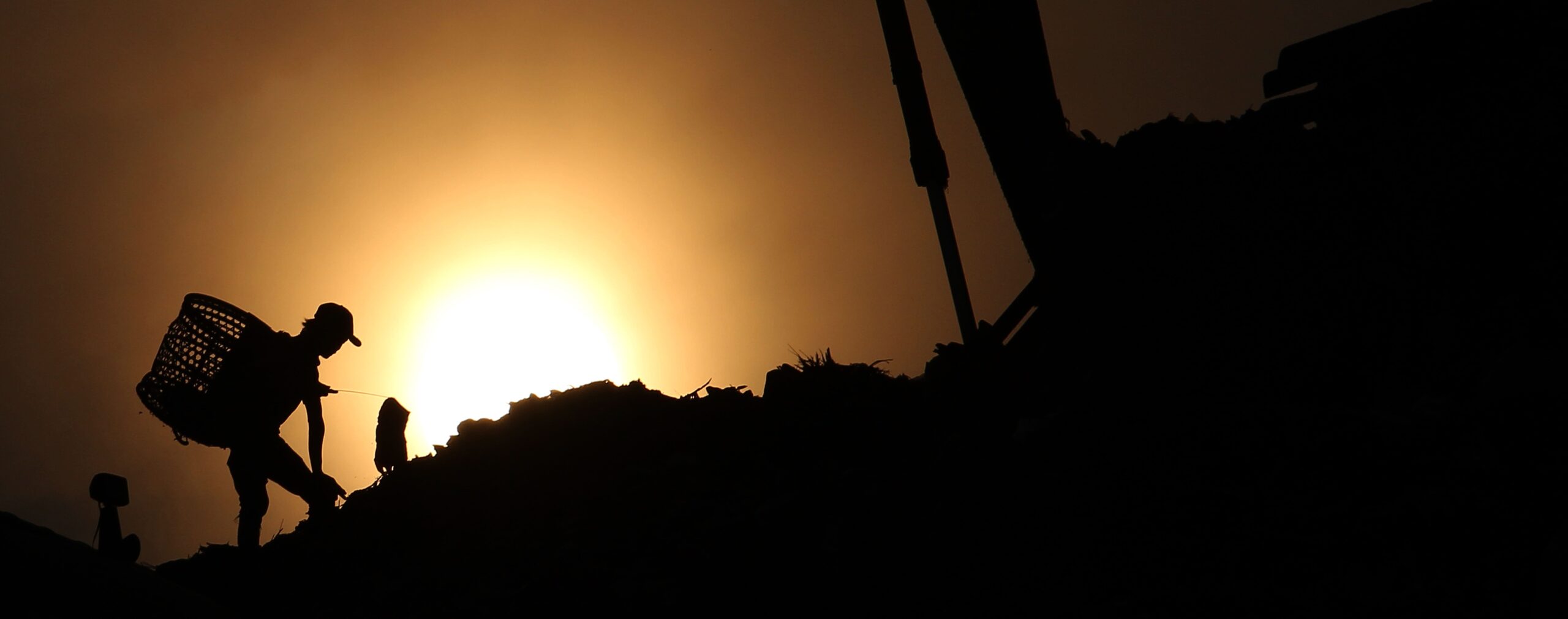
Banner image: An excavator collects garbage at the Bantargebang Integrated Waste Disposal Site. Image by Kuncoro Widyo Rumpoko via Wikimedia Commons (CC BY-SA 4.0).