- A federal court and Brazil’s environmental agency ordered the Belo Monte hydropower plant to revise the Xingu River’s water-sharing plan, a decade after its debut, but a legal stay blocks enforcement of the ruling.
- The plant’s water flow has been subject to several complaints, as low water levels in the Volta Grande do Xingu have dried flooded forests and rock habitats, disrupting fish and turtle reproduction and threatening endemic species.
- “Increasing the amount of water is the only solution to restore this ecosystem,” says Josiel Juruna, coordinator of an Indigenous-led monitoring program documenting the impacts.
See All Key Ideas
After 10 years of operation, the Belo Monte hydroelectric plant in Pará state has yet to resolve its most severe local impact: the reduction in water flow in the Volta Grande do Xingu. The 130-kilometer (81-mile) bend on the river in the Brazilian Amazon is rich in biodiversity and vital to Indigenous peoples and riverine communities.
Belo Monte is the largest hydropower plant in the Amazon and the second-largest in Brazil. Since construction plans began, local and Indigenous communities have been warning that the plant could disrupt the Xingu ecosystem and livelihoods. Ensuring sufficient river flow was a nonnegotiable condition of the project’s environmental licensing, but Belo Monte’s operator has invoked Brazil’s energy security to avoid reviewing the volume of water diverted from the Xingu River.
Technical reports by the federal environmental agency, IBAMA, alongside independent monitoring by researchers, have confirmed early warnings and pointed to grave and irreparable impacts across the Volta Grande (Big Bend) as Belo Monte began operating in 2016. Subnormal water levels have dried flooded forests and ironstone formations, disrupting reproduction and causing physical deformities and massive mortality among fish and turtle species, many of which are endemic to the region and critically endangered.
“The Xingu is a highly unique river,” Lúcia Rapp Py-Daniel, a biologist and researcher at the National Institute for Amazonian Research, told Mongabay by phone. “Several species of fauna and flora have adapted to the rapids flowing over an almost continuous bed of rock that exists only there. We are seeing a loss of biodiversity, particularly with the disappearance of fish species that in many cases have not yet been studied.”
Scientists work to measure a white pacu, a fruit-eating fish that has formed a fundamental part of the diet of local communities and, since the construction of Belo Monte, has seen a huge drop in their abundance as well as the size and weight of individuals caught. Image by Dimitri Selibas.
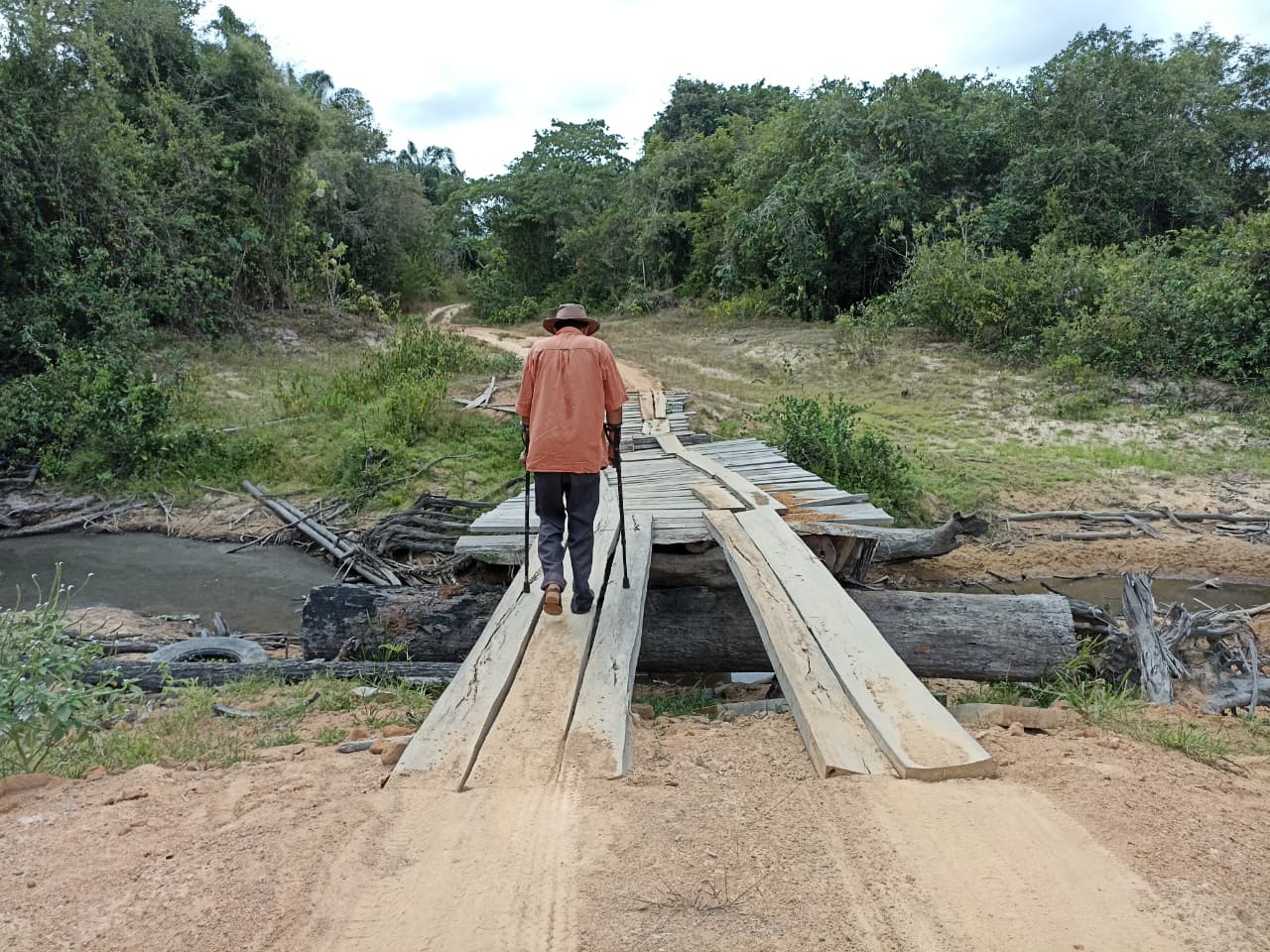
The collapse of the aquatic ecosystem has affected the Volta Grande fishery and the communities that depend on it for food and livelihoods, triggering profound social, cultural and psychological impacts. Families also face transportation hurdles due to low water levels in the Xingu River, which no longer flows through several channels, now completely dry.
Despite warnings from experts, Belo Monte was built in an area unsuitable for large-scale hydroelectric projects. Lacking a major reservoir to store water during the rainy season, the so-called run-of-river plant is highly dependent on flows from the Xingu River, a tributary of the Amazon. In terms of efficiency, the logic behind Belo Monte is simple: The more water diverted to the turbines, the more energy the operator can generate, and, as a consequence, less river flow is available for aquatic species to reproduce.
The Pimental dam, about 40 km (25 mi) downstream from the municipality of Altamira, retains up to 70% of the water from the Xingu River, routed through a 20 km (12 mi) diversion channel to an intermediate reservoir, which flows into the 18 main turbines. As a result, the Xingu’s Volta Grande section receives only a fraction of the water that once flowed through this large natural curve.
“It was a predictable tragedy,” Rapp Py-Daniel said. “We have not fully understood all the impacts associated with Belo Monte. We do not yet know everything that will be lost.”
The Belo Monte hydropower dam on the Xingu River is the largest in the Amazon and the second-largest in Brazil. Image courtesy of TV Brasil.
Belo Monte controls Xingu River’s flow
The artificial flow regime is controlled by Belo Monte’s operator, Norte Energia, under the so-called Consensus Hydrogram. This plan, approved by Brazil’s national water agency (ANA) before hydroelectric operations began and based on projections rather than actual conditions, establishes two minimum flow levels to preserve ecosystem dynamics in an attempt to simulate the river’s seasonal pulse.
It soon became clear that the water volumes projected by the Consensus Hydrogram were insufficient. In 2019, IBAMA highlighted the need to revise the water-sharing plan and established a provisional, less restrictive hydrogram, calling for additional studies to determine a sustainable river flow for the Volta Grande do Xingu.
In 2021, however, against the agency’s own technical findings, IBAMA’s then-president Eduardo Fortunato Bim, appointed by former far-right President Jair Bolsonaro (2019-22), authorized the adoption of the original Consensus Hydrogram, once again reducing the flow at the Xingu.
In the same year, in light of political interference in IBAMA’s technical oversight, the Federal Prosecutor’s Office (MPF) filed a lawsuit seeking a review of the Xingu’s water-sharing calculations.
Adding to the controversies, Belo Monte’s environmental license expired in November 2022, prompting IBAMA to review it, including its hydrogram. The agency already notified Norte Energia of the need to increase Xingu’s flow, Brazilian news outlet Agência Pública reported in 2025, but there’s no deadline for issuing a new license, valid for six years.
Rodrigo Agostinho (at the center), the head of IBAMA, Brazil’s environmental protection agency, has said “the most important thing is to guarantee the life” of the Xingu River that’s been impacted by the Belo Monte dam complex. Image courtesy of Pablo Valadares/Chamber of Deputies.
A legal battle has been underway ever since, with Norte Energia refusing to revise the hydrogram as the socioenvironmental crisis in the Volta Grande worsens.
In December 2025, a federal court in Pará ordered Norte Energia and IBAMA to revise the Consensus Hydrogram, requiring the creation of artificial flow controls to ensure sufficient water levels for maintaining ecosystems, local livelihoods and navigation in the Volta Grande do Xingu, with the effective participation of affected Indigenous and riverine communities.
The decision, however, is bittersweet. A stay of the ruling (suspensão de segurança in the Brazilian legal context), obtained by the same pro-Bolsonaro head of IBAMA in 2021, prevents judicial rulings from being enforced until all appeals are exhausted. The measure was justified on grounds of public and administrative order, arguing that the MPF cannot usurp IBAMA’s regulatory authority. Citing this legal shield, Norte Energia does not expect to review the Consensus Hydrogram until a final, nonappealable judgment is reached — a process that could take another five years, according to Belo Monte’s operator.
The same stay of the ruling has been cited to avoid complying with IBAMA’s request to review the hydrogram during the environmental license renewal process.
“Increasing the amount of water is the only solution to restore this ecosystem,” Josiel Juruna, coordinator of MATI, an Indigenous-led monitoring program in the Volta Grande region, told Mongabay by phone. “The impacts are becoming increasingly severe, even in years with higher rainfall, as the Belo Monte operator retains water in the reservoir and releases only the minimum required under the current hydrogram.”
Created by Indigenous and riverine communities during the construction of Belo Monte, the independent monitoring program has generated scientific data showing that Norte Energia minimizes the impacts of its operations. Supported by researchers from universities and environmental organizations, MATI has documented disruptions to fish reproductive cycles, the collapse of the food chain and deformities in species in the Volta Grande.
Volta Grande do Xingu resident Josiel Juruna leads an independent program monitoring the impacts of the Belo Monte. Image courtesy of Jennifer Bandeira/Instituto Socioambiental.
The energy security narrative
The history of Belo Monte has always been turbulent, marked by criticism from experts, environmental groups and Indigenous organizations, along with numerous legal challenges since the beginning of the permitting process. Promoted by leftist President Luiz Inácio Lula da Silva during his first two terms, 2003-11, the plant entered operation in 2016 under his successor and protégé, Dilma Rousseff, and was officially completed in 2019 under Bolsonaro, when the last of the 18 main turbines began operating.
Even in the face of warnings and extensive documented impacts, challenging the Belo Monte project has not been easy. An investigative report by Brazilian news outlet Sumaúma shows that Norte Energia maintains a media machine focused on publicizing positive news about the plant, emphasizing the importance of the hydroelectric plant for Brazil’s energy security without acknowledging its serious socioenvironmental problems.
Also, the reluctance to revise the Consensus Hydrogram is supported by influential sectors within the federal government. According to the Brazilian newspaper Folha de S.Paulo, the Ministry of Mines and Energy is attempting to circumvent IBAMA and ANA to expand its authority over Belo Monte’s operations and influence operational decisions, including the Xingu River’s flow levels.
Built as a key project for Brazil’s energy security, Belo Monte has operated below its installed capacity of 11,233 MW. Even with the diversion of large volumes of water that would otherwise flow into the Volta Grande do Xingu, the plant cannot run all turbines at full output. To increase power generation, even more water would be needed.
Pressure on water resources for energy production is expected to grow. Two major studies published in late 2025 warn that climate change could slash river flows and hydropower generation across the Amazon by up to 40% in the coming decades. According to experts, the Xingu River Basin in particular is likely to face significantly longer and more intense dry seasons, making Belo Monte one of the most exposed plants in Brazil.
“We are trying to postpone the end of the world in the Volta Grande,” said Ana Laide Barbosa, a representative of the Xingu Vivo Para Sempre Movement, echoing the ideas of Brazilian Indigenous leader and writer Ailton Krenak. According to her, different affected communities need to unite to demand a new sharing arrangement for the Xingu River’s flow, pressuring federal authorities and Belo Monte’s operator to engage in dialogue.
Indigenous people from the state of Pará, Brazil, demonstrate against the construction of the Belo Monte hydroelectric dam in 2011. Image by International Rivers via Flickr (CC BY-NC-SA 2.0).
During the COP30 climate summit, held in November in Belém, representatives of MPF, researchers and affected communities denounced the Belo Monte project as responsible for ecocide and ethnocide.
“The Brazilian government is ashamed to admit the damage caused by the construction of a power plant that does not generate the expected amount of energy,” Barbosa told Mongabay by phone.
In an official statement to Mongabay, Norte Energia said the Consensus Hydrogram has proven essential for Brazil and that technical discussions on defining a new model must consider not only environmental concerns but also energy security and consumer costs. (Read full statement here).
The company said technical reports submitted to IBAMA show that the changes observed in the Volta Grande are consistent with the scenario outlined in the environmental impact assessment and that there has been no ecological disruption, irreversible loss of ecological functions, local extinction of species or disruption of reproductive processes.
In the Volta Grande do Xingu, the impacts of low river flows are becoming increasingly severe over time. In late 2025, at the MPF’s request, a federal court ordered Norte Energia to provide drinking water to 635 families after their wells dried up.
“Communities in the Volta Grande will not adapt to this change. There is no way to avoid the environmental, economic, social and psychological impacts of water scarcity,” Juruna said.
Banner image: Dry canals in the Xingu River basin prevent boat traffic and make it difficult for local families to get around. Image courtesy of MATI/ISA.
Falling Amazon river flows trigger reality check at Belo Monte power plant
FEEDBACK: Use this form to send a message to the author of this post. If you want to post a public comment, you can do that at the bottom of the page.