The Gulf Cooperation Council (GCC) states import roughly 85% of their food needs, according to 2025 data from the World Economic Forum. This dependence leaves the region acutely exposed to global supply chain disruptions. Analysts estimate that strategic investments in food security and sustainability could add nearly $30.5 billion to the Gulf economy. Unsurprisingly, GCC food strategies now rest on strong government action, public-private partnerships, and an expanding ecosystem of technology, innovation, and agribusiness entrepreneurship.
The 2022 Global Food Security Index places all six GCC members—Bahrain, Kuwait, Oman, Qatar, Saudi Arabia, and the UAE—among the world’s top 50 performers. Their rankings reflect financial strength and sophisticated import systems. Yet the core vulnerability remains: the overwhelming majority of their staple foods—grains, rice, meat, and fresh produce—still originate abroad.
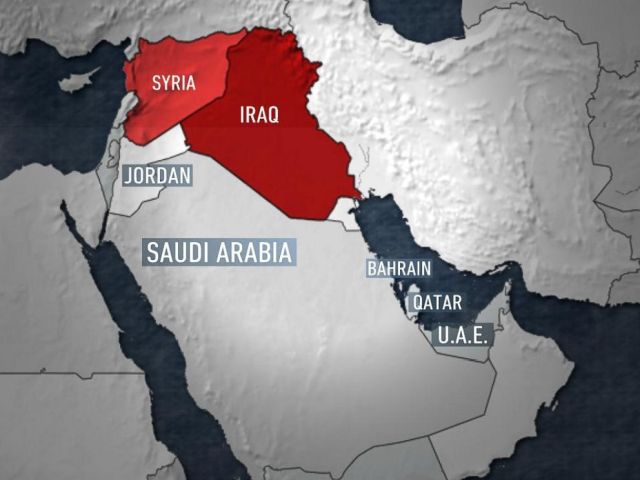
Amid profound geopolitical and economic shifts across the Middle East, the proposed Saudi–Syria Rapid Food Security Corridor emerges as a bold geo-economic project with the potential to reshape regional supply chains.
A Strategic Artery for a New Era
The proposal envisions a high-speed railway linking northern Saudi Arabia to Syria through Jordan. Beginning in Arar and extending toward major Syrian cities, the line would operate at speeds exceeding 200 km/h. Its central purpose is the swift movement of fresh produce and commercial goods, creating a new overland supply chain for food and trade.
This initiative directly addresses the fragility of maritime routes and the Gulf’s heavy reliance on the Strait of Hormuz—one of the world’s most sensitive chokepoints. Roughly 20% of global oil trade and a significant share of non-oil commodities, including food bound for the Gulf, pass through this narrow waterway.
Any disruption in the Strait immediately drives up shipping and insurance costs, delays cargo, and inflates consumer prices across Gulf markets. With the GCC importing more than $40 billion in food annually, the economic exposure is substantial. Perishable goods are especially vulnerable: even minor delays can cause spoilage, shortages, and price volatility.
Diversifying the Region’s Logistics Backbone
Eight major Gulf ports depend on unhindered navigation through the Strait of Hormuz, including Jebel Ali and Khalifa Port in the UAE, Hamad Port in Qatar, Shuwaikh and Shuaiba in Kuwait, Khalifa bin Salman in Bahrain, and Saudi Arabia’s King Abdulaziz and Jubail ports. Industry estimates suggest that 60–70% of Gulf food imports transit this maritime corridor.
While alternative ports outside the Strait—such as Jeddah and Yanbu in Saudi Arabia, Khor Fakkan and Fujairah in the UAE, and Sohar and Salalah in Oman—offer some relief, the region’s structural dependence on maritime freight persists. Developing resilient land-based alternatives is no longer optional; it is a strategic imperative.
Syria: A Natural Breadbasket for the Gulf
Syria’s diverse climate, fertile agricultural zones, and geographic proximity position it as a natural production hub for the Gulf. A high-speed rail link would allow fresh Syrian produce to reach Gulf markets within hours rather than days. Beyond food, the corridor would facilitate the movement of industrial goods and passengers, stimulating tourism and expanding bilateral trade.
For Syria, the project promises a broad agricultural and economic revival. Rising demand for exports would spur the creation of contract farming zones, modern grading and packing centers, cold-chain storage, quality-control laboratories, and advanced rail-loading facilities. Urban areas along the route—from Deir ez-Zor to Aleppo, and onward to Damascus and Daraa—would benefit from renewed investment and development.
Digital Borders and Seamless Integration
A rapid customs corridor at the Saudi–Syrian border, equipped with digital clearance systems and automated sanitary inspections, would reduce transit times from days to mere hours. Within Saudi Arabia, the rail line would connect to advanced distribution hubs, wholesale markets, and cold-chain networks, eventually linking to all six GCC states.
The project dovetails naturally with the India–Middle East–Europe Economic Corridor (IMEC) announced at the 2023 G20 Summit. In this framework, the Saudi–Syria corridor becomes a critical extension: goods would flow from India to the Gulf, cross Saudi Arabia by rail into Syria, and reach Europe through the Mediterranean ports of Latakia and Tartus.
In doing so, Syria would reclaim its historic Silk Road role—not only as a conduit for goods, but as a platform for modern agricultural trade, industrial exchange, and technological innovation.
A Vision Built for the Future
For decades, the Arab world has lacked meaningful terrestrial economic integration despite geographic proximity. This project offers a practical model for Arab economic unity, aligning the agricultural capacity of the Levant with the consumption power of the Gulf and the trade routes leading to Europe.
As global supply chains face mounting pressures—from geopolitical tensions to energy volatility and climate change—countries with flexible, multi-modal transport networks will be best positioned to safeguard their economies. The Saudi–Syria Rapid Food Security Corridor could become one of the Middle East’s most consequential strategic projects over the next two decades. It aligns closely with Saudi Vision 2030 and reflects a broader commitment to a prosperous, interconnected, and resilient region.
Ultimately, this project is far more than a railway. It is a comprehensive geo-economic vision: reducing dependence on the Strait of Hormuz, strengthening Gulf food security, reintegrating Syria into regional commerce, and linking the Levant to the India–Europe trade axis. By redrawing the region’s economic map, the corridor could anchor sustainable growth, modern infrastructure, and deeper cooperation across three continents.
This article was translated and edited by The Syrian Observer. The Syrian Observer has not verified the content of this story. Responsibility for the information and views set out in this article lies entirely with the author.