One month is far too short a period to meaningfully assess a government’s performance. Moreover, the context in which this government assumed office is unlike the usual transition from one administration to another. It came to power through an election held under an interim government formed after the bloody July mass uprising. Public expectations are therefore both high and unconventional, while the government’s own commitments are extensive and multidimensional. In that light, a month is hardly sufficient for a full evaluation.
That said, early actions can offer some indication of the direction ahead. In my view, the government’s activities so far are both encouraging in parts and concerning in others.
Given the changed political context, the Bangladesh Nationalist Party’s (BNP) 31-point state reform agenda, its election manifesto and the July national charter, the prime minister has set some positive precedents. For instance, members of parliament will not avail themselves of undue benefits such as duty-free cars or plots.
In line with its electoral manifesto, the government has initiated several welfare-oriented measures, including family cards and canal excavation. Efforts to introduce farmer cards and tree-planting programmes are also underway. These suggest a degree of commitment to fulfilling its promises and have generated some hope among citizens.
There are other positive examples as well. However, there are also troubling trends. These include removals and appointments in major state and accountability institutions. The manner and nature of some of these appointments are not reassuring. One such case is the departure of the governor of Bangladesh Bank and the appointment of a new one.
The government has made many commendable promises. None can be effectively realised unless corruption prevention is placed at the core of all programmes. Resistance may come from within the party as well as from the administration and bureaucracy.
During the period of authoritarianism, the banking sector was a major sphere of plunder. In that context, the latest appointment at Bangladesh Bank does not appear to have been well considered. If it was indeed a deliberate decision, questions may arise as to whether it was done with a certain purpose.
After assuming office, the chairman and two commissioners of the Anti-Corruption Commission (ACC) also resigned. This can hardly be described as anything other than removal. The haste with which it was carried out does not send a positive message. Similarly, partisan administrators have been appointed in local government bodies. In the same way, partisan academics have been chosen for appointing the vice-chancellors at the public universities. Comparable patterns are also visible in law enforcement agencies and the bureaucracy. Those steps are not compatible with the positive measures of the government; rather, those hints at politicising the state machinery through a risky practice of “now it is our turn”.
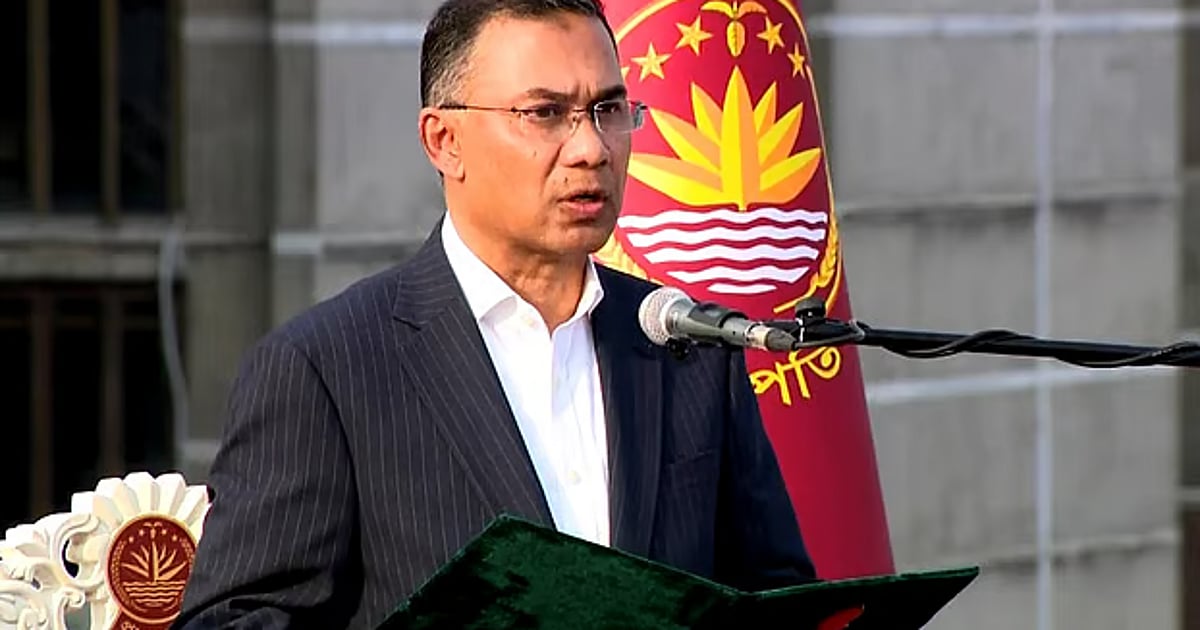
TIB Executive Director Iftekharuzzaman addresses of media conference to publish a research report titled “One Year After the Fall of an Authoritarian Regime: Expectations and Reality” at Midas Centre in Dhanmondi, Dhaka, on 4 August 2025
The government has pledged to build a corruption-free Bangladesh. In that spirit, appointments across sectors should have been more carefully considered. It must be recognised that while positive signals are coming from the top, good governance cannot be ensured by the head of government alone.
Those tasked with implementing commitments must demonstrate equal integrity and resolve. Yet, some questionable positions have emerged, for instance, attempts to frame extortion as a negotiated settlement. Despite widespread criticism, such positions appear to persist, while the government is yet to take a clear stance. One would have expected a strong message from the prime minister to colleagues or party members. That has not happened—though time has not run out yet.
The government has made many commendable promises. None can be effectively realised unless corruption prevention is placed at the core of all programmes. Resistance may come from within the party as well as from the administration and bureaucracy. Without prioritising anti-corruption efforts, even the most well-intentioned public initiatives risk failure. Every wrong step or failure will not only disappoint the public but also provide political advantage to opponents.
A new parliament has begun its journey. However, despite the referendum, a constitution reform council has yet to be formed. This is not surprising. From the outset, the BNP has opposed reform proposals outside its preferences during discussions at the National Consensus Commission, particularly those aimed at enhancing executive accountability. The party argued that such proposals would constrain the government, which effectively means attempts to prevent limiting the unchecked executive power.
In the 13th parliamentary election, the BNP-led alliance secured a more than two-thirds majority. As a result, even if a reform council were established, it would have been difficult to implement proposals beyond what the party desired.
Even so, the BNP has the capacity to implement reforms, and the people have given it that mandate. We hope that the government will honour its commitments by giving due importance to the reform proposals outlined in its manifesto, the July national charter and the recommendations of the 11 commissions.
These reforms are essential to prevent the rehabilitation of authoritarian kleptocracy, something the BNP itself has been a major victim of.
* Iftekharuzzaman is executive director of Transparency International Bangladesh (TIB)
* The views expressed are the author’s own