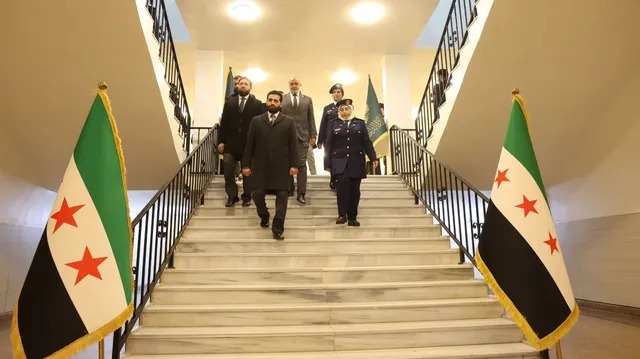
Syria has taken a significant step toward modernizing its security sector with the official inauguration of the Women’s Police Institute in Al-Tall, in the Damascus countryside. The new institution reflects a strategic shift toward professionalizing law enforcement and expanding the role of Syrian women in frontline policing.
A Strategic Vision for Modern Policing
Minister of Interior Anas Khattab led the inauguration ceremony, describing the institute as a specialized center dedicated to training and qualifying female police personnel. He noted that the facility is the product of nearly a year of intensive preparation, during which a multidisciplinary team worked to establish a modern educational environment capable of meeting contemporary security needs.
According to Minister Khattab, the initiative stems from the ministry’s conviction that women are indispensable partners in maintaining public safety. He emphasized that the government has prioritized expanding women’s participation in security roles since the post-liberation period, ensuring that training programs respect both the professional demands of policing and the social considerations unique to the sector—all while adhering to international standards.
Specialized Training and Community Engagement
The institute’s curriculum is designed to balance technical police training with the social dimensions of community security. Courses include legal studies, tactical field exercises, and specialized modules on family protection, child welfare, and the prevention of community-based violence.
Brigadier Huda Mahmoud Sarjawi, the institute’s director, described the project as a national response to evolving public safety challenges. “This platform prepares female officers to navigate complex professional realities,” she said, “and reflects the deep national trust placed in Syrian women to safeguard society and reinforce stability.”
Public interest has been remarkable: more than 15,000 applications were submitted for the first intake. The institute currently accommodates 200 trainees per cycle, with a four-month intensive program set to begin soon. The curriculum covers foundational policing, military discipline, and field operations. A specialized officer-training track, developed in coordination with the Police College, aims to cultivate a new generation of female leadership within the ministry.
Integration and Professional Renewal
A notable feature of the institute’s mission is the integration of female officers who previously defected from the former regime’s security apparatus. Minister Khattab welcomed their return, describing their inclusion as a qualitative addition to the ministry’s expertise and a reaffirmation of a national path that prioritizes service to the homeland.
Among these figures is Colonel Yusra Dhiyab Al-Qata’na, widely known as Al-Anoud, who now heads the institute’s Training and Rehabilitation Department. With a background in military and political science, Al-Qata’na defected in 2012 and spent years working in humanitarian logistics, supporting the wounded and displaced. Her experiences, she says, shaped her understanding of the resilience and potential of Syrian women.
“The hardships Syrian women endured during the war revealed their capacity to assume vital roles in this new phase,” she noted. Her current mission is to ensure that recruits are not only trained but genuinely prepared for the responsibilities of public service.
This article was translated and edited by The Syrian Observer. The Syrian Observer has not verified the content of this story. Responsibility for the information and views set out in this article lies entirely with the author.