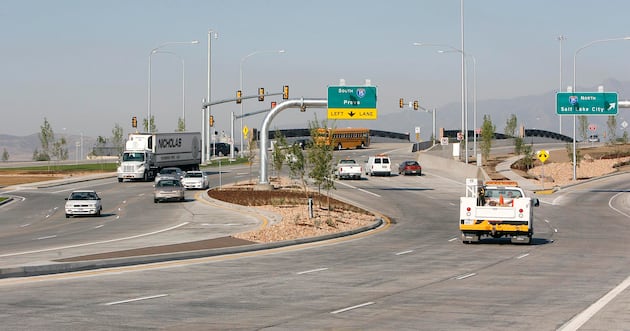
When Pioneer Crossing opened in 2010, it was built to serve a growing Utah County. Few anticipated just how quickly that growth would come. Since then, Lehi, Saratoga Springs and Eagle Mountain have more than doubled in population. Pioneer Crossing has become the main connection to I-15 and one of the most congested roads in the state, now carrying nearly twice the traffic it was built to handle.
This pattern is evident throughout the state, where population and traffic growth are exceeding what our roads and infrastructure can handle. As the state continues to grow, we face the reality that yesterday’s infrastructure cannot support today’s needs or those of tomorrow.
That’s why, during the legislative session, the House Majority Caucus took an infrastructure-first approach. Infrastructure isn’t just asphalt. It’s the foundation that fuels economic growth. When we invest in infrastructure, we are investing in people, prosperity and Utah’s long-term future.
Reliable roads and highways do more than move cars. They increase affordability, enhance connectivity and improve overall quality of life. The Legislature’s commitment to strategic infrastructure investments ensures Utahns can depend on safe, efficient transportation now and in the future.
Investing in infrastructure directly supports housing affordability in ways that create real, lasting impact. Areas like northwest Utah County and southwest Salt Lake County have room to build more homes. Increasing supply helps ease demand and stabilize prices. The reality is, when families must spend hours in traffic each day, they pay for it in higher fuel costs, increased vehicle maintenance and time away from loved ones. By investing in roads, we give families the freedom to live where housing is attainable without sacrificing their time or taking on added transportation costs.
Strong infrastructure not only supports daily life but also drives economic development and creates opportunity. Businesses look for communities where goods can move efficiently, employees can commute safely and utilities are reliable. Strong infrastructure attracts investment, supports small businesses, keeps Utah competitive and keeps Utahns working.
In recent years, the Legislature has demonstrated its commitment to infrastructure by making historic investments in corridor preservation — acquiring land now for future highways. This type of planning ahead will save taxpayer dollars and allow communities to grow around transportation corridors. None of this happens without collaboration. State leaders, local governments and community members all play a role in deciding which projects matter most. By listening to our constituents — the people who actually use these roads and systems every day — we can prioritize solutions that make the greatest difference for Utah families.
That commitment and collaboration is especially critical in high-growth areas like southwest Salt Lake County and northwest Utah County. In the last few years, the Legislature has allocated $2.1 billion to improve mobility in this region. This investment includes fully building out the 2100 North freeway, extending Mountain View Corridor into Utah County, upgrading Pioneer Crossing and completing portions of the Cory B. Wride Memorial Highway.
These projects are designed to provide long-term relief in some of the state’s most congested areas. The newly completed four-mile section of Mountain View Corridor is already improving travel between Salt Lake and Utah counties, reducing delays on Redwood Road and easing pressure on I-15 near the Point of the Mountain. Pioneer Crossing is also getting major upgrades that include using flex lanes to adjust capacity based on traffic demand and adding additional travel lanes to expand roadway capacity.
For years, Utah has prioritized planning ahead to support growth. By continuing the tradition of investing wisely, building responsibly and thinking about the big picture, we can build a strong foundation for what comes next.
Infrastructure may not be glamorous, but it is essential. When we invest thoughtfully, we aren’t just building roads — we are building stronger communities and greater opportunities for generations to come.