- Reaffirms Eswatini–South Africa water partnership for peace, cooperation and development
BY MBONO MDLULI
MBABANE – Prime Minister Russell Mmiso Dlamini says he is inspired by His Majesty King Letsie III of Lesotho and how the Kingdom of Lesotho has leveraged its water resources to drive development and strengthen regional collaboration.
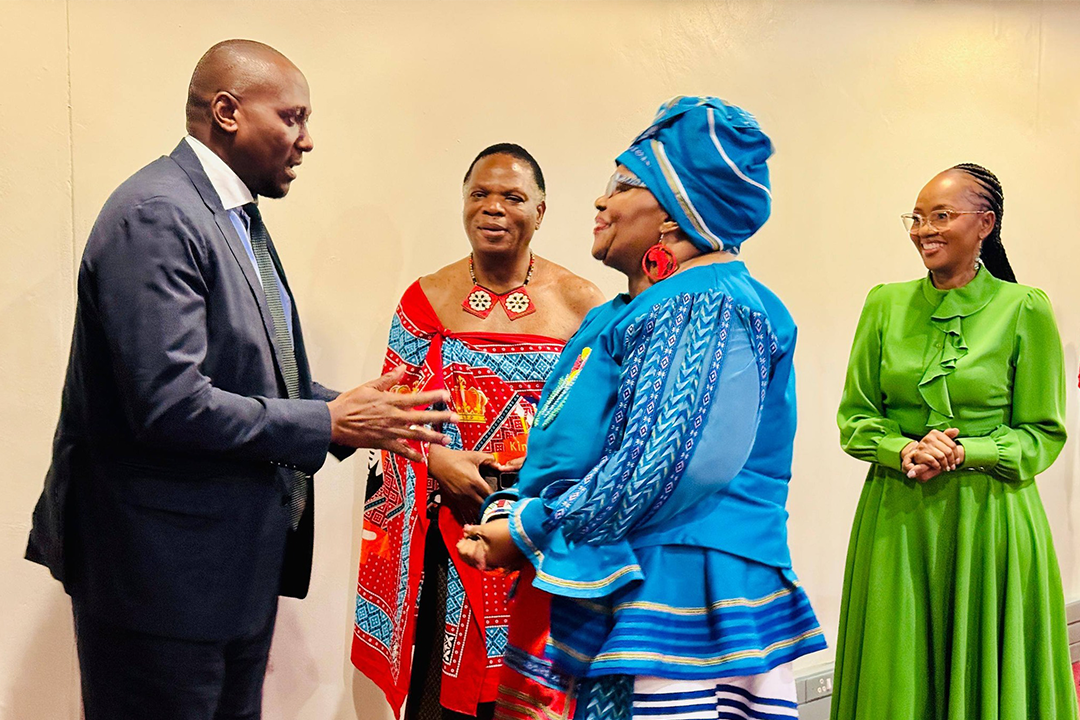
The Prime Minister made the remarks following a courtesy visit by South Africa’s Minister of Water and Sanitation Hon. Pemmy Majodina on Friday, March 13, 2026, at the Private and Cabinet Offices in Mbabane.
The meeting was also attended by Eswatini’s Minister of Natural Resources and Energy Prince Lonkhokhela and Eswatini Water Services Corporation (EWSC) Managing Director Jabulile Mashwama.
Hon. Majodina was in the Kingdom for the signing of the revised Komati Basin Water Authority (KOBWA) Treaty, an agreement aimed at strengthening cooperation between Eswatini and South Africa in the management of shared water resources. The treaty is expected to unlock new development opportunities while supporting regional economic growth.
Dlamini noted that projects such as the Maguga Dam demonstrate what can be achieved through strong partnerships between neighbouring countries. He said such projects provide a foundation for even greater regional initiatives in the future.
“Our discussions reaffirmed our shared commitment to using water as a resource for peace, cooperation and development. I personally draw inspiration from the leadership of King Letsie III of Lesotho, whose country has demonstrated how water resources can drive development and regional collaboration,” said the Prime Minister.
Lesotho fosters regional collaboration primarily through strategic, transboundary water-transfer infrastructure, supplying water to South Africa and partnering with Botswana. The Lesotho Highlands Water Project (LHWP) transfers large volumes of water from its mountains to South Africa’s Vaal River system, enhancing regional economic security, generating revenue and generating hydropower.
Key initiatives fostering this regional collaboration include:
- Lesotho Highlands Water Project (LHWP): Phase II, with an R43 billion investment, is set to increase water transfer to South Africa to over 1.27 billion cubic metres annually by 2028–2029 while generating renewable energy for Lesotho.
- Lesotho-Botswana Water Transfer Project: A major project approved by SADC to transfer 150 million cubic metres of water to Botswana and 158 million to Lesotho, promoting regional water security.
- Joint Water Agreements: Lesotho has engaged in agreements such as the Memorandum of Understanding for the Mohokare/Caledon River project to regulate water resources and improve irrigation and flood control.
- Regional Integration Frameworks: Lesotho participates in SADC and ORASECOM projects to manage water resources collaboratively for sustainable regional growth.
- Policy Alignment: Lesotho is working to join the UN Water Convention to bolster legal frameworks for transboundary cooperation.
These efforts are supported by collaborative partnerships with the World Bank and the African Development Bank to build local infrastructure, including in the Rural Water Supply and Sanitation Project and the Lesotho Lowlands Water Development Project.
The Prime Minister also pointed to the Grand Ethiopian Renaissance Dam (GERD) in Ethiopia as another example of Africa’s capacity to harness its natural resources for development. The project, valued at approximately US$5 billion, is designed to generate about 5 150 megawatts of electricity and was financed largely through domestic contributions by Ethiopian citizens.
On September 9, 2025, the premier was part of the opening of the GERD, whose construction began in 2011 under the then Ethiopian Prime Minister Meles Zenawi. He was among Heads of State present at the event, which included Kenya’s President William Ruto, Somalia’s President Hassan Sheikh Mohamud, Djibouti’s President Ismail Guelleh and South Sudan’s President Salva Kiir Mayardit. They all praised the project, saying it was going to be beneficial to East Africa.
During that event, Dlamini noted that Ethiopia’s example demonstrated how African nations can shape their own development pathways through unity, vision and commitment, without relying solely on external financial assistance.
In his keynote address at the inauguration ceremony, Ethiopia’s Prime Minister Abiy Ahmed acknowledged that the construction of the dam had faced diplomatic concerns from Egypt and Sudan, both of which depend heavily on the Nile River for water resources. However, he emphasised that Ethiopia remained open to dialogue with neighbouring countries to ensure the project promotes development and cooperation rather than conflict.
Prime Minister Dlamini said the declaration of 2026 as the Year of Water and Sanitation by the African Union provides an opportunity for countries in the region to pursue even more ambitious collaborative water projects.
He stressed that regional cooperation between countries such as Eswatini, South Africa and Mozambique could unlock significant economic potential while ensuring sustainable management of shared water resources.
According to the Prime Minister, water remains one of Africa’s most strategic natural resources and, when managed collectively, can serve as a powerful driver of peace, development and regional integration across the continent.
#WaterDiplomacy #RegionalCooperation #Eswatini #AfricaDevelopment #KOBWA
Post Views: 243