Originally published on Eurasia Review
Myanmar’s military junta is afraid of what the U.S. Congress is about to do—and their propagandists are stepping up a targeted misinformation campaign to stop it.
As the U.S. Senate prepares to take up the BRAVE Burma Act (H.R. 3190) and lawmakers finalize aggressive new tools targeting global scam centers, the generals and their enablers are waging a parallel war in the world of commentary.
One notable example is the recent Modern Diplomacy essay, “Beyond the BRAVE Burma Act: US Myanmar Policy at a Crossroads.” Its timing is not accidental. It arrives just as the Senate and State Department are deciding how far to go with sanctions and existing Burma-related funds.
Faced with the very real threat of targeted financial strangulation, junta-friendly narratives are attempting to rebrand the Act as a reckless neocon crusade, a threat to “Buddhist Myanmar,” and a strategic gift to China.
Those of us who follow both Myanmar’s war and Washington’s debates do not object to critical views of U.S. policy. If anything, rigorous scrutiny of sanctions design and unintended consequences is long overdue.
The problem is that this particular article does not offer balance or nuance; it advances a narrative built out of fear.
By misstating what the BRAVE Burma Act actually does, romanticizing the military’s role at home, and caricaturing the country’s democratic alternative, the junta’s enablers are trying to weaken one of the few realistic instruments the United States has to constrain a coup regime deeply intertwined with China, Russia, Iran, and a growing cyber-scam economy.
To understand the regime’s panic, we need to start with the law itself. The BRAVE Burma Act is not a blank cheque for regime change or a plan to collapse Myanmar’s entire financial system.
It extends and refines targeted sanctions authorities first laid out in the 2022 BURMA Act.
It directs the U.S. administration to identify and, where appropriate, sanction specific junta-linked revenue streams—such as Myanma Oil and Gas Enterprise (MOGE), Myanma Economic Bank, and foreign suppliers of aviation fuel used in airstrikes on civilians—while reporting regularly to Congress, as outlined in summaries from non-partisan trackers like The Capitol Wire and PoliScore.
It also creates a Special Envoy position to coordinate sanctions, humanitarian assistance, and diplomacy with regional governments and with Burmese democratic actors, including the National Unity Government (NUG) and ethnic organizations.
In other words, this is a narrow, reviewable toolkit: sanctions on named perpetrators and enablers, accompanied by reporting and a diplomatic channel.
The House has already signalled its intent to pair the Act with roughly $121 million USD in Burma-related assistance in this fiscal year, to be delivered through cross-border humanitarian and democracy programs rather than through the regime, as noted by groups such as Burma Rights Initiative.
If the disinformation framing is accepted—that the Act is a wild effort to punish “Buddhist Myanmar” and destroy its economy—it becomes easier for the Senate to water it down and for the State Department to sit on both new authorities and existing funds.
The article’s treatment of religion illustrates the desperation of this narrative. It leans heavily on the army’s own self-image as a kind of Buddhist “knightly order,” defending a unique civilization against Western liberalism.
That description jars with the detailed record assembled by the U.S. Commission on International Religious Freedom (USCIRF).
In its 2026 Annual Report, and on its Burma country page, USCIRF once again recommends designating Burma/Myanmar as a “Country of Particular Concern,” the harshest category reserved for the worst violators of religious freedom worldwide.
The Commission reports that Tatmadaw forces destroyed 379 religious sites in 2025—monasteries, churches and mosques—and killed more than 259 clergy and civilians in or around these places of worship, alongside continued persecution and forced conscription of Rohingya and other minorities.
USCIRF has gone beyond description. In related materials such as its hearing summary “Burma in Transition: Next Steps to Advance Religious Freedom and Improve Conditions,” it has urged Congress to prohibit governments on the worst-offenders list—including Myanmar’s junta—from hiring U.S. lobbying and public-relations firms.
The logic is clear: an authority that burns religious buildings and persecutes people of faith should not be allowed to purchase a cleaner image in Washington.
Set against that backdrop, an essay that presents the generals primarily as guardians of Buddhism and tradition is not offering a corrective to Western prejudice; it is participating, consciously or not, in a reputational campaign that official U.S. bodies have already warned about.
The same pattern appears in how the article describes the opposition. Readers are told that the only alternative to military rule is a mix of radical NGOs, drug-linked ethnic armies, and peasant mobs, structurally incapable of governing. That portrayal is out of step with what has actually happened inside Myanmar since the 2021 coup.
The vanguard of the Civil Disobedience Movement was not warlords or foreign ideologues, but doctors, nurses, teachers, civil servants, and students who refused to work under an illegal regime. Many of them have paid with their livelihoods and their freedom. Reporting by outlets such as the BBC, The Irrawaddy, and The Diplomat has documented this pattern in detail.
Today, that pattern is reflected at the top of the NUG. The minister who runs the Prime Minister’s Office is a widely respected orthopedic surgeon who left a senior hospital and academic post to take on civilian governance and health-sector reform in the middle of a war.
The minister responsible for humanitarian affairs and disaster management previously served as the dean of a major medical college, bringing decades of experience in public-health administration into the resistance’s efforts to support displaced populations.
The NUG’s president and prime minister themselves come from university-educated civilian political backgrounds formed in the pre-coup parliamentary era, not from militia fiefdoms or extremist seminaries.
None of this is to claim perfection. As many inside the movement admit, the NUG and allied forces struggle with slow decision-making, poor communication, and internal tensions. High-profile crises like the surrender of Bo Nagar and his Bamar National Revolutionary Army, after clashes with other resistance units, have rightly raised concerns about discipline and accountability, as covered by outlets such as DVB and SHAN News.
But those failures do not justify reducing a broad-based democratic movement to a caricature of chaos and fanaticism. Nor do they support the familiar excuse that “there is no organized alternative.” In Myanmar, an imperfect but genuine civilian alternative already exists. Allowing it to wither while invoking the fear of a vacuum is a choice, not an inevitability.
The junta is equally terrified of Washington’s new focus on transnational crime, which is why their propagandists glide past the regime’s growing entanglement in cyber-scam compounds that have proliferated in Myanmar and across the Mekong region.
Over the last few years, border areas in Karen and Shan State have become hubs for large-scale scam centers that traffic workers and defraud victims throughout Asia and beyond.
Analyses such as the International Crisis Group’s “Scam Centers and Ceasefires: China-Myanmar Ties Since the Coup” and investigations like Al Jazeera’s “Under Siege in Myanmar’s Cyber-Scam Capital” show how these complexes flourished in zones controlled or tolerated by junta-aligned militias and border-guard forces.
Washington has responded with a series of targeted measures that have Naypyidaw alarmed.
In late 2025, the U.S. Senate passed the Scam Compound Accountability and Mobilization Act (SCAM Act, S. 2950), which directs the administration to develop a comprehensive strategy to combat overseas scam compounds and authorizes sanctions, visa restrictions, and other tools against the foreign individuals, entities, and governments that run or enable them.
In the House, the Dismantle Foreign Scam Syndicates Act (H.R. 5490) has advanced out of committee, creating an interagency task force to impose sanctions on foreign persons who own, control, or support such operations—with a clear focus on Southeast Asian hubs, including Myanmar.
The U.S. Treasury has already used existing authorities to designate Burma-linked militias and companies for their role in scam operations, in press releases such as “Treasury Sanctions Burma Armed Group and Companies Linked to Scam Operations” and “Treasury Sanctions Burma Warlord and Militia Tied to Cyber Scam Operations.”
The Department of Justice and partner agencies have launched a dedicated “Scam Center Strike Force” focused on Southeast Asian scam hubs, explicitly including Myanmar.
On 6 March 2026, President Donald Trump added an additional layer by signing an Executive Order on “Combating Cybercrime, Fraud, and Predatory Schemes Against American Citizens,” accompanied by a White House fact sheet.
The order directs agencies to develop a coordinated plan to identify foreign scam networks and makes clear that governments which allow, protect, or profit from scam centers may face consequences, including sanctions, visa restrictions, and limits on assistance.
Myanmar under the junta fits that description uncomfortably well. Scam compounds in Karen and Shan areas grew for years under military and militia protection; the regime’s recent, highly publicized “raids” on selected sites took place only after intense pressure from China and other governments, as detailed in reporting such as Reuters’ “Global pressure forces Myanmar junta to crack down on scam centers.”
In that context, it is difficult to take seriously any narrative that frames the generals as natural partners against cybercrime. They look far more like arsonists posing for photographs with a fire hose.
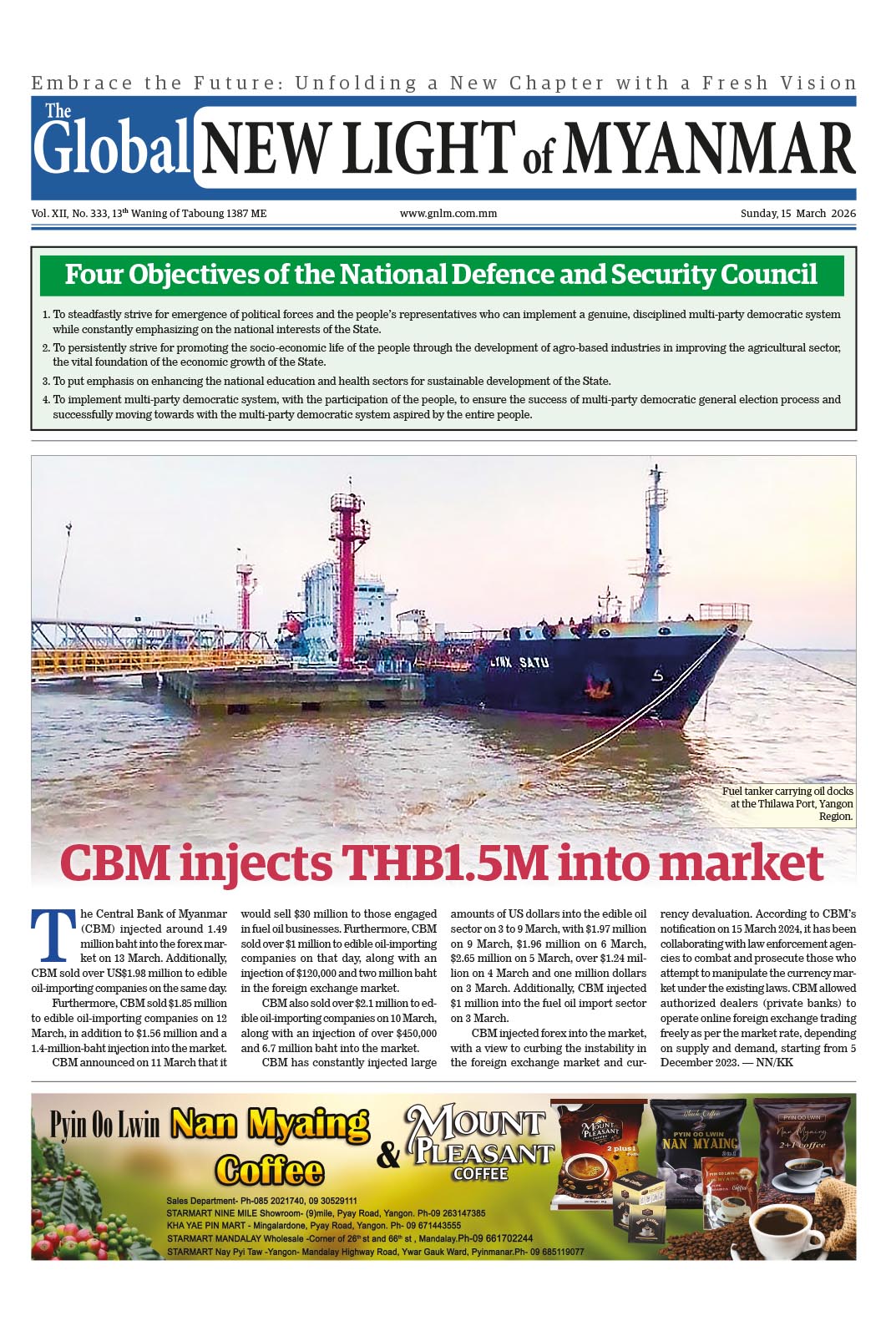
The same logic applies to the junta’s war economy. Public investigations by Burmese and international groups, including Justice For Myanmar, have traced a sharp rise in jet-fuel imports since 2024 through a shadowy supply chain linking Iranian ports, Vietnamese intermediaries, and Myanmar’s military-controlled enterprises.
Those supplies keep fighter jets and helicopter gunships in the air over villages and towns.
Analysts at institutions such as the Foundation for Defense of Democracies (FDD) have argued, in pieces like “Five Ways to Crack Down on Myanmar’s Military Junta,” that the current conflict with Iran may disrupt these routes and that the United States should use the authorities in the BRAVE Burma Act to target Myanma Petrochemical Enterprise, vessels, and middlemen involved in this trade.
Here again, the junta’s disinformation campaign tries to flip reality, claiming that sanctions merely hand Myanmar to China. For decades, it has been the military that invited deep Chinese and Russian penetration into Myanmar’s economy and security sector.
Beijing’s current approach to Myanmar has increasingly been described as “managed chaos”: supporting the junta enough to keep corridors and projects running, while also dealing with ethnic armed groups to ensure that no actor can operate outside Chinese leverage, as explored in regional analysis such as “Why the US Needs to Back Myanmar’s Spring Revolution.”
Normalizing relations with the generals in the name of “containing China” would solidify precisely the client regime on which that strategy depends.
All of this is unfolding as the junta tries to wrap its own rule in a new civilian veneer. After staging its own elections under bombardment and mass displacement, it is convening a new parliament backed by a Union Consultative Council designed to lock in military dominance regardless of who holds which formal title, as documented by Myanmar-focused rights groups and media.
Within ASEAN, discussion of a more permanent Myanmar envoy has raised concerns that routine engagement with the regime could become institutional habit even without real progress on the bloc’s Five-Point Consensus.
In Washington, the generals have hired major lobbying firms to promote a story of gradual normalization: elections, minerals, selective crackdowns on scam centers, and supposed cooperation against China—arrangements described in detail by Reuters and others in coverage of junta contracts with firms like DCI Group and the McKeon Group.
Seen against that backdrop, the Modern Diplomacy essay is more than just one opinion. It is a calculated piece of a wider effort launched by a regime that knows the legislative walls are closing in.
If this message takes hold, it will not only make it easier to dilute the BRAVE Burma Act in the Senate. It will also make it easier for officials to ignore or under-use the tools they already have: Burma-related appropriations, scam-center legislation, and the new cybercrime Executive Order.
U.S. lawmakers and officials are not naïve about Myanmar. Many have followed the crisis for years, read the same USCIRF reports, and understand how scam-center economies work.
They do not simply “fall for” a single op-ed. But in a crowded information space, even sophisticated readers benefit from clear reminders of what the law actually says and how the junta has behaved. That is why narratives designed to protect a failing, abusive military still deserve a careful, public rebuttal.
Myanmar’s future is not going to be decided in opinion pages. But opinion pages help shape how lawmakers, officials, and voters understand their choices. A serious debate about U.S. policy should absolutely ask whether specific sanctions are effective, how to minimize harm to ordinary people, and what a realistic endgame looks like.
It should not be built on the desperate propaganda of a regime that burns religious sites, enables transnational crime, and is currently terrified of being held accountable by the U.S. Congress.
James Shwe is a Burmese American Engineer residing in Los Angeles, California, USA. He was born in Yangon, Myanmar in 1954 and has been residing in the US since 1984. He is a Registered Professional Mechanical Engineer in California. He owns and operates a consulting engineering firm in Los Angeles.