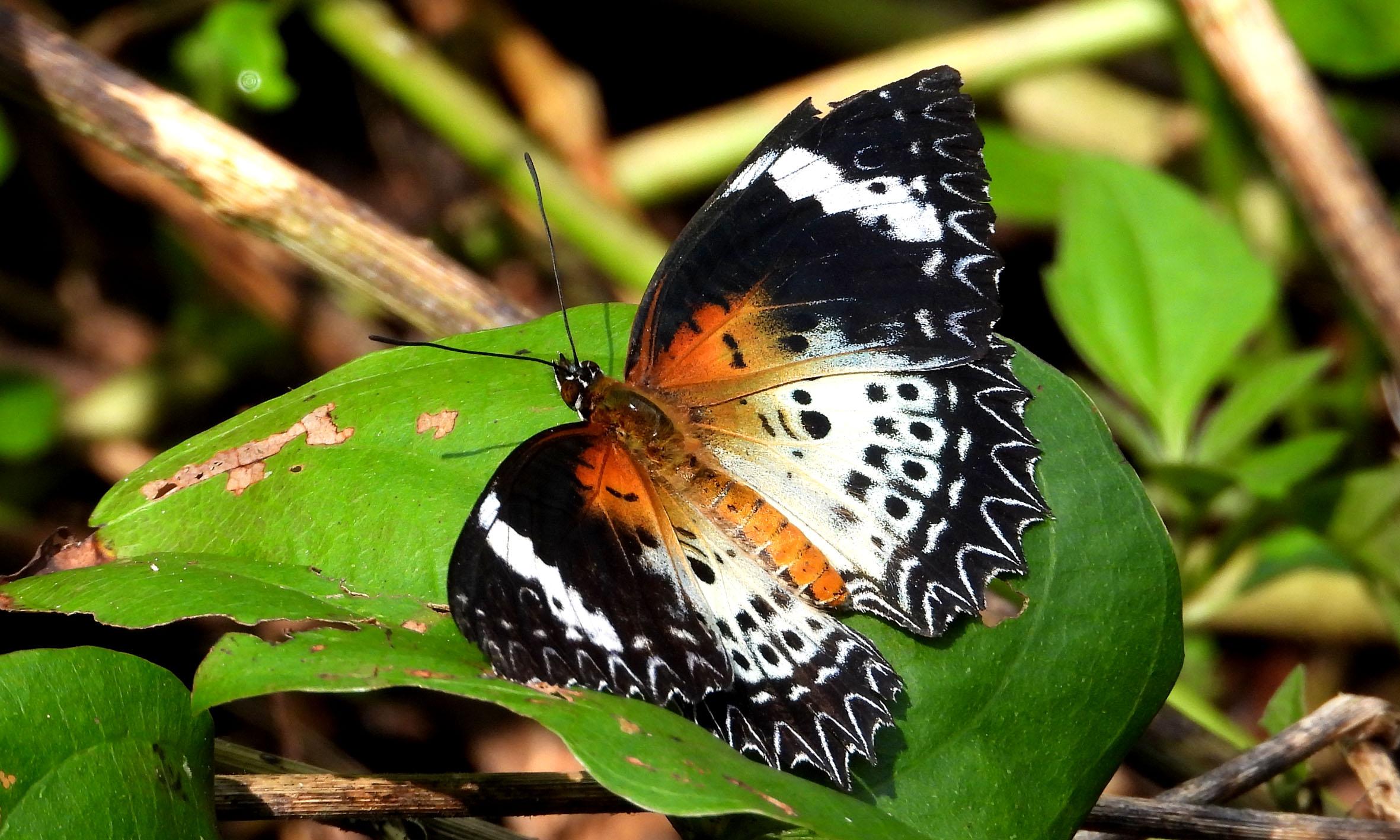
Visakhapatnam: Visakhapatnam’s streets and boulevards are awash with colourful flowers, thanks to the flowering trees that line them. Blossoming African Tulip, Pink Trumpet, Tabebuia Aura, and Tecoma Stans have given the city shades of red, pink, and yellow. Yet, butterflies are a rare sight.
S. Appanna, a researcher passionate about butterfly ecology, points out that city’s beautification drives often rely on ornamental exotics. While these trees are visually striking, they fail to serve as host plants for caterpillars.
“Ornamental exotics dominate the scene, but they don’t support caterpillars that develop into butterflies,” Appanna explains.
African Tulip (Spathodea campanulata), Pink Trumpet Tree (Tabebuia rosea), and Fountain Tree are nectar-rich species that attract adult butterflies. But do not provide the essential foliage for the butterfly larvae to feed and grow. Without host plants, butterflies cannot complete their life cycle, leaving the city’s butterfly population stunted, despite the floral abundance.
African Tulip, native to Africa, is prized for its fiery red-orange flowers and is widely planted across the tropics. The Pink Trumpet Tree, hailing from Central and South America, produces delicate pink blooms that brighten avenues. Both, however, are limited to being only the sources of nectar. Fountain Tree, another name for Spathodea campanulata, shares the same limitations.
Such species highlight the paradox of urban greening: beauty without ecological balance. The scarcity of native host plants explains why butterflies appear fleetingly during bloom seasons, but never have thriving populations.
A proof of this dichotomy is not far but in Vizag itself. Indira Gandhi Zoological Park (IGZP) of the city offers a model of ecological foresight. Its butterfly park has become vibrant in the region, thanks to its deliberate plant selection.
IGZP education officer Divya highlights that nectar plants in the zoo provide adult butterflies with energy, while the plants present sustain larvae, ensuring a complete ecological cycle.
Ornamental Lantana, locally known as Pulikampa, attracts Swallowtails, Birdwings, and Blue Tiger butterflies. Hibiscus supports Blue Tiger, Common Lime, and Crimson Rose butterflies. Some plants, like Cherry Pie, play dual roles, offering nectar while supplying alkaloids vital for male reproduction. Tigers, Indian Crows, and King Crows thrive on its presence. Similarly, Peacock Flower sustains species ranging from the Common Mormon to the Pale Black Rajah butterflies.
Native trees add depth to the zoo park’s ecosystem. Ashoka tree supports Oriental Tailed Jay butterflies, while Magnolia champaca is indispensable for the Tailed Jay. Creepers, such as Blue Morning Glory and Thunbergia grandiflora provide vertical diversity, feeding Swallowtails and Roses.
The IGZP Nursery section ensures sustainability by propagating plants through seeds and cuttings. Nerium oleander supports the Indian Common Crow, while Globe Amaranth and Marigold attract Pansies and Crows, keeping butterfly activity alive year-round.
Visakhapatnam’s streets may dazzle with exotic blooms. But IGZP demonstrates that true beauty lies in balance, where butterflies find not just nectar but a home where their caterpillars can thrive.