Worried about immigration actions across the nation, the Maui County Council voids longtime local partnership between its police and the FBI.
After months of discussion, activism and political maneuvering about immigration enforcement, Maui has inched ahead of other Hawaiʻi counties in reassessing its relationships with federal law enforcement agencies.
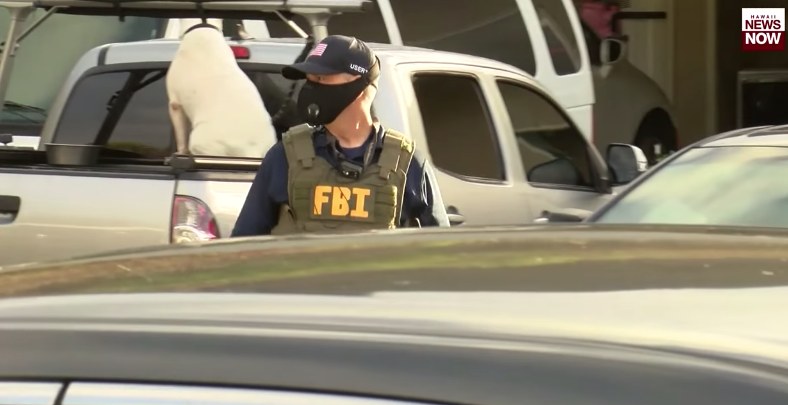
The county has at least temporarily untied itself from a partnership its police department has had with the FBI, and the County Council chair said she wants to revisit its agreement with the U.S. Immigration and Customs Enforcement agency, too.
Together, the developments could cut a path for other Hawaiʻi counties to follow, say advocates who have urged officials statewide to prevent local officers from becoming entangled in the federal crackdown on immigrants.
Maui County Council Chair Alice Lee called for a vote on Bill 92 so that council members would have to publicly say yes or no. (Screenshot/2026)
“Maui is ahead of the pack but also could be leading the other counties in an effort to really scrutinize all of these agreements and make sure they pass legal muster,” said Tina Sablan, community and policy advocate at The Legal Clinic, a Honolulu nonprofit that serves immigrants.
It began with a wrinkle in the law that required Maui’s agreement with the FBI to be updated after a change in leadership, in this case at the FBI’s Honolulu office. Activists seized the moment, mounting a letter writing and phone call campaign to persuade the council to slow down.
Last October, a vote on the bill was pulled from the council’s agenda. In a press release, Council Chair Alice Lee underscored why: “Due to public concerns, it seems reasonable to take a step back to further consider this bill.”
At subsequent meetings, council members expressed their own concerns about getting drawn into the Trump Administration’s crusade against immigrants — and the people protesting it. Five months later, on March 6 they unanimously rejected Bill 92, which would have sent the agreement — under which Maui officers could assist the FBI in terrorism investigations — to the mayor to sign off on it.
“…(U)nder the circumstances that we are living with, I don’t believe that the council will be inclined to support any agreement.”
Alice Lee, Chairperson, Maui County Council
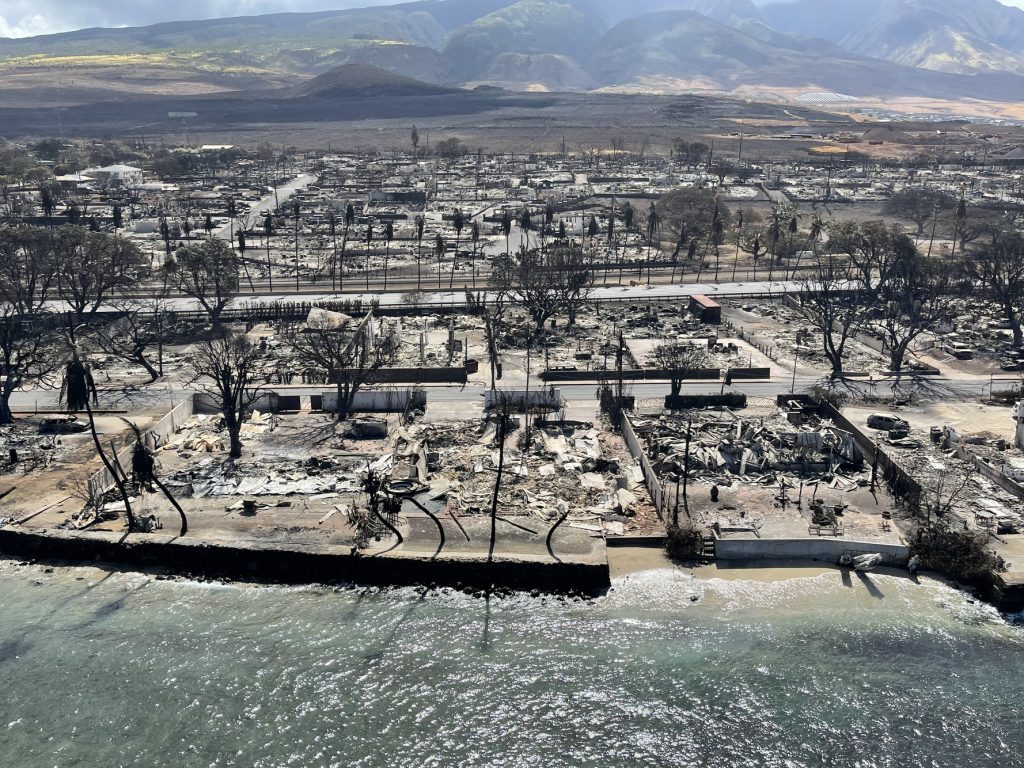
One immigrant advocate attributed Maui’s maverick move to fortitude earned during its recovery from the 2023 wildfires.
“When you have a destabilized situation like that, you have a more of a critical lens as to ‘What are the things that are serving us and what are the things that are potentially endangering us as a community?’” said Liza Ryan Gill, co-coordinator of the Hawaiʻi Coalition for Immigrant Rights. “They have developed that muscle to advocate for themselves.”
Lee later told Civil Beat that the council is going to scrutinize police department agreements not only with a unit of ICE but with the Hawaiʻi Army National Guard — and could well end them, too.
The council is leaning that way, she said, because of the harshness of the nationwide immigration enforcement campaign, which has continued in the face of more than 100 court orders to restrain it, taken in thousands of people without criminal records, and led to the shooting deaths of two U.S. citizens who were observing and protesting ICE agents.
“I’d hate to jump to any premature conclusions,” Lee said. “But in general, at this time, under the circumstances that we are living with, I don’t believe that the council will be inclined to support any agreement.”
‘Not Executed Properly’
Activists who had spent months trying to persuade the council to turn Bill 92 back were delighted by the outcome.
“We left feeling sort of victorious,” said Marnie Masuda, lead organizer of Maui Indivisible, which had campaigned against the bill since September.
Maui Indivisible leaders said a key part of the win was that the group had persuaded Lee to call a vote on Bill 92, not just kill it by filing it — a parliamentary move that would have let it die without council members having to take any public action.
That would have meant the bill could have been revived, said Jake Carton, the group’s special projects lead, “and we want this door closed.” It also would have let council members off the hook of actually voting on the merits of the FBI agreement.
“That’s not being accountable to the public because a ‘no’ vote is an individual vote on the record, saying ‘no’ to something,” Masuda told Civil Beat. “That’s how the public can better understand where our council members stand on things.”
Mimi DesJardins, Maui County’s First Deputy Corporation Counsel, said the police department’s existing agreement with the FBI-Joint Terrorism Task Force was void. (Screenshot/2026)
In the wake of that no vote on Bill 92, the county was left with the previous police-FBI agreement. Then something happened that surprised even the Maui activists: A county attorney said the police department’s existing agreement with the FBI didn’t hold up legally.
That came to light thanks to a resolution introduced by Council member Keani Rawlins-Fernandez, urging Maui Mayor Richard Bissen to terminate the agreement entirely. Asked by Lee to speak about her resolution, Rawlins-Farnandez instead turned to Mimi DesJardins, Maui’s first deputy corporation counsel.
DesJardins said the agreement – from 2007 – actually was never valid because then-police chief Thomas Phillips had signed it without bringing it to the mayor or council for their approval.
“It’s just been the practice and culture of how they’ve worked on these joint terrorism task force agreements.”
Mimi DesJardins, First Deputy Corporation Counsel, Maui County
“It was not executed properly,” DesJardins said.
That, Masuda said, “was a moment of celebration.”
The mayor needs to approve such agreements and if they impose any financial obligations on the county, the council must review them also, according to county ordinances.
“Apparently, the practice in the past of Maui Police Department has been consistently to not bring these to the councils,” DesJardins said. “It’s just been the practice and culture of how they’ve worked on these joint terrorism task force agreements.”
‘No Immigration Enforcement Whatsoever’
Police officials have not given up.
Chief John Pelletier had told the council in January he would work with the FBI to add language to the task force agreement to clarify that Maui police officers could not take part in immigration enforcement.
At the March 6 meeting, Deputy Maui Police Chief Wade Maeda reiterated that pledge — “No immigration enforcement whatsoever” — and outlined other steps. The department would create a new policy, he said, stating that it “understands the sensitivity and cultural significance of immigration in the United States,” and will not enter into a 287(g) agreement.
Deputy Maui County Police Chief Wade Maeda told the County Council that the department would not enter into a 287(g) agreement and would not participate in immigration enforcement. (Screenshot/2026)
Under the 287(g) program local police agencies can collaborate in a wide range of immigration enforcement, including identifying, arresting and jailing people suspected of being in violation of civil immigration law. It has grown tenfold since Donald Trump returned to office last January but no Hawaiʻi police departments have a 287(g) agreement with ICE.
At the March 6 meeting, Maeda sought to reassure council members about the Maui Police Department’s intentions in the partnership, should it continue: “If the president deems certain groups are now domestic terrorists, MPD will not go after these people because of a label. Remember, MPD will only investigate if a crime has occurred.”
He asked the council to file Bill 92 so that those changes, including new language in the agreement with the FBI, could be put into place. From the dais, Lee let him know the council was likely to vote no.
“I just want you to know up front, rather than surprising you,” Lee said. “Then we know that you understand our position and that you’re going back to the drawing table and work something else out.”
The question of whether a revised agreement would cost the county any money might be key, Lee suggested. If it didn’t, that might take it out of the council’s hands.
“If it doesn’t really concern any money, then we’re not the proper authority to review that,” Lee said. “We’re not in charge of operations. We’re in charge of budgets.”
Asked this week if the changes Maeda outlined would make a difference, Lee said: “If a different agreement came up to us, we’d have to take a look at it.”
Pelletier could not be reached for comment after the vote. Maeda, in a written statement, said the department doesn’t agree with counsel that the existing agreement is invalid.
But to address concerns “that the federal government will overstep its authority,” Maeda said the department will redraft the agreement, he said, to affirm that Maui officers won’t take part in immigration enforcement and won’t take orders from the FBI. That update would also state that the partnership would not cost either the Maui department or the FBI anything.
Masuda said the activist group is prepared for the possibility that the fight not be over, that the agreement could reappear at a future council meeting.
“But if that happens, we know what to do,” she said, “We just did it.”
Sign up for our FREE morning newsletter and face each day more informed.
Sign Up
Sorry. That’s an invalid e-mail.
Thanks! We’ll send you a confirmation e-mail shortly.