BY MBONO MDLULI
EZULWINI – The United Nations has reaffirmed its commitment to supporting Eswatini in strengthening investment-driven growth and sustainable development, emphasising the importance of modern development partnerships in a rapidly changing global landscape.
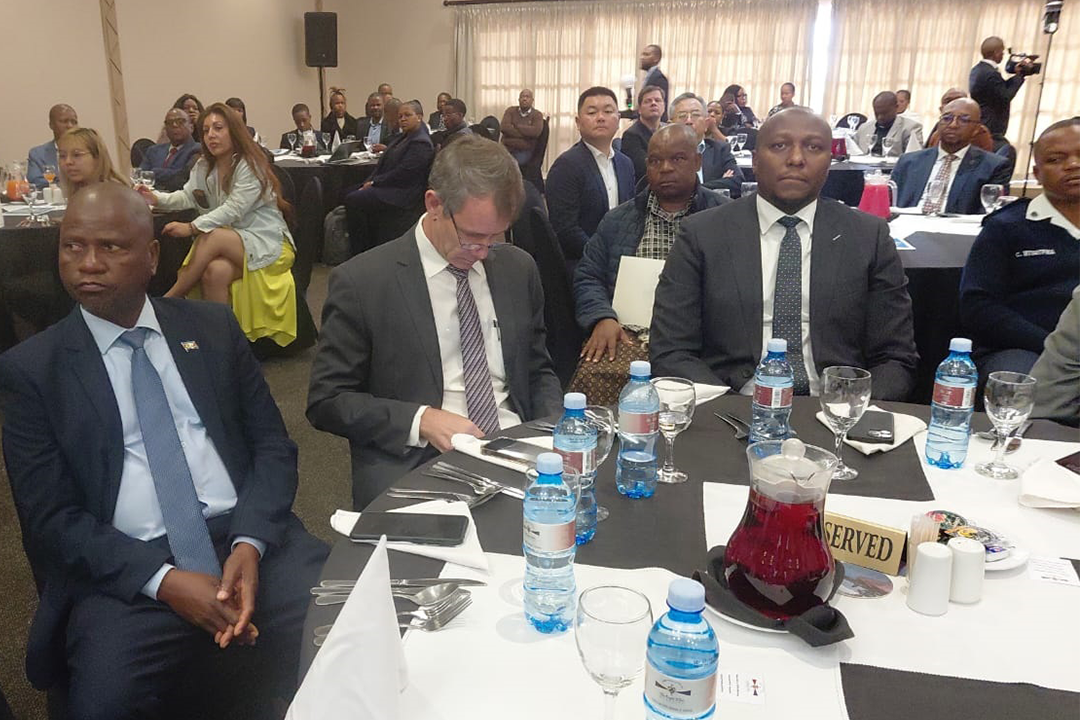
This message was delivered by George Wachira during the launch of the Eswatini Investment Conference 2026 held at Royal Villas on Monday.
Speaking under the theme “Re-Calibrating Development Partnerships at a Time of Change,” Wachira highlighted the evolving nature of global development cooperation and the growing role of investment and domestic resource mobilisation in driving national progress.
He explained that the concept of “development partners” first emerged in the 1980s as part of efforts to move away from the traditional donor-recipient model towards a more collaborative relationship between countries and international partners. However, he noted that global dynamics have since shifted significantly, with many nations now entering what analysts describe as the post-Official Development Assistance (ODA) era.
“In this increasingly competitive global marketplace, countries must grow their economies by attracting finance and investment,” Wachira said.
According to him, institutions such as the Eswatini Investment Promotion Authority (EIPA) play a critical role in positioning the country to attract investment and unlock new economic opportunities.
Wachira noted that while international support remains valuable, development partnerships today are increasingly centred on investment, domestic resource mobilisation and private sector participation, rather than traditional aid alone.
For a country such as Eswatini, which has attained middle-income status, he said the changing landscape should be viewed not as a challenge but as an opportunity to define development priorities and strengthen economic sovereignty.
“This transition gives countries the opportunity to take the driving seat in setting and implementing their development priorities,” he said.
He also highlighted the importance of strengthening domestic revenue collection and addressing financial leakages that limit economic growth.
Citing global estimates, Wachira noted that Africa loses between US$88 billion and US$580 billion annually through illicit financial flows, trade mispricing, tax evasion and other financial irregularities.
In Eswatini, he said tax compliance gaps are estimated at around E4 billion annually, particularly in areas such as Value Added Tax (VAT), corporate taxes and customs administration.
He emphasised that closing these gaps could significantly reduce fiscal pressure and increase government resources available for development.
Wachira pointed to examples from countries such as Rwanda and Mauritius, where the introduction of digital tax systems and stronger enforcement mechanisms has increased government revenue by between two and four per cent of Gross Domestic Product.
Another key priority highlighted during his address was the role of development partners in catalysing private investment.
Wachira explained that development partner support is most effective when it helps to attract and multiply private sector finance through instruments such as guarantees, blended financing mechanisms and risk-sharing arrangements.
He further stressed the need to strengthen institutions and governance systems that make markets more predictable and attractive to investors.
“Strong regulatory frameworks, reliable data and transparent governance are essential in lowering the cost of capital and improving investor confidence,” he said.
Wachira also encouraged a whole-of-government approach to investment promotion, where policies, legislation and institutional frameworks work together to create a stable and competitive investment environment.
He noted that digital transformation has become a powerful tool in improving service delivery, strengthening public financial management and reducing corruption.
Countries such as Estonia, Singapore and Mauritius have demonstrated how digital governance systems can transform economies by improving efficiency and transparency.
The UN Resident Coordinator also highlighted the importance of investing in youth-driven enterprises as a strategy for long-term economic growth.
With approximately 73 per cent of Eswatini’s population under the age of 35, Wachira said the country has the potential to turn its youthful population into a powerful driver of economic development.
However, he emphasised that this demographic advantage can only be realised if economies create jobs in scalable sectors such as agro-processing, information and communication technology, manufacturing, logistics and green industries.
“These sectors have the potential to unlock innovation, expand employment opportunities and drive sustainable growth,” he said.
Wachira concluded by reaffirming the United Nations’ commitment to supporting Eswatini’s development agenda through its upcoming 2026–2030 Cooperation Framework, which will guide collaboration between the UN and the country in key areas of development.
He revealed that additional UN agencies, including the United Nations Economic Commission for Africa, International Fund for Agricultural Development, International Telecommunication Union and UN‑Habitat, will expand their engagement in Eswatini.
Together with existing partners such as the Food and Agriculture Organization, the expanded collaboration will provide specialised expertise in economic policy, digital transformation, agriculture, urban development and regional integration.
Wachira congratulated EIPA for spearheading the investment drive and convening stakeholders committed to strengthening the country’s economic future.
He expressed confidence that strong partnerships between government, the private sector and development partners would position Eswatini to adapt to the changing global environment and thrive in the years ahead.
Post Views: 127