Family Affairs Minister Max Hahn, whose ministry is responsible for refugee reception centres, spoke to the Luxemburger Wort about the situation of refugees in the Grand Duchy.
The interview comes following a visit by Hahn and other deputies to state-run refugee shelters at the end of February, which some parliamentarians described as akin to a “prison”.
Max Hahn, a fortnight ago you visited three refugee centres together with members of parliament. The ones in Zolver and Mersch were particularly heavily criticised. Afterwards, you left without commenting on the visit. Why?
I didn’t receive any requests for interviews after the visit.
Members of the press stood in front of the structure and other deputies stepped in front of the microphones – but not you.
As a minister, I am always available if there are questions. I’m not one of those [people] who shy away from media.
After the visit, MPs spoke of “prison-like conditions” or “disastrous conditions” in the structures. Can you understand the criticism or did you see something else that day?
I have never made a secret of the fact that the structures we have in Luxembourg are what they are. I have never tried to sugarcoat anything. The situation is like this: we have a lot of beds, but we also need a lot of beds, which is why we can’t do without any structures. We have to make the best of the accommodation we have.
I would also like to emphasise that I was the one who suggested to the parliamentarians that they visit the structures.
You don’t want to sugarcoat anything, but would you really agree that “prison-like conditions” prevail in some structures?
No, I don’t think so. It doesn’t do justice to the picture I see. When you first visit a refugee centre, you can get the impression that there are security forces there. But they are there for the safety of the residents.
You just have to know that refugee reception is different all over the world, and you cannot always compare.
The Green MP Djuna Bernard said that she has “seen a picture of Luxembourg” that she is “not proud of”. As a minister, are you proud of the way Luxembourg treats refugees?
The question of whether I am proud or not does not arise. With over 8,000 beds, Luxembourg has always shown great solidarity. We are at the top of the podium in the European Union. But more effort is needed in this area.
Even if we only had the newest and most modern structures, I would not say that I am proud. For me, no one should be on the run and certainly not children or vulnerable people. We make the best of the situation to accommodate refugees in a dignified manner.
How do you measure that you are really making the best of the situation? After all, residents of refugee centres write you open letters in which they complain about “inhumane living conditions”.
It’s not just the minister who has to do his best, but all of us together: the government, the municipalities and civil society. Will we manage to make the best of the situation? We can always do better. This would be especially true if we had new structures. But even then, it’s not easy to live as a refugee. We have to make it clear to the people who come to us that they are living in Luxembourg in a country where there has been a housing crisis for 25 years, and not give them false hope.
A fortnight ago, members of parliament’s Family Commission visited the controversial refugee structure in Zolver. © Photo credit: Gerry Huberty/ LW-Archiv
There is constant criticism of the hygiene standards in the structures. Before the MPs’ visit to Zolver, Mersch and Käerjeng, there were allegedly major cleaning operations. Why were these necessary if you repeatedly emphasise that hygiene is guaranteed in the structures?
In the structures of the National Reception Centre (ONA), external companies that clean professionally are responsible for the maintenance and cleanliness of the shared rooms. This was the case before and is still the case today.
Did these cleaning activities only take place because members of parliament were visiting?
I didn’t give any such instructions in advance. On the contrary, I was the one who suggested that the MPs choose two structures to visit. Zolver was one of them.
The structure in Zolver has been criticised for some time because 29 women live there in a dormitory. Why don’t you just close the structure if nobody seems to be happy with it?
Renovations are planned. We will reduce the number of people in the dormitory and put up partitions. However, I would like to emphasise that there are no children or vulnerable people in the dormitory.
There is no one magic solution to provide the most modern beds that can be implemented at the flick of a switch. I am in favour of the policy of what is feasible. That means making the best of the structures we have.
Videos and photos of mold, dirt and blocked sinks have been leaked from several refugee shelters. How can this be when professional cleaners maintain the premises?
The pictures shocked me. Our aim is to welcome people with dignity. But there are a few black sheep who leave the facilities in the condition we found them in.
The pictures shocked me, especially when I think about the fact that our cleaning staff have to repair everything. It is unacceptable that Luxembourg’s solidarity in the area of refugee reception is not recognised and respected by various people.
However, those who are not “black sheep” live in filthy structures in the meantime. So what is your solution to provide them with dignified accommodation?
There will always be photos like the ones that have been circulating in recent weeks. There are always black sheep. The work of keeping communal areas clean and providing a dignified welcome also involves working with people. Those who are responsible for the filth must be held accountable. As far as I know, this is already happening. But it is difficult to find out who has soiled one of six toilets every time.
The photos have been circulating not just for weeks, but for years. So the measures taken so far don’t seem to be working.
It’s true, there is always criticism. We need to hold the people in the structures more accountable.
Is it really beneficial to keep talking about “black sheep”? After all, there is already a lot of agitation against refugees on the internet.
I’m trying to say exactly the opposite. We shouldn’t generalise. But it is enough that a few people shed a bad light on the area of refugee reception. But they are not representative of everyone. We have many success stories of refugees in the country. But there are also those who do not appreciate Luxembourg’s welcome. That is part of the truth.
The discussions surrounding the reception structures have once again fuelled the debate about the distribution of refugees in the country. The coalition agreement states that all municipalities will participate. Are you introducing mandatory admission quotas?
No one has yet been able to explain to me how such a quota would work. But it would have to be introduced by the minister of the interior, not me. In principle, I am not against such a quota. But would that mean giving municipalities three years from today to comply with the quota. That doesn’t solve my problem of admission at the moment.
And what should happen to the municipalities that don’t comply? Will they get less money? Will we confiscate their sports hall or their buvette? The mood in the country would change. I would advise against such things.
So you’re not against quotas, but you won’t implement them?
It doesn’t solve my acute problem today. What’s more, those who are calling for it the hardest today are also the ones who have been the minister of the Interior for ten years. They have not implemented quotas and probably not without reason.
Would you say that the municipalities are to blame for the fact that the reception centres in the country are overcrowded? Only a third of them are currently helping with reception.
My wish is that there is solidarity across the country and that every municipality helps. That’s why I go to the councils of aldermen and show them what structures would be possible and explain to them exactly how the whole thing works.
For example, that every refugee structure is 100%. But I also talk to them about their concerns and try to get them on board. We can only do this together, even if it is difficult and takes a long time. I also know that the structures that are being approved today will not be ready until after this legislative period, but it is important to me to keep the municipalities informed.
So the municipalities are currently lacking solidarity?
There are municipalities that are very supportive and others that don’t have the whole thing on their radar.
You said that you are touring all the communities to inform them about what they can do to help with the reception of refugees. So far, you have not been able to celebrate any significant success. Have you failed with your strategy?
I can tell you that when I try to ask communities for their solidarity via a newsletter, the response is very small. But when I go to the college of aldermen, I can address the concerns of the communities in one-to-one meetings. So you have the whole thing on your radar. But I won’t force anyone to do anything.
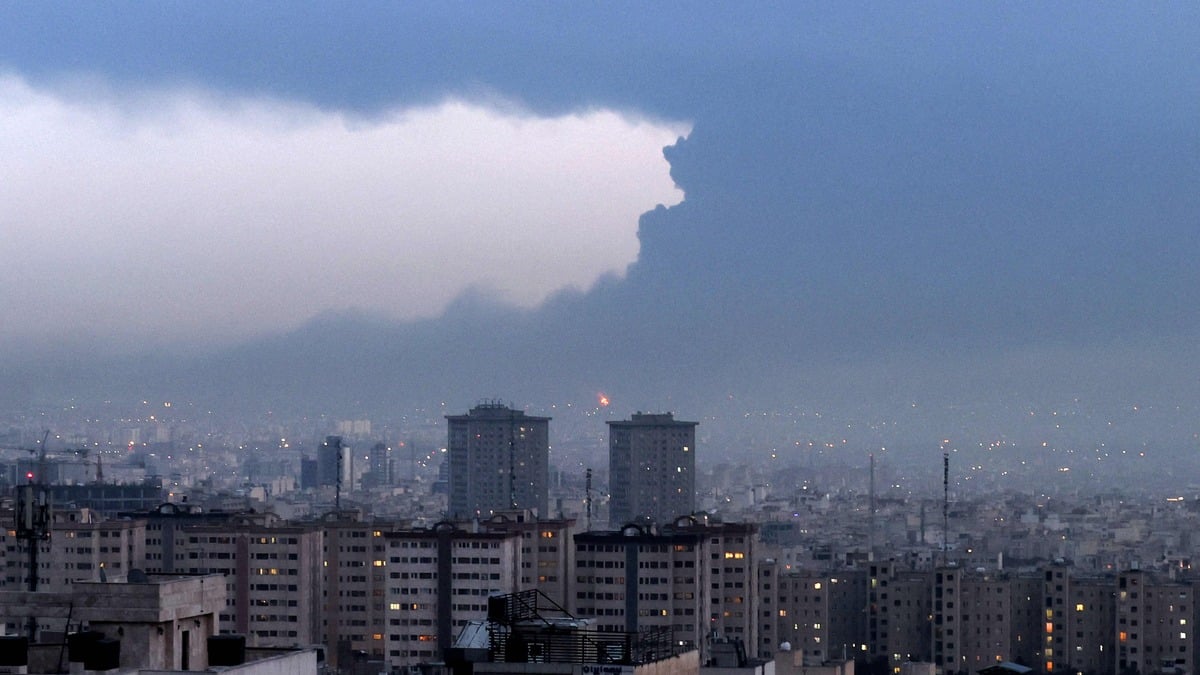
With the current events in Iran and the geopolitical instability in the Middle East, there could be another wave of refugees. Is Luxembourg prepared?
I am concerned about the situation there. As a minister, I know that if conflicts continue for a longer period of time, this will result in additional refugees. However, our reception network here in the country cannot cope with this. We are happy to be able to cope with the number of refugees we currently have.
So we wouldn’t have any capacity in the event of a large wave of refugees?
We don’t have the space. No country would be prepared for it. We are happy about every refugee who doesn’t come here.
(This article was originally published in the Luxemburger Wort. Translated using AI and edited by Kate Oglesby.)