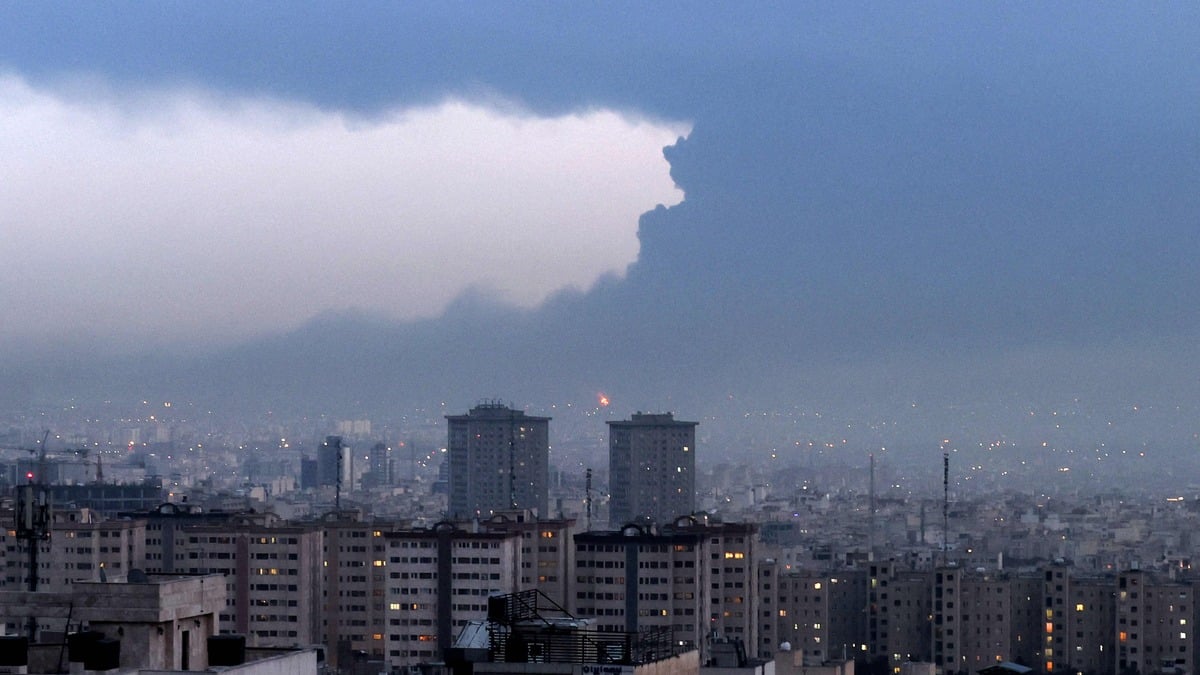
Oil soared above $100 (€86) a barrel as more major Middle East producers curbed production, the Strait of Hormuz remained all but closed, and the US threatened to deepen a conflict that has upended energy markets.
Brent spiked as much as 29%, the biggest intraday move since April 2020, while West Texas Intermediate jumped 31%. Prices pared gains after the Financial Times reported that Group of Seven finance ministers will discuss a possible joint release of oil from reserves co-ordinated with the International Energy Agency on Monday.
The war in the Middle East is showing no signs of abating after US and Israeli strikes on Iran more than a week ago, and the fallout is stoking fears of an inflation crisis. The halt to shipping through Hormuz — a narrow waterway that normally handles a fifth of the world’s oil — along with attacks on key energy infrastructure have driven up prices of crude and natural gas.
Oil prices have surged on Monday after Kuwait and the United Arab Emirates started reducing output as storage rapidly fills due to the closure of Hormuz. Iraq began shutting in production last week.
Trump says US may target new parts of Iran in escalating war
US President Donald Trump weighed in on the oil spike with a late night post on his social-media platform Truth Social, saying that short-term movements are a “very small price to pay” for the US, the world, and peace. He added prices will fall rapidly “when the destruction of the Iran nuclear threat is over.”
“We have seen a quick shift from the hopeful view that this would be a shortlived disruption to clearly something more prolonged now,” said Warren Patterson, head of commodities strategy at ING Groep NV. “As long as we don’t see oil moving through the Strait of Hormuz, oil prices will only move higher.”
More than a dozen countries have been sucked into the fray and Trump has signaled intentions to push on with the war. In a social media post early Saturday, said the US will consider striking areas and groups of people in Iran that were not previously considered targets. The remarks came after Iranian President Masoud Pezeshkian vowed not to back down.
Iran named the son of the late Ayatollah Ali Khamenei as its new supreme leader, the semi-official Fars news agency said on Sunday, with the Islamic Revolutionary Guard Corps pledging obedience to the new leader. Meanwhile, the US State Department ordered American employees and diplomats in Saudi Arabia to leave the country, citing safety risks.
More major energy infrastructure was threatened over the weekend, with Saudi Arabia intercepting and destroying drones heading to the 1-million barrel a day Shaybah oil field. Last week, the kingdom was forced to halt operations at the Ras Tanura refinery, the country’s biggest, and is seeking to divert barrels to its Red Sea ports for export after the Hormuz closure.
Middle East oil production shut-ins could expand to over 4 million barrels a day by the end of next week as storage fills and bottlenecks persist, JPMorgan Chase & Co. analysts including Natasha Kaneva wrote in a note dated March 8. The region accounts for roughly one-third of global output.
“Right now, the biggest fear is still disruption to flows through Hormuz,” said Haris Khurshid, chief investment officer at Karobaar Capital LP in Chicago. “Production shut ins matter but the market really worries about barrels not being able to move.”
Rising energy prices, including for products such as gasoil, are rippling through the market. China’s government has told the country’s top refiners to suspend exports of diesel and gasoline, and South Korea is reviewing whether to introduce an oil price cap for the first time in 30 years.
US retail gasoline prices have jumped to the highest level since August 2024, posing a significant challenge to Trump and his party at midterm elections later this year. UK Prime Minister Keir Starmer has raised the prospect of intervening to help households with soaring energy bills