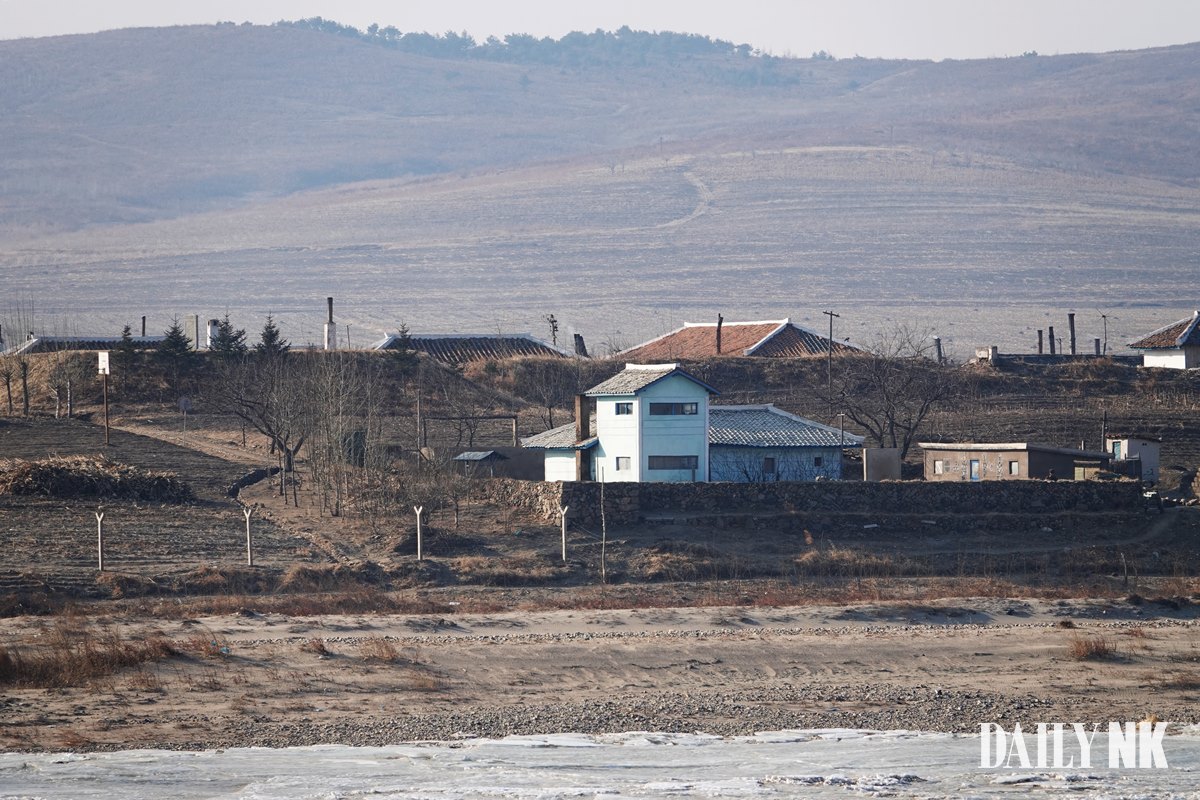
FILE PHOTO: A border patrol checkpoint in Pungso county, Ryanggang province, can be seen in this photo, which was taken in February 2019. (Daily NK)
Word that Iranian Supreme Leader Ayatollah Ali Khamenei was killed in U.S. and Israeli airstrikes has spread rapidly along North Korea’s border regions, prompting quiet but striking expressions of doubt about the country’s nuclear weapons program among local people, Daily NK has learned.
“Even a country with nuclear weapons got attacked — we can’t guarantee our own safety either,” residents in border areas have been telling close acquaintances, according to sources.
A Daily NK source in North Hamgyong province said Friday that the news had swept through Hoeryong and other border communities almost overnight. “People are saying the U.S. attacked Iran and killed its leader,” the source said. “But because the specific details haven’t been widely shared, all kinds of speculation is circulating.”
News filters in through Chinese mobile phones
Information that Pyongyang withholds from official channels tends to reach border communities relatively quickly through people using Chinese mobile phones to communicate with contacts abroad. The source confirmed the news of the Middle East strikes arrived through the same channels.
North Korea’s state newspaper, the Rodong Sinmun, did publish a foreign ministry spokesperson statement on March 2 condemning U.S. and Israeli military operations against Iran. However, it made no mention of the deaths of Khamenei or other senior Iranian leadership figures.
Even so, news of those deaths has been circulating in Hoeryong, where people have been adding their own speculation: “How did they pull it off with all that security around him?” and “Could there have been a spy on the inside?”
The reaction stands in marked contrast to January, when news that Venezuelan President Nicolás Maduro had been arrested by the U.S. generated a general sense among local people that the event had nothing to do with North Korea. This time, sources say, the emotional response is noticeably different.
“For a long time, people here widely believed that having nuclear weapons meant you were untouchable — that even the U.S. wouldn’t dare come after you,” the North Hamgyong source said. “But hearing that this happened to a country with the same nuclear capability as ours has been quite a shock.”
Some have gone further, voicing skepticism about the regime’s long-standing justification for nuclear development. “They told us to endure hunger because nuclear weapons would keep us safe, and that building them couldn’t stop,” one account described local people as saying. “If that’s true, then something like what happened to Iran shouldn’t be possible.”
A smaller number of people in border areas have gone so far as to say they wish war would break out in North Korea, though sources note this is less an expression of a genuine desire for conflict than a venting of frustration born from prolonged economic hardship and resentment toward the system.
“Saying you wish war would come is a kind of grumbling that people struggling to get by have muttered for years when things get bad,” the source said. “With life getting harder and now this Iran situation on top of it, that kind of talk is coming back up again.”
Hyesan, too, feels the weight of the news
The news has also spread quickly in Hyesan, a border city in Ryanggang province, where the reaction mirrors what sources described in North Hamgyong province.
When Maduro was arrested, the dominant sentiment in Hyesan was that such a thing “could never happen in our country.” But the Iran strikes are generating a different response. “It doesn’t feel like someone else’s problem,” residents have reportedly been saying. “We can’t say for certain something like this couldn’t happen here.”
A Ryanggang province source said that while the Maduro case left most people confident their nuclear arsenal kept them safe, the Khamenei killing is slowly eroding that belief. “The idea that even having nuclear weapons doesn’t guarantee safety — and that our country, which is on bad terms with the U.S., could be attacked at any time — is quietly spreading among people,” the source said.
Among some young people in Hyesan, more pointed observations are also being quietly exchanged: “Whether you have nuclear weapons or not, seeing America arrest and kill another country’s leader makes you realize how powerful they are,” and “They say we’re a nuclear power, but I wonder if we could actually win against the U.S.”
Sources note that all such conversations are confined to close family members and trusted acquaintances, given the political sensitivity of the subject.
Smugglers fear tighter border controls
The broader concern is that Pyongyang, once it recognizes how widely these doubts are spreading, may respond with intensified internal controls.
Smugglers operating along the border have already begun voicing fears that the current situation could trigger a crackdown. The source noted that the border region, as the point of origin for the spreading rumors, is seen as a likely target for tightened surveillance and enforcement.
“Smugglers know from experience that the more unstable the situation, the harder the crackdowns get,” the source said. “With smuggling already cut off for months and goods paid for in China still not making it through, this on top of everything else is making people even more anxious.”
“The U.S. actions — arresting and killing foreign leaders — are causing no small amount of shock and anxiety among people here,” the source added. “The fact that it happened even to a nuclear-armed country has been a particularly big surprise, and curiosity about what comes next for Iran is only growing.”
Read in Korean
A Note to Readers
Daily NK operates networks of sources inside North Korea who document events in real-time and transmit information through secure channels. Unlike reporting based on state media, satellite imagery, or defector accounts from years past, our journalism comes directly from people currently living under the regime.
We verify reports through multiple independent sources and cross-reference details before publication. Our sources remain anonymous because contact with foreign media is treated as a capital offense in North Korea—discovery means imprisonment or execution.
This network-based approach allows Daily NK to report on developments other outlets cannot access: market trends, policy implementation, public sentiment, and daily realities that never appear in official narratives. Maintaining these secure communication channels and protecting source identities requires specialized protocols and constant vigilance.
Daily NK serves as a bridge between North Koreans and the outside world, documenting what’s happening inside one of the world’s most closed societies.