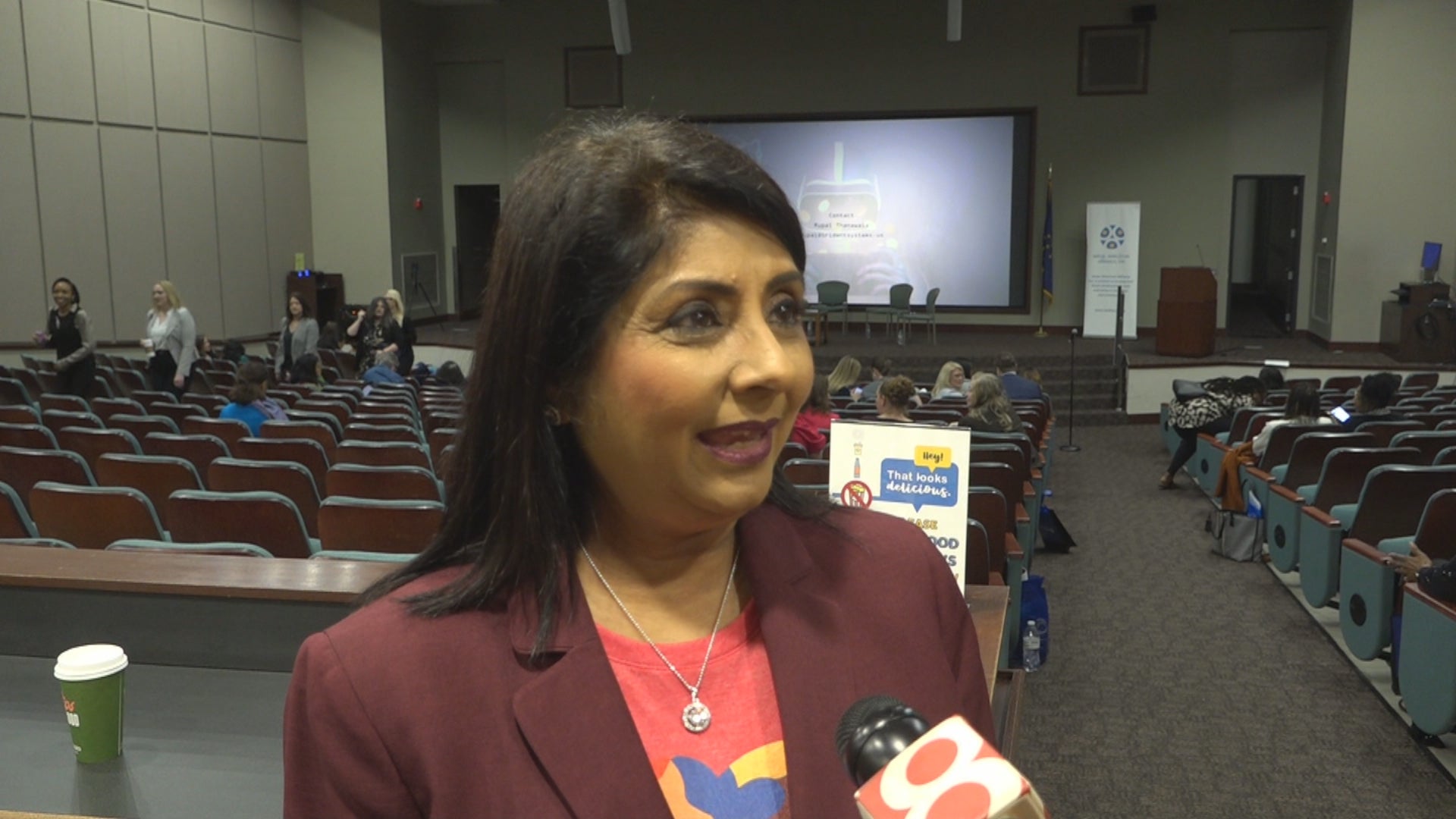
INDIANAPOLIS (WISH) — A childhood development researcher on Thursday said Indiana’s new social media law aligns with the latest research on the impact of social media on children.
Republican Gov. Mike Braun on Wednesday signed a bill that sets new limits on what social media platforms can offer teens. Beginning on Jan. 1, social media companies will have to verify the ages of anyone who requests a social media account in Indiana. If the person requesting the account is younger than 16, social media companies will have to get parental permission to create an account and the account could not have infinite scrolling, autoplay or livestreaming capability. Accounts also could not send or receive messages to anyone who was not a direct contact, such as a Facebook friend.
Lawmakers have considered legislation to limit teens’ access to social media in each of the past three sessions but it was the disappearance and death of 17-year-old Hailey Buzbee in January that pushed the new law over the finish line. Investigators said Buzbee left home after she communicated with a man through an online gaming platform for about a year.
Shu Su, assistant chair of the department of early childhood, youth and family studies at Ball State University, said research on the impact of social media on children and teenagers has returned mixed findings. She said most of the negative impacts can be traced to specific features such as infinite scrolling. Su said those features can impact the development of critical skills such as impulse control and time management.
“One of the most consistent findings in the research is, the strongest predictor of a negative outcome is not simply you have an account, or you’re spending time online, but what we call problematic or compulsive use,” she said, “and that kind of compulsive use is encouraged by specific design features that build into platforms.”
Su said it will take some time before the efficacy of the new law becomes clear, but she said lawmakers were smart to target features within the digital environment rather than trying to enact blanket policy.
“Hopefully, by changing the experience, they feel like they are less likely to use those platforms,” she said, though she added it’s possible teens might seek out less-used platforms that face fewer restrictions.
That question came up on the Senate floor during the final vote on the bill on Friday. The bill only applies to social media platforms with at least $1 billion in annual revenue. Sen. Mike Bohacek, R-Michiana Shores, who wrote similar legislation last year, repeatedly pressed Sen. Jeff Raatz, R-Richmond, on whether state authorities could find out if privately-held companies meet that threshold. Raatz said absent a major court ruling, officials could only obtain revenue figures if a company is publicly traded. Meta, the parent company of Facebook, Instagram and Threads, is publicly traded and thus must disclose revenue figures. The same is also true of Snap Inc., which owns Snapchat. TikTok and X are both owned by privately held companies.
In the meantime, Su said parents should have an open and ongoing conversation with their children about how they use social media. She said a good question to ask is how, specifically, the child interacts with the social media platform; for example, communicating with friends versus passive scrolling.
She said parents should set reasonable daily limits on how much time their child can spend on social media and adjust the rules based on their child’s needs and what they’re capable of doing.
Finally, she said parents should themselves model healthy online behavior.