When self-censorship becomes pervasive, a society forfeits more than the right to open dissent; it forfeits the very conditions that make common knowledge possible – the shared awareness of what others know, think, and believe. In such an atmosphere, individuals can no longer reliably gauge the convictions of their peers or distinguish private doubt from public consensus. Suspicion replaces certainty. Silence becomes interpretive rather than neutral. What follows is not merely quiet but fragmentation: a once-shared reality splinters into isolated, disconnected, and often contradictory worlds of understanding.
Public discourse may continue, but increasingly as a kind of performance. Stripped of candour and reciprocity, it grows hollow – symbolic rather than substantive, ritualised rather than genuinely deliberative. Words are still spoken, meetings still convened, statements still issued, yet the essential function of discourse – to reveal disagreement, test ideas, and generate shared understanding – slowly erodes. What remains is the appearance of debate without its substance.
Keeping the points raised in the introduction in mind, we can now proceed to analyse how self-censorship operates at boththe individual and group levels in Eritrea.
The episode at the University of Asmara offers a particularly stark illustration of this dynamic. The dismissal of thirty-four academics in September 1993, coming so soon after independence, was not merely a bureaucratic decision or a routine institutional reshuffle. It was a formative act in the intellectual life of the new state. Its significance lay less in the immediate loss of lecturers than in the signal it sent to those who remained … that certain questions were dangerous to ask, and that the pursuit of knowledge itself could carry consequences beyond the professional realm. Such signals recalibrate institutional behaviour. Faculty members, uncertain of the boundaries of permissible thought and unsure of who shares their reservations, internalise restraint. As self-censorship spreads, the university may retain its formal structures – lectures delivered, degrees granted – yet its deliberative core is diminished. The erosion of common knowledge transforms discourse into performance, and intellectual life into ceremony.
Yet beyond this public rupture lies a more intimate and disquieting reckoning: my own silence. Although I registered the gravity of the event, I did not articulate opposition. I neither protested publicly nor expressed dissent beyond the confines of what felt minimally secure. Fear, initially subtle and rationalised as prudence, gradually asserted itself with constricting force, delimiting both speech and action.
Within the political atmosphere of that moment, dissent was readily construed as indulgence or disloyalty, a posture attributed to the imprudent or the insufficiently patriotic. Courage appeared to demand a degree of personal risk for which I was unprepared. In its place, I embraced a repertoire of justificatory narratives – invocations of timing, discretion, and survival. These were not grand ideological commitments but the modest, familiar grammars of self-exculpation.
If any obligation remains to me now, it is to ensure that this episode persists within the domain of public memory. To recall it is not merely to revisit a personal failure, but to acknowledge a formative rupture in the intellectual and moral history of a newly independent nation.
How Did Self-Censorship Creep In?
How did I begin to censor myself as Eritrea’s new rulers consolidated power through hero worship and spectacle? What unfolded was incremental, almost ordinary. In response, I internalised the boundaries without ever being explicitly told where they lay. It felt like prudence – a necessary adaptation.
Over time, that adaptation hardened into the construction of my own cell, brick by brick, bar by bar, long before I understood that it would confine me. Yet I was not building alone. The mortar was mixed in a collective silence; the design was shared, even if unspoken.
I believe my self-censorship emanated from a skewed logic I carried within me: How could one question the supposedly “infallible” EPLF? I asked myself. The atmosphere recalled the old parable of the emperor’s new clothes: doubt was privately acknowledged yet publicly denied. We performed belief for one another and mistook the appearance of unanimity for genuine conviction.
Over the years, I have revisited the arguments I once rehearsed in my own defence – arguments that were measured, rational, almost gentle in their self-deception. I persuaded myself that Isaias Afwerki – newly enthroned, unelected yet wrapped in the aura of inevitability – must surely have been guided by some grand-national design beyond my limited sight. I interpreted opacity as depth. I confused fear with discipline. I dignified my silence by calling it patience.
That story once soothed me. Now it accuses me.
What I named restraint was, in truth, hesitation draped in respectability. What I called loyalty was obedience emptied of moral inquiry. By remaining still – by declining to ask even modest public questions – I became, however reluctantly, part of the machinery I privately distrusted. My silence was not neutral; it was contributory. I lent it to a project that would slowly hollow out the University of Asmara – not with spectacle or sudden collapse, but with method, with increments – and then extend that same narrowing logic outward, beyond lecture halls and laboratories, into the broader bloodstream of society.
There was nothing theatrical about what followed. That is perhaps what made it so unbearable. No dramatic rupture, no thunderous betrayal – just a slow settling, like dust after a storm. Liberation did not collapse in a single moment; it quietly reshaped itself into something unrecognisable. What we had called freedom gradually learned the language of subjugation.
Silenced Voices: How Self-Censorship Shaped Former Freedom Fighters and Civilians
Our lions – those who had roared across mountains and deserts for independence – did not change overnight. They grew tired. They longed for stability after years of sacrifice. And in that longing, something subtle shifted. The fierce guardians of a people became careful custodians of their own survival, waiting for gestures of approval, for appointments, houses, diplomatic postings, titles. Proximity to power began to feel safer than proximity to principle. It was not cowardice alone; it was exhaustion, hope, and perhaps the deeply human desire to believe that the struggle had not been in vain.
In those fragile early years, civilians stood at the margins, watching and waiting. They were told to be patient and to trust the process. Yes, to endure just a little longer. Yet patience did not lighten their burden. They were pressed for resources and loyalty alike, treated less as citizens than as reservoirs from which the new elite could draw. Many saw what was happening. But disbelief dulls alarm, and hope can postpone judgment.
The freedom fighters, meanwhile, grew steadily more dependent on the favour of Isaias Afwerki. Few asked what that dependence might one day cost them. Perhaps they believed loyalty would protect them. Perhaps they believed the revolution still lived within its leader.
Then came the slow erasure. One by one, many of those who had sacrificed everything were pushed aside – side-lined, silenced, or driven into exile from the very country they had helped to create. The tragedy was not only their removal. It was the lesson it carried. In the new order, sacrifice did not guarantee belonging. The homeland for which they had fought could forget its own.
The civilians, already weary, watched their world contract. Promises thinned. Opportunities vanished. Families fractured under the weight of uncertainty. Exile beckoned. Many left, joining those who had once waited to return.
Slowly, the country began to empty – first of its critics, then of its dreamers, and finally of its youth. What remained was not only silence, but the uneasy realisation that a nation born from sacrifice had begun to consume its own.
The Eritrean tragedy is not loud. It is not marked by a single catastrophic event. It is measured instead in departures, in silences, in the quiet resignation of a people who once believed that freedom, once won, would be irreversible.
Eritrean academics scattered across continents received the decree the way one swallows bitter medicine: quickly, discreetly, without ceremony. Emails acquired a new caution; conversations shed their candour. The diaspora – so capable of volume in other contexts – learned the discipline of restraint. Silence became not merely common but ritualised, almost sacral, as though we had collectively agreed that survival required muteness.
As far as memory allows, only one voice resisted that choreography of caution. One figure stepped slightly out of alignment and chose to speak at a moment when speech carried consequence.
This was meant to be the story of that person. At the last moment, however, I changed course. I realised I could not be certain that the individual in question would feel at ease seeing his story laid bare in public. The instinct to protect him– perhaps also to protect the fragile courage his act represented – felt more urgent than the desire to narrate it.
So, for now, I settle for something smaller: a quiet acknowledgement directed toward the person who performed that rare and difficult act – questioning the president’s rationale for dismissing the academics. Even unrecorded, the gesture mattered.
And yet I find myself lingering in that airless season a little longer – in the hush that enveloped us, in the uneasy calm that felt less like peace than suspension. Silence, after all, has its own architecture; it shapes memory as powerfully as speech. Reckonings rarely arrive with fanfare. More often they gather quietly in the space we leave behind when we choose not to speak.
Conditioning the Diaspora: The Cultivation of Silence
Like many of my compatriots, I was shaped – pressed and tempered – by a deep and deliberate social and political conditioning forged during the Hafash Wudubat era, when Eritrean freedom fighters were locked in an armed struggle against Ethiopian rule. I was never an ID-waving member of the EPLF’s mass mobilisation structures, yet I supported the EPLF wholeheartedly, unquestioningly, as so many of us did.
Among the mobilised masses abroad, the conditioning was more than intense; it was atmospheric. It was the air we breathed. To belong to the Hafash Wudubat was not merely to support the EPLF; it was to defend it reflexively, to justify it endlessly, to shield it from scrutiny – whatever the cost to truth. This was dogmatism in its most disciplined form: a ritual silencing of doubt, a carefully cultivated obedience.
Members learned, in effect, to clap on cue. We Eritreans applauded Isaias Afwerki when he spoke – when his words were hollow, when they rang false, even when they wounded reason itself. Doubt was recast as betrayal. Questioning became treasonous. Silence, once again, proved to be the safest form of survival. It settled over us like dust, coating even the corners of private thought.
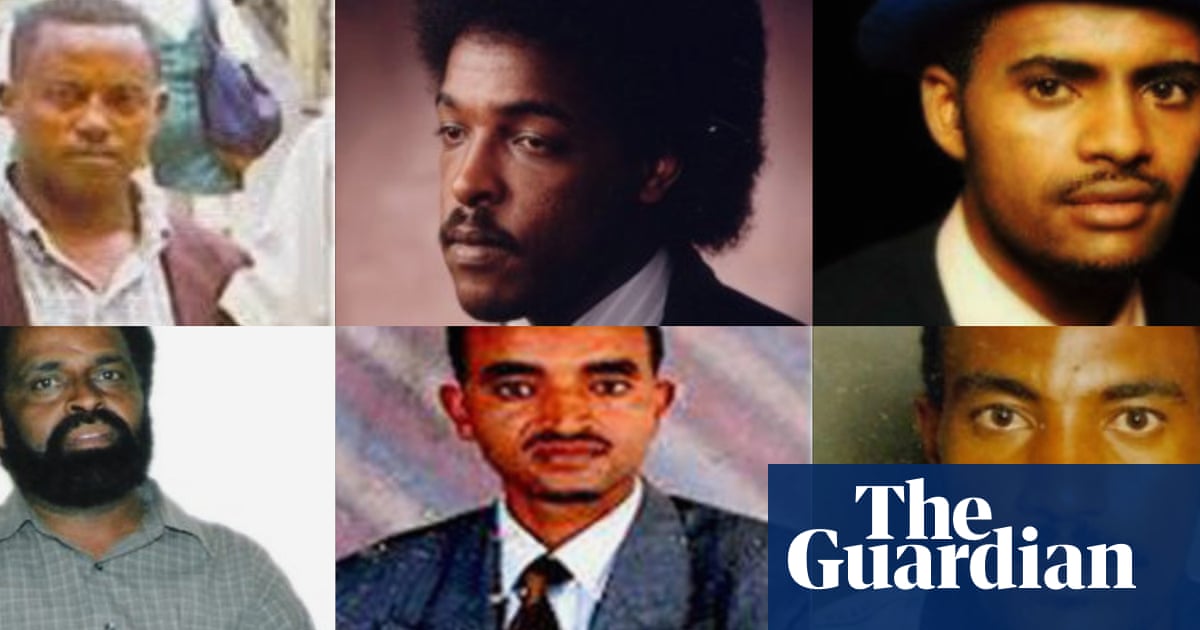
I remember how those labelled MenkaE and Yemin were hounded, broken, and erased – driven to the margins by Isaias and his inner circle, and ultimately executed. No one spoke out. Only now, with the cruel clarity of hindsight, can their faces be seen as they were. They were not enemies of the struggle. They were fighters who dared to ask for reform, for fairness, for dignity in leadership. Yet we had been trained to see otherwise. They were denounced as regionalists, extremists, saboteurs. And so the denunciations came – obedient, rehearsed, and almost liturgical.
The Hafash Wudubat were schooled in another reflex: to cheer the EPLF and to boo the ELF – always, instinctively, without pause. The ELF, a rival faction, had to be an enemy, even when conscience hesitated, even when something within us quietly resisted. It is painful now to admit how easily we learned to betray that inner tremor, how readily we bent to an irrational creed and crowned it patriotism.
What remains, all these years later, is the echo of applause reverberating in empty halls – and the heavier echo of what we chose not to say. Silence, once our refuge, has become our reckoning.
Today, the reckoning is unavoidable. We are living with the consequences of those choices. We vilified the ELF so that Isaias and his circle might appear stronger and more legitimate. In doing so, we revealed ourselves as pliable – as people who could be moulded, programmed, and used.
The trust we placed in Isaias Afwerki and those around him was not merely misplaced; it marked a quiet fracture in our historical conscience. It did not arise from naivety alone. It grew out of exhaustion after long struggle, from a deep longing for closure, from the desire to believe that sacrifice had not been in vain. Nationalism nourished that hope, repetition hardened it, and over time it became almost instinctive – a reflex that turned doubt outward, toward imagined enemies rather than inward toward our own assumptions.
Many of us, myself included, wanted to believe. We invested him with meanings that perhaps no single person could bear. In him we thought we glimpsed a restorer of dignity, a figure who might gather the fragments of a wounded past and shape them into something whole. And when the shadows lengthened, we explained them away. We told ourselves that suffering was the inevitable toll of history, that pain was the price that renewal always demanded.
Today, most of those once associated with the HafashWudubat – the former mass organisations – remain scattered across their host countries, suspended in a kind of historical waiting, still anticipating a return that has never arrived. For many, exile has become a life sentence rather than a temporary condition. Some have died far from the land they spent their youth imagining. Others have entered old age in foreign places, carrying memories of a homeland that exists more vividly in recollection than in reality. Their prolonged displacement followed the quiet closure of the road back to Eritrea by Isaias Afwerki and the political structure many had once supported with unwavering conviction.
This reality echoes what Prof Bereket Habte Selassie describes as an “immaculate deception” in The Wounded Nation (chapter 4). In its simplest form, it was a betrayal. Yet naming it as such is emotionally and morally difficult. To acknowledge it would mean confronting a painful truth: that the very figure for whom many had once been ready to sacrifice their lives systematically denied them the right to return home.
A few did go back, hoping to settle again in Eritrea, if only for a brief time. But the encounter between memory and reality proved disorienting. The Eritrea they had carried within them for decades – shaped by sacrifice, nostalgia, and hope – did not resemble the country they found. Faced with this stark dissonance, many quietly returned to the countries that had once been meant only as temporary refuges. They did so with the heavy recognition that the Eritrea of the present had become, for them, neither the home they had imagined nor a place in which their long years of devotion could find meaningful rest.
What am I to do?
I want to end by asking myself a question: what have I learned from censoring myself? I have learned that systems of power like ours are sustained not only by force, but by silence. And I now see that the silence was not imposed on me alone – I helped cultivate it. What I face today is the cost of years spent normalising my own self-censorship.