Venezuela has approved an amnesty law in response to pressure to release political prisoners. It still leaves a lot of them behind bars.
The move represents the first institutional measure to address decades of chavismo’s hostage politics. The country’s prison cells have held a broad range of people whose crimes ranged from protesting against the government to organizing elections. They were constant bargaining chips during the years that the regime was pressured to negotiate with its adversaries.
The law does seem to have some immediate benefits, including freedom for opposition leader Juan Pablo Guanipa, who had been released from detention and immediately put under house arrest after criticizing the government. It coincided with the release of Maykelis Borges, who is jailed for the crime of being the partner of an exiled military officer. She left detention with her six-month-old daughter, a child who was born a political prisoner – perhaps the most grotesque and appalling manifestation of Venezuela’s hostage politics.
But the law has evident gaps. It explicitly excludes anyone considered to have engaged in rebellion or called for military force against the regime. The government that is now openly allied with its occupation force is retaining the right to jail anyone who called for that very occupation. The María Corina clause, which seems aimed at excluding Machado from the benefit of amnesty from the charges concocted in response to her thundering and undisputed victory (which had Edmundo González elected) in the 2024 presidential elections against the now jailed Nicolás Maduro.
The amnesty law has provided its benefits, but also signals that the world needs to keep up the pressure on chavism0
The amnesty measure would allow the government to continue using laws that the regime on Thursday recognized deployed unfairly to target adversaries and silence critics. Anti-defamation statutes that became convenient weapons against free speech could be used against those who benefit from the amnesty law, calling into a doubt how much freedom is actually being provided by this amnesty measure. It again shows the regime unwilling to fully part with its capacity to quash free speech and dissent.
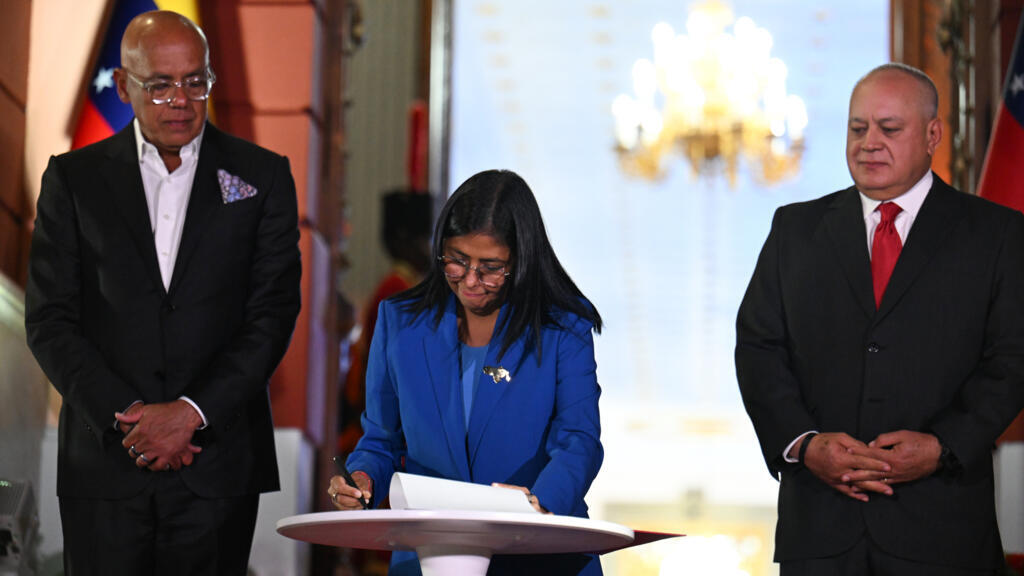
This Amnesty Law also shows how chavismo still has to battle its internal demons, which are many. During the signature act last night at Miraflores, local manager Delcy Rodríguez said that they will begin a review process of all the cases that are not covered by the amnesty whichn will be led bybthe devil himself Diosdado Cabello—again the balancing act between what is being requested of them by their US overlords, the public outrage around how chavismo does things, and giving Cabello his place. There’s also that thing that chavismo has always been disciplined about regarding sticking to their narratives on paper. The law cannot admit that the political prisoners are victims, that’s why they are submitting them to the humiliating process of having to request it.
What’s clear is that innocent Venezuelans remain behind bars and it’s not clear how long they will remain there. The government is not letting go of its long-held playbook, and Washington is increasingly focused on Cuba and Iran—leaving the regime more room to maneuver. The amnesty law has provided its benefits, but also signals that the world needs to keep up the pressure on chavismo.