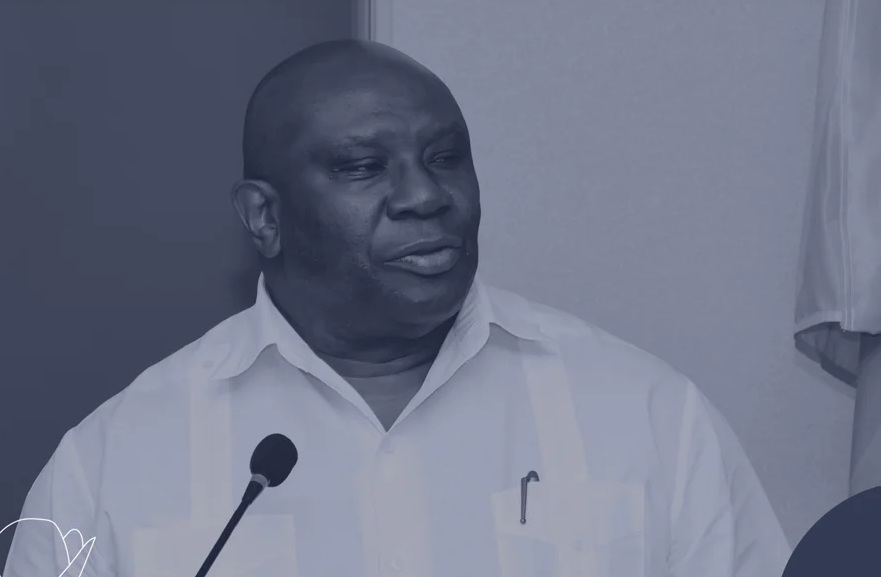
A constitutional standoff over the “unpaid” status of the Prime Minister’s son ignited a firestorm between Leader of the Opposition Ralph Gonsalves and House Speaker Ronnia Durham-Balcombe. During the budget debate last week, the conflict centered on a fundamental question: can the highest office in the land maintain a “shadow staff” beyond the reach of public oversight?
The central clash erupted when the Leader of the Opposition attempted to formally interrogate the presence of the Prime Minister’s son within the halls of government.
Despite having a previous question on the matter blocked, the Opposition Leader utilised the debate on the general principles of government policy to bring the issue back to the floor, citing the young man’s presence as a significant breach of administrative norms and questioned whether procedural rules are being utilized to safeguard the decorum of the House or to stifle necessary inquiries into the Prime Minister’s inner circle.
Gonsalves executed a calculated rhetorical move by explicitly describing the Prime Minister’s son as a “splendid young man” who possesses a “wonderful mother.” This praise served to isolate the institutional governance concerns from personal attack. By removing the element of personal animosity, the Opposition Leader sought to narrow the debate to the legality and propriety of the arrangement, effectively daring the government to defend the policy rather than the person.
The core allegations, as presented on the floor, include:
The Unofficial Role: The Prime Minister’s son is publicly identified and treated as an “assistant” or “aid” to his father.
Physical Presence: He maintains a consistent, regular presence within the Office of the Prime Minister.
Budgetary Absence: Despite this role, there is no allocation for such a position within the official “estimates” (the state budget).
Gonsalves during his raising of the matter, noted that fiscal transparency and the “oath of secrecy” are the primary mechanisms used to prevent the subversion of state interests and opined that when an individual has access to the inner sanctum of government without a formal contract, the integrity of the government is compromised.
The Leader of the Opposition focused heavily on the “estimates,” noting that if the son is not funded by the state, he may be “paid from another source.” This raises the investigative question of whether external entities are funding a member of the Prime Minister’s immediate staff, which would constitute a massive conflict of interest. The Leader argued that the “unpaid” label is a shield that bypasses the public service regulations designed to ensure that every government actor is vetted and bound by law.
The following table summarizes the risks and the Leader’s proposed remedies:
Institutional RiskProposed SafeguardUnauthorized Information Access: Access to sensitive state documents without legal binding.Oath of Secrecy: Mandatory for any individual occupying office space in a ministry.Shadow Funding: Staff being “paid from another source,” creating conflicts of interest.State Contracts: Ensuring all staff are paid via the state budget for financial transparency.Regulatory Bypass: Individuals working outside the reach of civil service oversight.Public Service Regulations: Subjecting all aids and assistants to official state employment rules.Normalization of Nepotism: Family members occupying offices without formal merit-based hiring.Formalized Employment: Replacing informal “family” arrangements with transparent, state-funded roles.
These concerns led to a direct confrontation with the Speaker over the very rules of the House.
In this exchange, the procedural tension reached a boiling point as the Speaker attempted to limit the discussion to a urged the Opposition Leader to move on.
The Speaker warned the Leader to “tread lightly”. The Leader of the Opposition retorted that he was “swimming well,” insisting that he was not challenging the Speaker’s authority but commenting on the “general principles of government policy” under Section 64. The Speaker countered by questioning the Leader’s reliance on “unofficial sources” specifically public statements the Prime Minister made “outside of the precincts” of the House.
The Speaker’s primary objections were synthesized into two procedural roadblocks:
Hearsay vs. Record: The Speaker argued that the Prime Minister’s public comments regarding his son were not an “official source” for parliamentary debate.
The “Second Chop”: The Speaker ruled that the Leader was attempting to take a “second chop with the axe” by reintroducing a question that had been previously disallowed, accusing him of trying to circumvent a settled ruling through a general policy speech.
The standoff concluded without a clear resolution, leaving the matter of the “unpaid assistant” hanging in the balance of the parliamentary record.
Ultimately, while the Speaker may exercise her power to silence the floor, the public’s awareness of the issue cannot be so easily erased and the tension between the rigid rules of the chamber and the public’s right to know could remain a defining conflict of this administration.
Despite the Speaker’s warnings, the Leader of the Opposition maintained that the issue had been raised with “sufficient clarity.”