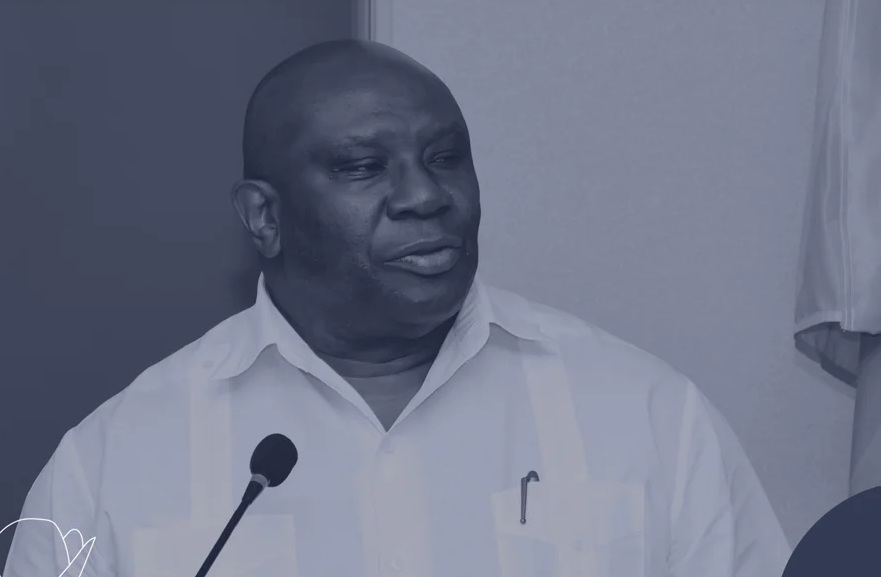
Opposition Senator Keisal Peters presented a case during her contribution to the 2026 budget stating that the current administration is asking the public to accept “shrinking ambition” as “fiscal responsibility,” essentially attempting to fund a modern state by “living off of yesterday’s plans.”
At the heart of her argument lies a fundamental ideological clash: a return to a specific brand of fiscal austerity versus the continuation of a social revolution. As a child of that very revolution, Peters used the debate to remind the nation that a budget surplus is a mirage if it is built upon the foundation of social neglect.
The administration’s embrace of “prudent conservatism”—a nod to the Mitchell-led NDP era of 1984–1989—was framed by Peters as ideological cover for a return to scarcity. She challenged the nostalgic celebration of “successive surplus budgets,” arguing that these figures often masked a period where social safety nets were non-existent and infrastructure was left to rot.
Her primary case study was her own alma mater, the Lommans Leeward School. While the government of the 1980s boasted of financial gains, the lived reality for students was one of visceral trauma;
Sanitation as Scarcity: The bathroom facilities were so abhorrent they were “not even fit for use by animals.”
The Feeding Program Paradox: Students would rush for the “vanilla biscuits and milk” provided by the state, only to find the milk “didn’t agree with them.” In a cruel twist of “prudent” neglect, they then had to face bathrooms so foul they chose to “regulate their bowel movements” for the entire school day rather than use them.
The “Forever Closed” Library: A dedicated library sat at the back of the school, but for the duration of Peters’ primary education, it remained locked. While the government sat on a surplus, books were left to become “old, moldy, and dingy,” inaccessible to the very children they were meant to enlighten.
Reflecting on this era of “prudent” neglect, Peters noted:
“The bathroom facility that we had was not even fit for use by animals. Children had to regulate their bowel movements so as not to use the bathroom facility at the school. It was only after the “Education Revolution” began that this legacy of neglect was erased; the closed library was demolished and replaced with a functioning annex and a modern library for the students of today”.
Senator Peters positioned herself as a direct product of the transition from an elitist education system to one of mass empowerment. She contrasted the era where only a “fraction of students” could dream of higher education with the current landscape, where 3,000 scholarships and bursaries were awarded just last year.
However, she warned that this progress is being undermined by a “scornful undertone” from the current administration. She utilized the biting metaphor of “elitist undergarments” to describe the attitude of those who view government assistance as a badge of inferiority.
This elitism, she argued, acts as a barrier to social mobility by “othering” the beneficiaries of state investment.
“Do not feel that because you did not have to rely on government’s assistance that somehow you are superior,” she warned, “your elitist undergarments are revealing themselves.”
The debate took a somber turn as Peters reflected on her role in the subcommittee for resettlement following Hurricane Beryl. The recovery effort on Union Island revealed a predatory side of the housing crisis: landlords using the devastation of the storm as a pretext to evict vulnerable tenants.
Peters revealed that some property owners viewed the hurricane almost as “divine intervention” to clear out residents. “Without property ownership as a baseline, many victims find themselves with nothing to go back to, transforming a natural disaster into a permanent displacement”.
The most damning portion of Peters critique focused on the fragmentation of the government’s “heart and soul”—the Ministry of Family.
Peters argued that by fracturing interconnected social services, the budget fails to address the “multiplicity of issues” a single family might face.
This fragmentation she says leads to critical “math problems” in the budget:
Stagnant Training Funds: A $30 million allocation for training has remained static despite a massive upward trend in scholarship applicants, threatening to exclude thousands of aspiring students.
The Social Assistance Gap: With only $150,000 budgeted for cash assistance and $550,000 for assistance in-kind, Peters argued the figures are woefully insufficient for a population facing interconnected crises like domestic violence and economic hardship.
The Ministry Fracture: When social, community, and child welfare departments are separated, the government loses the ability to draw on the collective strength of these agencies, leaving victims of abuse or poverty to fall through the cracks of a “budgeted-by-silo” system.
Senator Peters anchored her contribution in a timeless biblical principle (Luke 16:10), suggesting that the government’s handling of these “small” social details reveals their fitness for higher leadership.